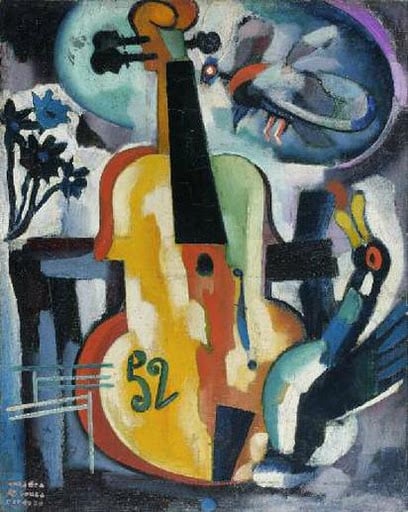
Composition with violin
Amadeo de Souza-Cardoso sanatçısının Composition with violin eseri hakkında uzman analizi
Tarz: Cubism, Expressionism · Tür: still life
Expert Analysis: Composition with Violin by Amadeo de Souza-Cardoso
Amadeo de Souza-Cardoso’s Composition with Violin stands as a bold synthesis of two major early-20th-century movements—Cubism and Expressionism—while asserting its place within the still life tradition. Created during a period of intense experimentation (circa 1914–1917), this work exemplifies the artist’s ability to merge the analytical structure of Cubism with the emotive, chromatic force of Expressionism.
Significance within Cubism and Expressionism:
- Cubist influence: The violin is deconstructed into geometric planes and intersecting lines, echoing the faceted compositions of Braque and Picasso. Yet Souza-Cardoso pushes beyond the muted palette of Analytic Cubism, introducing vibrant, often clashing colors—a direct nod to Expressionism’s subjective intensity.
- Expressionist energy: Unlike the more detached, intellectual approach of earlier Cubists, the brushwork here is dynamic and visceral, with visible strokes and deliberate distortions that convey emotional resonance. The violin becomes not merely an object to be analyzed, but a vessel of feeling—alive with the tension of modernity.
Genre Innovation (Still Life):
- Traditional still life is subverted: the violin is fragmented, overlapping with abstract shapes and fragmented lettering (a nod to Cubist collage). The composition deliberately rejects a single viewpoint, forcing the viewer to reconcile multiple perspectives at once, while the emotional saturation of color hints at the artist’s personal vocabulary.
Historical and Cultural Significance:
- Souza-Cardoso was a Portuguese modernist who worked in Paris alongside the avant-garde. Composition with Violin exemplifies his unique role as a bridge between European centers—absorbing influences from Delaunay’s Orphism, German Expressionism, and Cubism—while asserting a distinctly personal, syncretic vision. His work anticipates later abstract developments and showcases the global reach of early modernism beyond the canonical French-German axis.
Key takeaway: This artwork is significant for its fearless hybridization of analytical structure and raw emotion, proving that still life could be both a cerebral puzzle and a sensory explosion. It marks Souza-Cardoso as a radical innovator whose oeuvre was cut tragically short by his early death in 1918, yet whose legacy endures as a vital, independent voice within the modernist avant-garde.
Görsel olarak benzer
İlişkili kompozisyon ve renk paletine sahip 20 eser
Parto da viola Bom Ménage
Amadeo de Souza-Cardoso
Violin and Guitar
Juan Gris
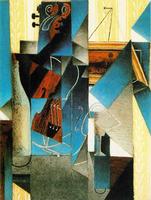
Violin and print
Juan Gris
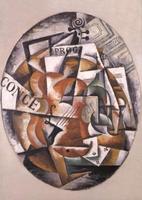
Violin
Lyubov Popova
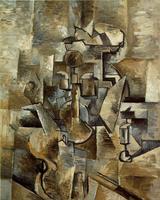
Violin and candlestick
Georges Braque
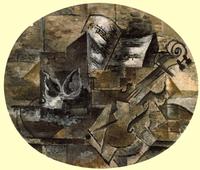
Violin and Musical Score
Georges Braque
Violin Melodie
Georges Braque
Violin and pitcher
Georges Braque
Berény Róbert, Szölős Csendélet Hegedűvel
Berény Róbert
Violin and Sheet Music on a Table (Petit Oiseau)
Georges Braque
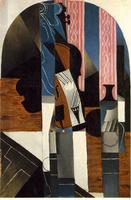
Violin and ink bottle on a table
Juan Gris
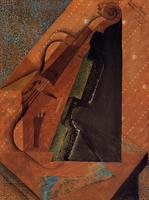
The Violin
Juan Gris
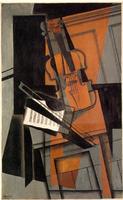
The violin
Juan Gris
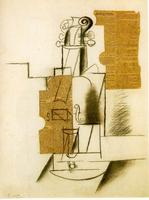
Violin
Pablo Picasso
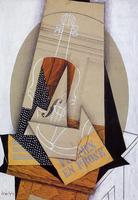
Composition with Violin
Juan Gris
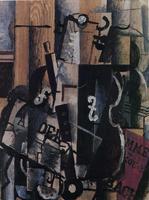
Violin and Clarinet on a Table
Georges Braque
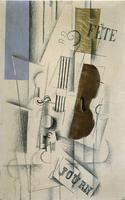
Violin and Newspaper (Musical Forms)
Georges Braque
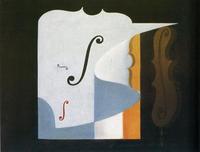
Untitled - Series on Catastrophes
Salvador Dali
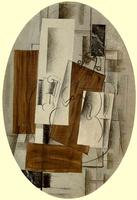
Violin and Glass
Georges Braque
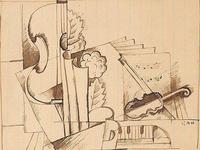
Composition with musical instruments
Gosta Adrian-Nilsson