
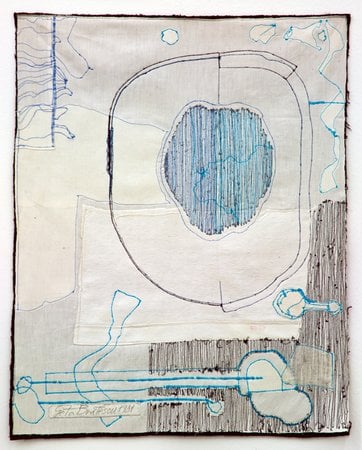
Geta Bratescu sanatçısının Medeic Callisthenic Moves VI eseri hakkında uzman analizi
Tarz: Abstract Expressionism · Tür: abstract
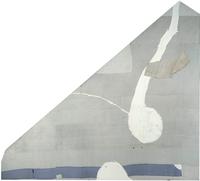
Analysis of "Medeic Callisthenic Moves VI" by Geta Bratescu
Geta Bratescu’s "Medeic Callisthenic Moves VI" is an abstract work created within the framework of Abstract Expressionism, a movement traditionally defined by gestural mark-making, emotional intensity, and a focus on the artist’s physical encounter with the canvas. What makes this piece significant within the style and period, however, is how it expands the vocabulary of Abstract Expressionism beyond its usual Western, male-dominated narrative.
First, the title itself is a conceptual layer rarely seen in classic Abstract Expressionism. “Medeic” invokes the mythological figure Medea—a powerful, transgressive female archetype—while “Callisthenic” refers to rhythmic, controlled body movements. Bratescu thus frames her abstraction not as pure spontaneity but as a disciplined, performative act. The “moves” suggests a sequence, a choreography of the hand and body that transforms the canvas into a record of a ritualized gesture. This reframes Abstract Expressionism’s hallmark “action painting” by foregrounding the artist’s female body and its deliberate, almost gymnastic movements, rather than the explosive, unconscious outpouring of emotion typical of male practitioners like Pollock.
Second, Bratescu’s work is significant because it bridges Abstract Expressionism with conceptual and performance art, a synthesis that was pioneering for a female artist working in Eastern Europe under a restrictive political climate. The Romaniian context meant that Bratescu’s abstraction was a subtle act of resistance—a personal, bodily freedom denied by state-imposed social realism. In "Medeic Callisthenic Moves VI", the gestural brushstrokes and layered lines may appear to be a pure formal exercise, but they also encode the tension between control and release, echoing the callisthenic’s disciplined training of the body. This duality—structured movement producing seemingly spontaneous marks—offers a critical commentary on the gendered and ideological expectations placed on the artist’s body.
Finally, the work’s generic classification as abstract allows Bratescu to explore the limits of representation without resorting to figuration, yet the mythic reference (“Medeic”) insists on a narrative presence. This move destabilizes the oft-assumed neutrality of abstract art, asserting that abstraction can be deeply autobiographical and politically resonant. In the wider Abstract Expressionist canon, "Medeic Callisthenic Moves VI" stands as a testament to how the style can be reinvented from the margins—by a woman, an Eastern European, an artist who turns the studio into a stage for performative self-definition. Its significance lies precisely in this expansion of the movement’s possibilities, merging rigorous physicality with intellectual and mythological depth.
Museum / Gallery
Görsel olarak benzer
İlişkili kompozisyon ve renk paletine sahip 20 eser
Medeic Callisthenic Moves IV
Geta Bratescu
Medeic Callisthenic Moves II
Geta Bratescu
Medeic Callisthenic Moves I
Geta Bratescu
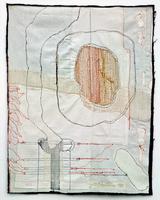
Medeic Callisthenic Moves III
Geta Bratescu
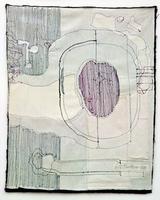
Medeic Callisthenic Moves V
Geta Bratescu
Number 226
Anne Ryan
Cat's Eye, 97B-5
Larry Poons
Yala Tjukurpa (Potato Dreaming)
Johnny Warangkula Tjupurrula
Jane Birkin #1
Julian Schnabel
Untitled
Artin Demirci
Faux Pas
Robert Blackburn
Bleu-violet
Gustave Singier
Blue Fences
Sharon Butler
Untitled
Anne Ryan
Henry Inn No. 3
Charles Garabedian
Untitled
Hannelore Baron
Father and Sons
Corneille
A Stretch of Time
Louise Bourgeois
Untitled #36
Robert Ryman
Jane Birkin (Egypt)
Julian Schnabel