
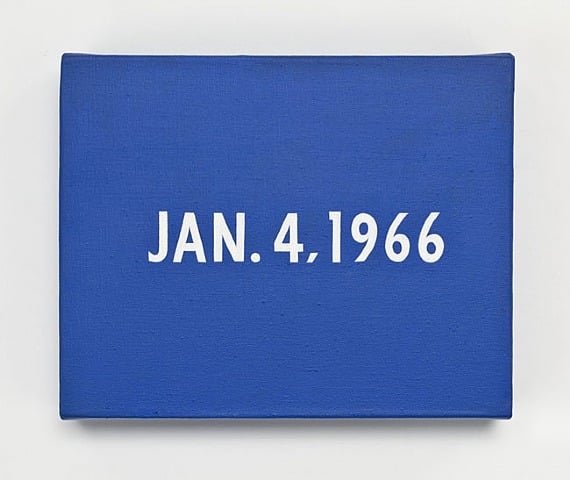
Analisi esperta di Jan. 4 1966 (from Today Series) di On Kawara
Stile: Conceptual Art · Genere: figurative
Expert Analysis: "Jan. 4 1966 (from Today Series)" by On Kawara
On Kawara’s Jan. 4 1966 belongs to his iconic Today Series, a landmark of Conceptual Art that redefines the very act of painting. At first glance, the work appears deceptively simple: a monochrome ground (typically gray, blue, or red) bearing the date “JAN. 4, 1966” in white, sans-serif lettering. Yet within the framework of conceptualism, this “figurative” representation—the date as a discrete, legible image—becomes a radical departure from traditional subject matter.
Significance within Conceptual Art
The Today Series strips painting down to a single, declarative act: recording the date on which the painting was made. The date itself is the subject, the content, and the title, collapsing time, language, and visual art into one gesture. Kawara’s obsessive repetition (he created hundreds of these works over decades) transforms the art object into a document of existence, an existential marker of a specific day. The genre label “figurative” here is redefined: the date is not a depiction of the world but a textual icon of lived experience, rendered with the precision of a sign painter.
Key Conceptual Strategies
- Elimination of the artist’s hand: The flat, mechanical lettering and uniform backgrounds suppress personal expression, aligning with Conceptual Art’s emphasis on idea over technique.
- Temporal presence: Each painting is completed on the day it records. If not finished by midnight, the canvas is destroyed. This rule binds the artwork to real, irreversible time.
- Seriality and repetition: The series as a whole functions as a calendar of consciousness—a cumulative, durational performance that questions how we measure life.
What Makes It Significant
Jan. 4 1966 is a pristine example of how Conceptual Art reimagines painting as a conceptual framework. Kawara transforms the canvas into a container for a date, not a window onto another world. The work resists aesthetic pleasure, instead demanding that viewers confront the ontological act of being in time. It also critiques the art market: each painting is identical in format yet unique in date, creating a paradox of mass production and irreplaceable moment.
In short, Jan. 4 1966 is significant because it redefines painting as a form of information, a pure index of now. It stands as a quiet, rigorous monument to the idea that art can be—and often is—a simple statement of presence.
Visivamente simili
20 opere con composizione e palette affini
Aug. 3 2005
On Kawara
Oct. 23, 1989 (from Today Series, Monday)
On Kawara
June 19, 1967 (from Today Series, No. 108)
On Kawara
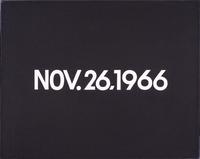
Nov. 26 1966 (from Today Series, No. 217)
On Kawara
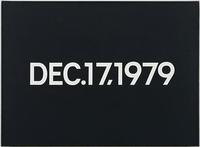
Dec. 17, 1979 (from Today Series, Monday)
On Kawara
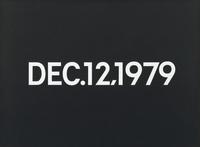
Dec. 12, 1979 (from Today Series, Wednesday)
On Kawara
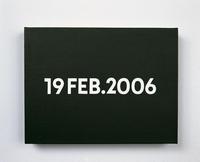
19 February 2006 (from Today Series)
On Kawara
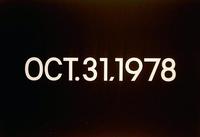
Oct. 31, 1973 (from Today Series, Tuesday)
On Kawara
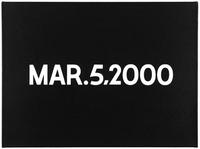
Mar. 5, 2000
On Kawara
I Don’t Want No Retro Spective
Edward Ruscha
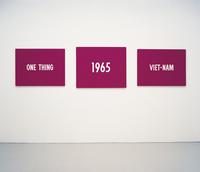
One Thing, 1965, Viet-Nam
On Kawara
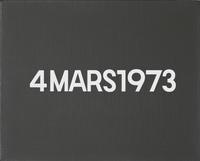
4 Mars 1973 (from Today Series)
On Kawara
OK (State I)
Edward Ruscha
Sunset
Luis Camnitzer
Something That Needs Something Else To Survive
Robert Barry
Dance?
Edward Ruscha
Untitled
Luchita Hurtado
What Should I Do?
Allen Ruppersberg
The End #28
Edward Ruscha
Micro-Painting
Gene Davis