Expert analysis of Tom Thomson’s Untitled (Wooden Landscape)
Style: Post-Impressionism · Genre: landscape
Expert Analysis: "Untitled (Wooden Landscape)" by Tom Thomson
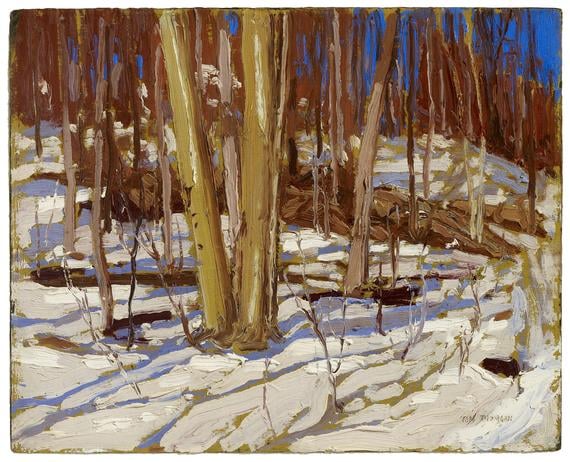
Tom Thomson’s Untitled (Wooden Landscape) exemplifies the artist’s distinctive Post-Impressionist approach to the Canadian wilderness, a style that would profoundly influence the Group of Seven and shape the identity of Canadian landscape painting. Though the work is untitled, the descriptor “Wooden Landscape” suggests a dense forest scene—perhaps a tangle of birch, pine, or fallen timber—rendered with Thomson’s signature expressive brushwork.
Significance within Post-Impressionism and Thomson’s Oeuvre
-
Bold Color and Simplified Form: True to Post-Impressionist ideals, Thomson abandons literal representation in favor of heightened emotional impact. He uses arbitrary, vibrant colors (such as deep greens, fiery autumnal oranges, and electric blues) to convey the raw energy of the northern woods. The “wooden” aspect—likely the structure of trees and logs—is built from thick, rhythmic strokes that flatten space and emphasize pattern over detail.
-
Spontaneity and Direct Observation: Thomson often painted in the field, directly confronting Algonquin Park’s untamed landscapes. This work captures the fleeting effects of light and atmosphere, but through a Post-Impressionist lens: the composition is deliberately arranged, with strong verticals (tree trunks) anchoring a dynamic surface of dappled color. The result is a tension between naturalism and abstraction that makes the scene feel both immediate and timeless.
-
Influence on the Group of Seven: Thomson’s untimely death at age 39 elevated his works to near-mythic status. Untitled (Wooden Landscape) embodies the pioneering spirit that his colleagues would later champion—a uniquely Canadian vision of rugged, unromanticized nature. The painting’s vigorous paint application and bold palette reveal Thomson’s departure from European Post-Impressionism, forging a vernacular style that speaks directly to the Canadian landscape’s scale and intensity.
Why This Work Matters
While Thomson’s iconic The Jack Pine and West Wind are better known, Untitled (Wooden Landscape) is equally significant as a record of his intimate engagement with the forest floor. The term “Wooden Landscape” hints at a focus on the materiality of the scene—the bark, the moss, the decay—rather than a sweeping vista. This ground-level perspective is rare in Thomson’s canon and demonstrates his ability to find monumentality in the ordinary. The work stands as a crucial link between European Post-Impressionist color theory and the raw, expressive nationalism that would define Canadian art in the early twentieth century.
Visually similar
20 works with related composition and palette
Winter Thaw in the Woods
Tom Thomson
Path Behind Mowat Lodge
Tom Thomson
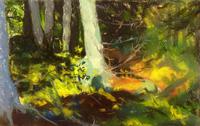
Under the Trees - Monhegan
Robert Henri
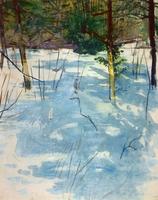
Winter, Monadnock
Abbott Handerson Thayer
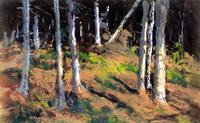
Where the Trees are Dying
Robert Henri
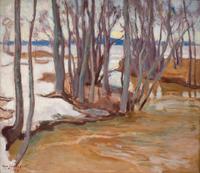
Kevättulva Tuusulanjärvellä
Eero Järnefelt
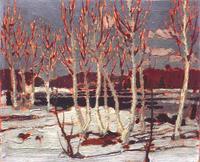
April in Algonquin Park
Tom Thomson
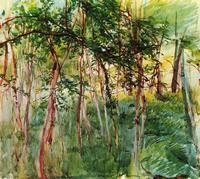
Trees in the Bois de Boulogne
Giovanni Boldini
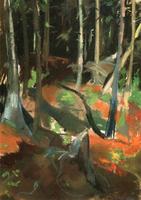
Monhegan, Maine
Robert Henri
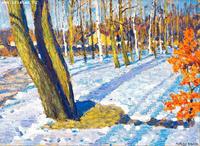
March Snow
Igor Grabar
Forest
Arkhyp Kuindzhi
Maple Saplings
Tom Thomson
Maine Landscape
Robert Henri
View from Kaivopuisto
Magnus Enckell
In the Woods
Paul Cezanne
In the Clearing, Charlevoix
Clarence Gagnon
Young Trees
Alex Katz
Au Wihlering 5
Gazmend Freitag
Paisagem, junto às ribeiras de Fiães
Paulo Fontes
Study for Little Spruce
Neil Welliver