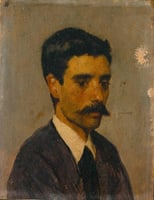
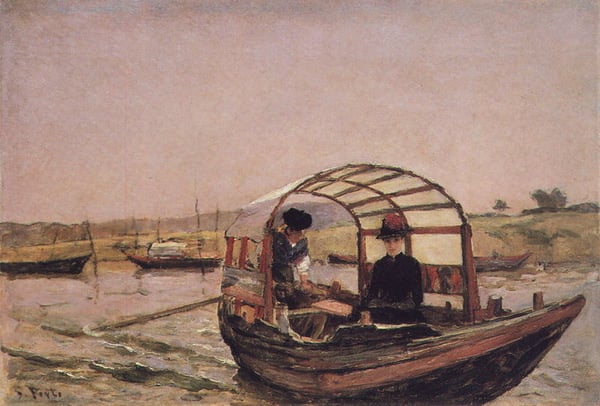
Expert analysis of António de Carvalho da Silva Porto’s No Areinho, Douro
Style: Impressionism · Genre: genre painting
Expert Analysis of "No Areinho, Douro" by António de Carvalho da Silva Porto
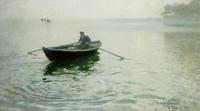
This work is a compelling example of Impressionism applied to a genre painting—a scene of everyday life—along the Douro River in Portugal. Its significance lies in how Silva Porto adapts the core tenets of French Impressionism to a distinctly Portuguese landscape and social context, marking a pivotal moment in the development of modern art in Portugal.
Key Contributions:
-
Regional Adaptation of Impressionist Techniques: Silva Porto employs the hallmark Impressionist broken brushwork, vibrant light effects, and an emphasis on capturing a fleeting moment. However, instead of Parisian boulevards or rural France, he turns his gaze to the sun-drenched banks of the Douro. This localization of the style demonstrates that Impressionism could transcend its French origins and become a tool for portraying the specific atmospheric conditions and rhythms of Portuguese life.
-
Elevation of the Ordinary: As a genre painting, No Areinho depicts a commonplace scene—likely workers, fishermen, or people resting on the sandy shore (“areinho” means sandy bank). By applying the same painterly, luminous approach reserved for landscapes or high art, Silva Porto dignifies the everyday activities of the region. This aligns with Impressionism’s broader goal of finding beauty in modern, mundane moments.
-
Pioneering Portuguese Impressionism: António de Carvalho da Silva Porto is recognized as a foundational figure in Portuguese Impressionism. This painting exemplifies his role in breaking away from the rigid academic traditions that dominated 19th-century Portuguese art. The loose handling of form and emphasis on natural light over detailed finish were radical for his time in Portugal, paving the way for subsequent generations of modernist painters.
Significance Within the Impressionist Movement:
While contemporary French masters like Monet or Renoir focused on leisure scenes in Argenteuil or Paris, Silva Porto’s No Areinho, Douro demonstrates the movement’s adaptability. The work is significant not for technical innovation per se, but for its cultural and geographic transplantation: it proves that Impressionism could serve as a universal visual language for capturing the ephemeral beauty of light, water, and human activity in any setting, including the distinctive terraced vineyards and riverscapes of the Douro Valley.
In essence, the painting stands as a bridge between the international Impressionist aesthetic and a uniquely Portuguese identity, making it a cornerstone of 19th-century Portuguese art history.
Visually similar
20 works with related composition and palette
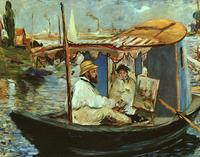
Monet in his Studio Boat
Edouard Manet
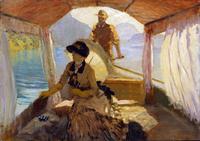
On Lake Lucerne
Giuseppe De Nittis
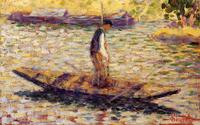
Riverman
Georges Seurat

The Fisherman - The Nightingale
Edmund Dulac
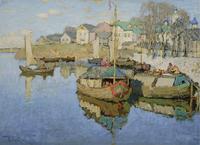
Boats on the River
Konstantin Gorbatov
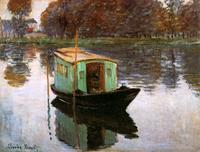
The Studio-Boat
Claude Monet
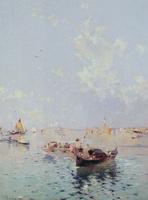
View to Saint Mark's Square, Venice
Franz Richard Unterberger
Boats on the Loing River
Alfred Sisley
Fishing boats in the gulf of Naples
Harald Jerichau
Low Tide Near Honfleur
Eugene Boudin
Gondola
Pierre-Auguste Renoir
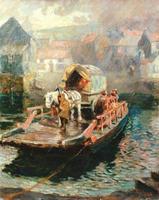
Hylton Ferry
Ralph Hedley
Boten Met Een Wassende Vrouw
Hendrick Avercamp
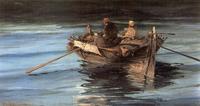
Fishing boat
Konstantinos Volanakis
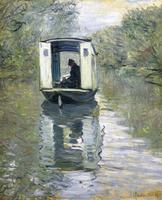
The Boat Studio
Claude Monet
Idle Barges on the Loing Canal at Saint Mammes
Alfred Sisley
Bords de la Seine à Poissy
Ernest Meissonier
Fishing boat at dusk
Konstantinos Volanakis
Venetian Gondola
Pierre-Auguste Renoir
Alkejegeren
Frits Thaulow