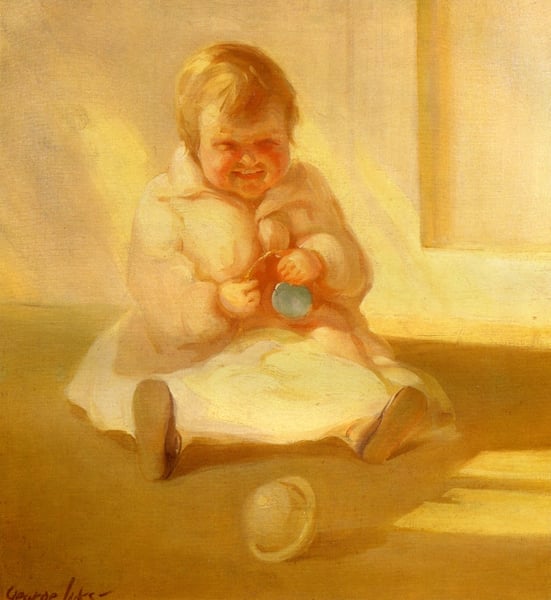
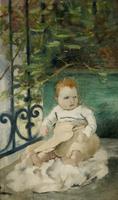
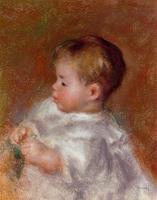
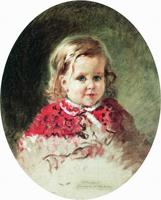
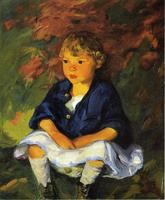
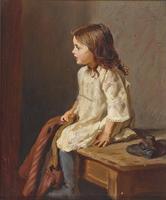
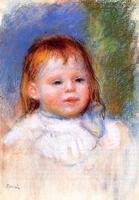
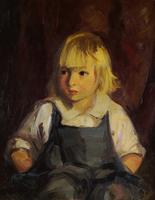
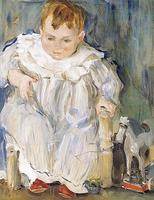
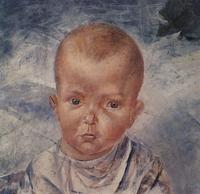
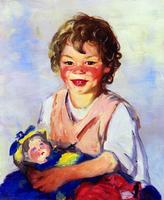
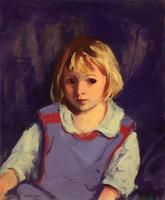
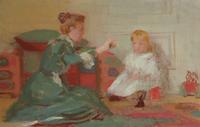
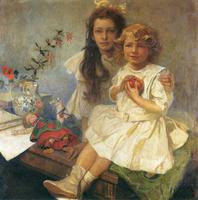
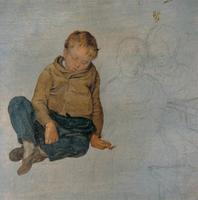
George Luks’s "Child with a Toy" exemplifies the core tenets of New Realism—a movement that emerged in early 20th-century America as a direct response to idealized, academic art. As a genre painting, it depicts an ordinary, unposed moment from everyday urban life, a hallmark of the Ashcan School with which Luks was associated.
The work’s significance lies in its raw, unvarnished portrayal of childhood. Unlike sentimentalized Victorian images, Luks presents a child with a directness that conveys both innocence and the grit of working-class reality. The toy itself is not a symbol of opulence but a humble object, grounding the scene in authentic experience. Luks’s vigorous brushwork and earthy palette—typical of his style—further reject polished technique in favor of capturing the vitality and immediacy of the moment. Within New Realism, this painting stands as a testament to the movement’s commitment to democratizing art: finding profound meaning in the lives of ordinary people, especially children, who were often overlooked in high art. It is a powerful, unsentimental snapshot of early modern American life.