Expertenanalyse zu Dmitry Levitzkys Portrait of A. I. Borisov
Stil: Rococo · Genre: portrait
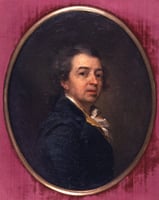
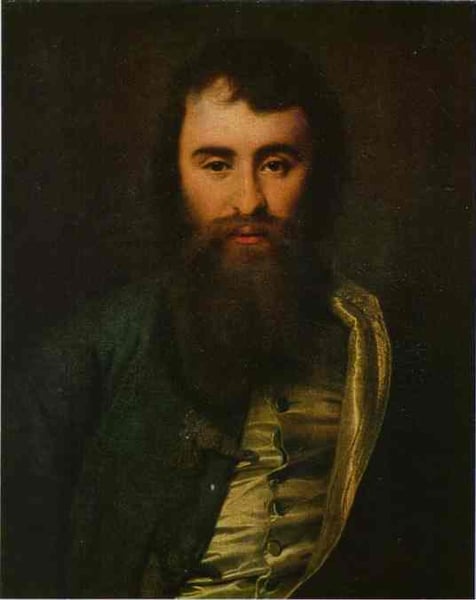
This work, Portrait of A. I. Borisov (c. 1790s) by Dmitry Levitzky, is a masterful synthesis of Rococo elegance and emerging Russian psychological realism, marking a pivotal moment in the evolution of portraiture within the late 18th-century Russian Empire.
Significance within Rococo and Genre Context
While the Rococo style—with its playful, asymmetrical compositions, pastel palettes, and emphasis on graceful, aristocratic leisure—originated in France, Levitzky adapts it for a distinctly Russian context. Unlike the frivolous pastoral scenes of Boucher or the airy sensuousness of Fragonard, Levitzky imbues his sitter with a quiet, introspective dignity. The portrait retains Rococo hallmarks: the soft, fluid brushwork on the silk facings of the coat, the subtle interplay of delicate whites and muted greys, and the subtle turn of the head. Yet the real significance lies in how Levitzky subordinates decorative flourishes to character study.
Psycho-Social Significance
The subject, A. I. Borisov (likely a minor noble or official), is not presented with the ostentatious regalia typical of state portraits. Instead, the canvas focuses on the sitter’s calm, intelligent gaze and relaxed posture. This reflects a key shift in Russian portraiture: the move from representing only power and rank to capturing the inner life of the educated elite. Borisov’s slight smile and direct eye contact suggest a self-aware, thoughtful individual—a hallmark of the Enlightenment ideals seeping into Russian court culture.
Artistic Innovation
Levitzky’s treatment of fabric and light exemplifies Rococo refinement, but he uses these elements to anchor the sitter in a specific, believable space. The muted, almost monochromatic palette (save for subtle touches of blue in the sash and the warm flesh tones) avoids the excessive pastel sweetness of Western Rococo. This restraint points toward the sentimental realism that would dominate Russian painting in the early 19th century.
Conclusion
The work is significant because it bridges the international Rococo aesthetic with a uniquely Russian emphasis on psychological depth and social observation. Levitzky proves that the Rococo portrait could be both elegant and profoundly human, serving not merely as a decorative object but as a document of personal identity and cultural transition.
Museum / Gallery
Visuell ähnlich
20 Werke mit ähnlicher Komposition und Farbpalette
Portrait of Dmitry Mendeleyev
Ivan Kramskoy
D. I. Mendeleev
Ivan Kramskoy
Portrait of Alfred Bruyas
Eugene Delacroix
Serafiński
Jan Matejko
Self-Portrait
Gheorghe Tattarescu
Self Portrait
Thomas Stuart Smith
Ivan Bilibin
Dmitry Levitzky
Self-Portrait
Ippolito Caffi
Portrait of Monsieur Nicolle
Gustave Courbet
Portrait of A.P. Bogoliubov
Fyodor Bronnikov
Portrait of Pavel Tretyakov
Ivan Kramskoy
Portrait of a merchant S.T. Kuznetsov
Vasily Perov
Fomushka-owl
Vasily Perov
Portrait of T.P. Chaplygin, a cousin of Ilya Repin
Ilya Repin
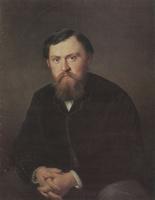
Portrait of A. A. Borisov
Vasily Perov
Painting of Daniele Barbaro
Titian
Autoretrato
Jose Maria Velasco
Portrait of Agostino Doria
Tintoretto
Portrait of a Man
Vasily Perov
Jules Luquet
Theodule Ribot