Expert analysis of Dmitry Levitzky’s Portrait of Countess A. S. Protasova
Style: Rococo · Genre: portrait
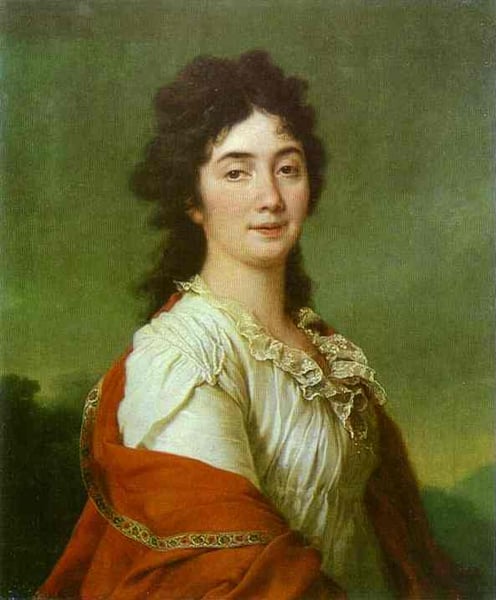
Expert Analysis: "Portrait of Countess A. S. Protasova" by Dmitry Levitzky
As a portrait in the Rococo style, this work by Dmitry Levitzky exemplifies the movement’s emphasis on elegance, intimacy, and decorative refinement. The painting captures Countess A. S. Protasova with the characteristic lightness and grace that define Rococo portraiture—soft, fluid brushwork, a delicate palette, and an air of aristocratic ease. Levitzky, a leading Russian portraitist of the 18th century, brings to this work a synthesis of Western European Rococo sensibility and Russian noble identity.
Significance within its style and period:
- Rococo’s social portraiture: Levitzky’s depiction of the countess aligns with Rococo’s fascination with the private, cultivated lives of the elite. The sitter’s pose, expression, and attire are rendered with a polished, almost theatrical charm that celebrates her status and personality without the formality of earlier Baroque portraits.
- Russian adaptation of Rococo: While Rococo flourished in France, Levitzky’s portrait demonstrates how Russian artists adopted its graceful lines and pastel tonalities to ennoble the Russian aristocracy. This work is significant as a testament to the cultural exchange between Russia and Western Europe during the reign of Catherine the Great—a period when Russian portraiture moved toward greater psychological subtlety and decorative sophistication.
- Artistic technique: Levitzky’s mastery of texture and light, typical of Rococo’s joue de vivre (joy of living), is evident in the handling of fabrics, lace, and the sitter’s complexion. The portrait is not merely a likeness but an idealized vision of youthful femininity and aristocratic virtue, capturing the spirit of an era that prized both natural grace and artificial refinement.
In sum, this portrait is significant as a prime example of how Russian Rococo portraiture merged European stylistic ideals with a distinctly Russian sensibility, reflecting the social aspirations and cultural identity of the 18th-century nobility.
Visually similar
20 works with related composition and palette
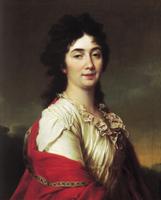
Portrait of Anna Stepanovna Protassova, the former maid of honor of Catherine II
Dmitry Levitzky
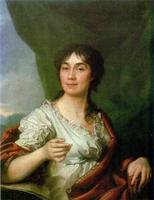
Portrait of Countess A. S. Protasova
Dmitry Levitzky
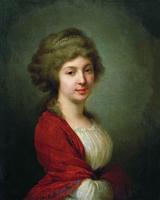
Countess Vera Zavadovskaya
Vladimir Borovikovsky
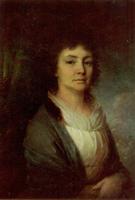
Vera Ivanovna Arseniev
Vladimir Borovikovsky
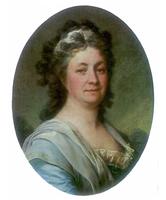
Portrait of M. I. Mussar
Dmitry Levitzky
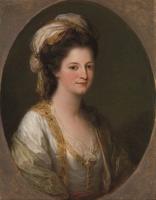
Portrait of a woman, traditionally identified as Lady Hervey
Angelica Kauffman
Portrait Einer Freifrau Von Richthofen
Barbara Krafft
Mrs. Joseph Anthony Jr. (Henrietta Hillegas)
Gilbert Stuart
Mrs Christian Cunninghame
George Romney
Portrait of Maria Alexeevna Lvova
Dmitry Levitzky
Portrait of Catherine Vasilevny Torsukovoy
Vladimir Borovikovsky
Darya Alexandrovna Valuev
Vladimir Borovikovsky
Portrait of E Temkina
Vladimir Borovikovsky
Portrait of V.A.Obreskova
Fyodor Rokotov
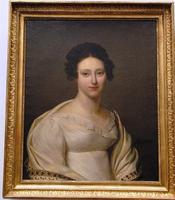
PORTRAIT OF A LADY in white dress and shawl
Henri-Francois Riesener
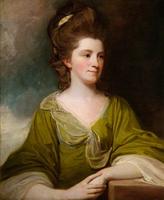
Mrs William Marwood, née Mary Goulston (1743–1807), Wife of William Marwood of Busby, near Stokesley, Yorkshire
George Romney
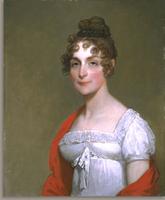
Margaret Crease Stackpole Welch
Gilbert Stuart
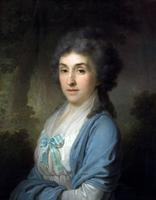
Portrait of Ekaterina Aleksandrovna Novosiltseva
Vladimir Borovikovsky
Portrait of Caroline Wilhelmina of Branderburg-Ansbach
Godfrey Kneller
Lady Juliana Dawkins
Gavin Hamilton