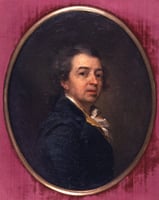
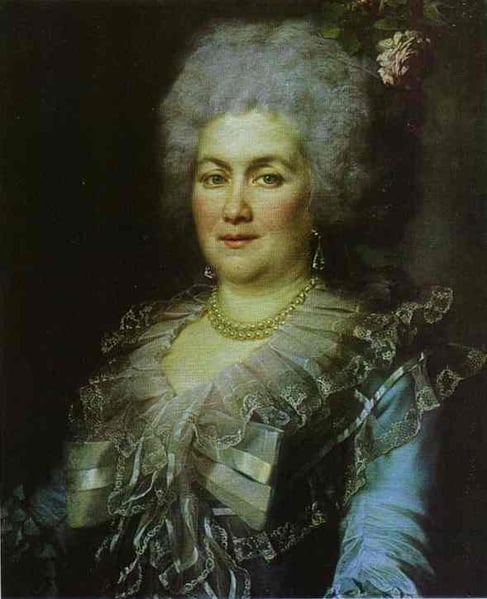
Expertenanalyse zu Dmitry Levitzkys Portrait of Gubareva
Stil: Rococo · Genre: portrait
Expert Analysis: Portrait of Gubareva by Dmitry Levitzky
Dmitry Levitzky’s Portrait of Gubareva stands as a refined example of Rococo portraiture adapted to the Russian imperial context. While the specific visual details of the work are not provided, Levitzky’s known oeuvre—especially his portraits of aristocratic women in the court of Catherine the Great—allows us to situate this piece within the broader significance of the artist and the Rococo style.
Stylistic Significance within Rococo
Rococo painting, originating in France, is characterized by delicate pastel colors, soft play of light, elaborate ornamentation, and an air of graceful intimacy. Levitzky, trained at the Imperial Academy of Arts, masterfully imported these qualities into Russian portraiture. In Portrait of Gubareva, one would expect a gentle, almost powdery palette, a sinuous s-curve pose, and meticulous attention to the textures of silk, lace, and pearl—hallmarks of the Rococo that emphasize feminine elegance and social refinement. The artist’s brushwork likely creates a soft, atmospheric luminosity around the sitter, blurring edges to evoke a dreamlike presence.
Genre and Context
As a portrait, the work functions both as a likeness and as a statement of status. Levitzky was the preeminent portraitist of the Russian Enlightenment, and his subjects were often members of the nobility or intellectual elite. Gubareva, presumably a lady of the court, would have been depicted with the accoutrements of her rank—jewels, a fashionable gown, perhaps a book or a fan—to signal cultivation and grace. Levitzky’s genius lay in combining the Rococo’s decorative charm with a subtle psychological depth, lending his sitters a sense of inner life beyond mere convention.
What Makes This Work Significant
The significance of Portrait of Gubareva lies in its role as a cultural bridge. Levitzky domesticated the French Rococo for a Russian audience, infusing it with a distinctly Russian sensibility: a dignified restraint and a hint of naturalism that tempered the frivolity often associated with the style. His portraits, including this one, helped define the image of the Russian aristocracy during the golden age of Catherine the Great—an era of Westernization, enlightenment, and imperial confidence. By capturing the poised elegance of Gubareva, Levitzky immortalized not just an individual, but an entire social ideal of polite, cultured femininity that Rococo so perfectly expressed.
In sum, Portrait of Gubareva is significant as a superb synthesis of Rococo aesthetics and Russian portraiture tradition, demonstrating how a foreign style was reshaped to reflect the values of a distinct national identity.
Visuell ähnlich
20 Werke mit ähnlicher Komposition und Farbpalette
Портрет Т.А. Ветошниковой
Ivan Argunov
Portrait of Unknown Woman
Dmitry Levitzky
Portrait of Princess Marie Adélaïde of France, called Madame Adelaide
Anne Vallayer-Coster
Natalia Melgunova
Dmitry Levitzky
Anne, Lady Holte (1734–1799)
George Romney
Portrait of N. Y. Levitzkaya, Artist's Wife
Dmitry Levitzky
Portrait of Alexandra Perfilyeva, née Countess Tolstaya
Carl-Ludwig Johann Christineck
Portrait of N. Y. Levitsky (wife of the artist)
Dmitry Levitzky
Portrait of Anne-Félicité Grésille
Marie-Gabrielle Capet
Portrait of Mrs. Awse
Thomas Gainsborough
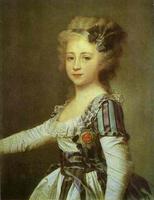
Portrait of Grand Duchess Elena Pavlovna as a Child
Dmitry Levitzky
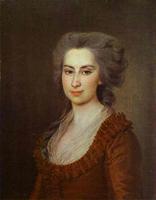
Portrait of Countess N. F. Vorontsova
Dmitry Levitzky
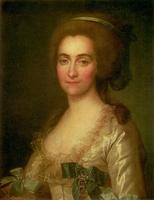
Portrait of E. A. Vorontsova
Dmitry Levitzky
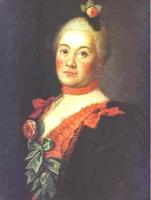
Portrait of Princess T.A.Trubetzkaya
Aleksey Antropov
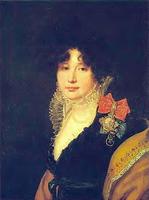
Portrait of the Princess A. Scherbatova
Orest Kiprensky
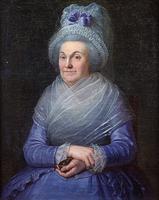
Portrait de dame au bonnet de dentelles
Dominique Doncre
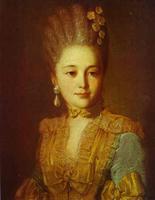
Portrait of an Unknown Woman in a Blue Dress with Yellow Trimmings
Fyodor Rokotov
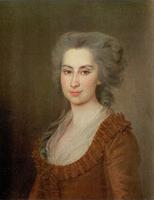
Countess Praskovia Vorontsova
Dmitry Levitzky
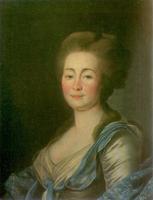
Anna Dorothea Louise Schmidt, née. Baroness Klossen
Dmitry Levitzky
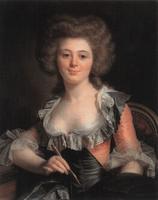
Self Portrait
Marie-Gabrielle Capet