Analisi esperta di Landscape of Creuse di Armand Guillaumin
Stile: Impressionism · Genere: landscape
Expert Analysis: Landscape of Creuse by Armand Guillaumin
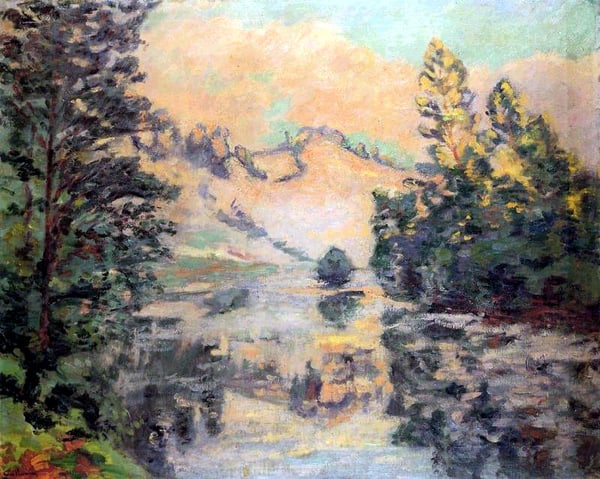
Armand Guillaumin’s Landscape of Creuse stands as a vivid exemplar of Impressionism’s core mission: to capture the transient effects of light and atmosphere on the natural world. Painted in the Creuse region of central France—a favorite locale for later Impressionists—the work demonstrates Guillaumin’s distinctive approach to color and brushwork, which set him apart even within the movement.
Significance within Impressionism
Guillaumin is often celebrated as one of the most audacious colorists among the original Impressionists. In Landscape of Creuse, this manifests in a bold, unblended palette that pushes beyond literal transcription of nature. The landscape becomes a field of luminous, vibrating hues—deep purples, fiery oranges, and crystalline blues—applied with energetic, broken strokes. This technique aligns with the Impressionist goal of rendering optical sensation rather than static form, allowing the viewer to experience the “impression” of a moment rather than a detailed topographical record.
Role of the Creuse Setting
The Creuse valley, with its rolling hills and dramatic rock formations, offered Guillaumin a subject rich in contrast and texture. Unlike the more pastoral scenes of Monet or Pissarro, Guillaumin’s rendition emphasizes the raw, almost molten quality of the landscape. The title alone—Landscape of Creuse—grounds the work in a specific place, yet the artist transforms it through his subjective color choices. This balance between recognizable geography and personal expression is a hallmark of Impressionism’s shift from objective depiction to the artist’s sensory response.
Influence and Legacy
While Guillaumin never achieved the fame of his peers, his fearless colorism deeply influenced later movements, particularly Fauvism. In Landscape of Creuse, we see early glimmers of that future break: colors are liberated from naturalism, applied with a fervor that anticipates Matisse and Derain. The painting thus represents a crucial bridge—rooted in Impressionist principles of light and atmosphere, yet pushing toward a more subjective, emotionally charged use of pigment.
In sum, Landscape of Creuse is significant not only as a beautiful Impressionist landscape but as a testament to Guillaumin’s role as a radical colorist within the movement, and as a precursor to the chromatic revolutions of the 20th century.
Visivamente simili
20 opere con composizione e palette affini
The evening. Landscape with a lake.
Pyotr Konchalovsky
Pond
Konstantin Korovin
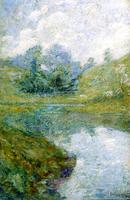
Landscape
John Henry Twachtman
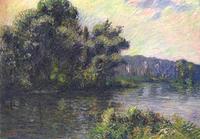
By the Eure River
Gustave Loiseau
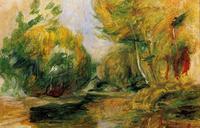
Landscape
Pierre-Auguste Renoir
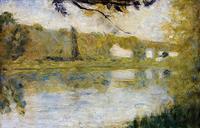
The Riverside
Georges Seurat
The Woodland Pool
Robert Julian Onderdonk
Lake near Breccles in Autumn
Winston Churchill
By the Eure River Fog Effect
Gustave Loiseau
Fog over water
Isaac Levitan
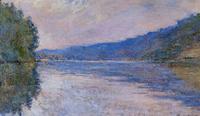
The Seine at Port-Villez
Claude Monet
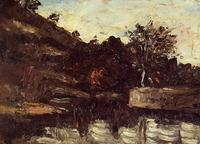
Bend in the River
Paul Cezanne
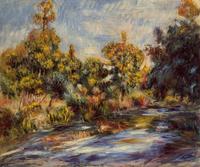
Landscape with River
Pierre-Auguste Renoir
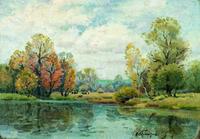
Autumn
Sergiy Grigoriev
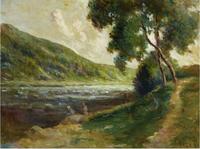
The Banks Of The Seine In The Surroundings Of Rolleboise
Maximilien Luce
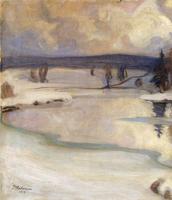
Talvimaisemawinter Landscape
Pekka Halonen
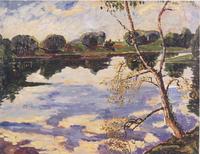
Near Breccles
Winston Churchill
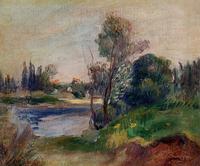
Banks of the River
Pierre-Auguste Renoir
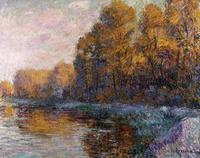
River in Autumn
Gustave Loiseau
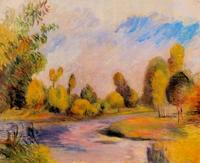
Banks of a River
Pierre-Auguste Renoir