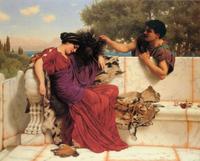
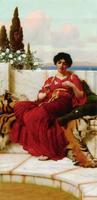
Analysis of "The Old, Old Story" by John William Godward
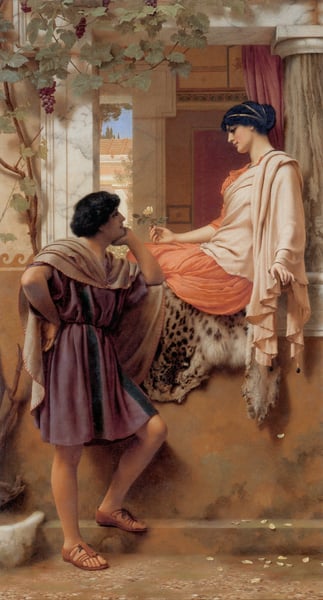
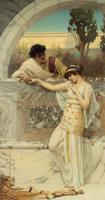
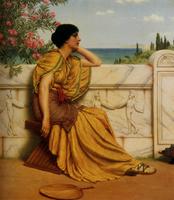
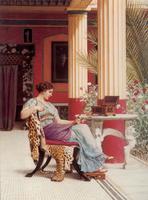
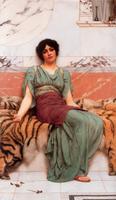
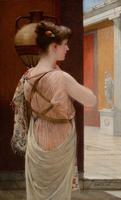
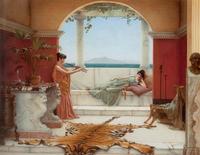
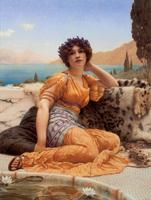
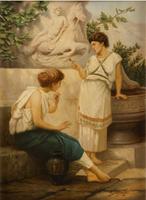
As a neoclassical genre painting, "The Old, Old Story" exemplifies John William Godward’s meticulous commitment to the revival of classical aesthetics in late Victorian art. The work’s significance lies in its fusion of a timeless, romantic narrative—implied by the title—with the rigorous formal ideals of Neoclassicism: precise draftsmanship, polished surfaces, and an evocation of ancient Greco-Roman serenity.
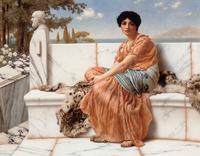
Within the context of the period, Godward’s genre scenes—often depicting solitary or paired figures in marble settings—represent the twilight of the neoclassical tradition. Unlike the grand historical or mythological subjects favored by earlier neoclassicists, Godward specialized in intimate, everyday moments that nonetheless retain classical dress, architecture, and compositional harmony. "The Old, Old Story" thus captures the movement’s shift toward sentimental, decorative beauty at the turn of the 20th century, even as Modernism began to challenge such ideals. The painting’s quiet elegance and technical refinement mark Godward as a devoted, if underappreciated, heir to the neoclassical legacy.