Analisi esperta di The Princess of the Sacred Fire di Wojciech Siudmak
Stile: Fantastic Realism · Genere: sketch and study
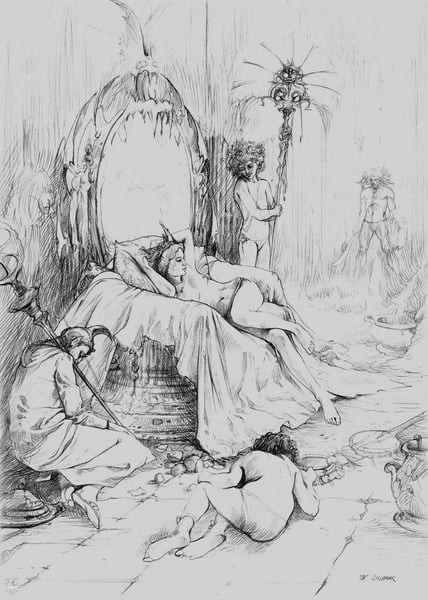
Expert Analysis of "The Princess of the Sacred Fire" by Wojciech Siudmak
As a sketch and study within the Fantastic Realism movement, The Princess of the Sacred Fire offers a rare and valuable glimpse into the foundational process of one of the style's most distinctive practitioners. Wojciech Siudmak is celebrated for his meticulously detailed, dreamlike compositions that fuse classical draftsmanship with surreal, often science-fiction or mythological themes. This work, by virtue of its genre, shifts the viewer's focus from finished spectacle to the raw intellectual and technical scaffolding that supports his larger vision.
Significance within Fantastic Realism
Fantastic Realism emerged in mid-20th century Vienna, emphasizing a return to precise, Old Master-style painting techniques as a vehicle for depicting uncanny, symbolic, and metaphysical subject matter. Siudmak, while not always strictly aligned with the Vienna School, embodies this ethos through his hyper-realistic rendering of impossible worlds.
-
Technical Foundation: The sketch and study genre is often overlooked in the context of Fantastic Realism, but it is here that the movement's core tension—between unwavering realism and unrestrained fantasy—is most legible. In this work, Siudmak likely explores proportion, anatomy, and composition for a fantastical figure (the "Princess of the Sacred Fire"). The study format reveals his academic rigor: the careful construction of a humanoid form that must balance credible physicality with ethereal, otherworldly attributes (such as surrounding flames or symbolic regalia). This underscores the movement's principle that the fantastic must be grounded in believable reality to be truly transporting.
-
Conceptual Genesis: The title evokes a powerful archetype—a female figure associated with primal, transformative energy. As a study, the piece records the artist's initial dialogue with that archetype: capturing gesture, light, and the interplay of organic and elemental forms. In Fantastic Realism, such preparatory works are not mere drafts; they are discrete acts of visionary research. Siudmak's choice to present a finished sketch (rather than a polished painting) suggests that the act of discovery itself is part of the artwork's significance—it is the moment when the artist translates an inner vision into a tangible blueprint.
-
Insight into Process: For scholars and admirers of Siudmak, this piece serves as a key to his working method. The study likely shows pentimenti (visible corrections) or exploratory lines that a final painting would conceal. These traces of decision-making illuminate how the artist navigates between technical precision and spontaneous imagination—a balancing act that defines the best Fantastic Realism.
In summary, The Princess of the Sacred Fire as a sketch and study is significant because it demystifies the creative engine behind Siudmak’s finished works. It reveals that his enchanted, meticulously realized worlds are built step by step through disciplined observation and fearless experimentation, reminding us that even the most fantastical figures must first be born on paper.
Visivamente simili
20 opere con composizione e palette affini
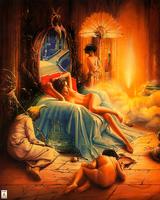
The Princess of the Sacred Fire
Wojciech Siudmak
Plot
Wojciech Siudmak
A Woman Lying on a Bed
Rembrandt
Sower of Discord
Gustave Dore
Untitled
Bruno Schulz
The wedding night
Wojciech Siudmak
Faun unveiling a sleeping girl (Jupiter and Antiope, after Rembrandt)
Pablo Picasso
The Inferno, Canto 28
Gustave Dore
GeJosiane Dans Son Alcôve, L'homme Qui Rit
Georges Rochegrosse
Illustration to "A Week of Kindness"
Max Ernst
Kisses of Death
Felicien Rops
Nude Woman
Rafael Zabaleta
Illustration to Milton`s On the Morning of Christ`s Nativity
William Blake
Beating the fiances of Penelope returning Ulysses
Vasily Vereshchagin
Woman`s Bath
Albrecht Durer
Kondor Béla, Gyözelem És Dicsőség
Kondor Béla
Illustration to "A Week of Kindness"
Max Ernst
My Earth
Wojciech Siudmak
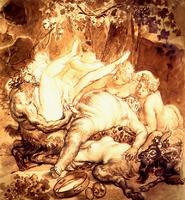
Silen, Satyr and Bacchanals
Karl Bryullov
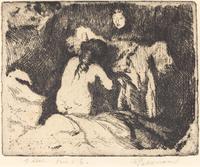
Getting up
Paul-Albert Besnard