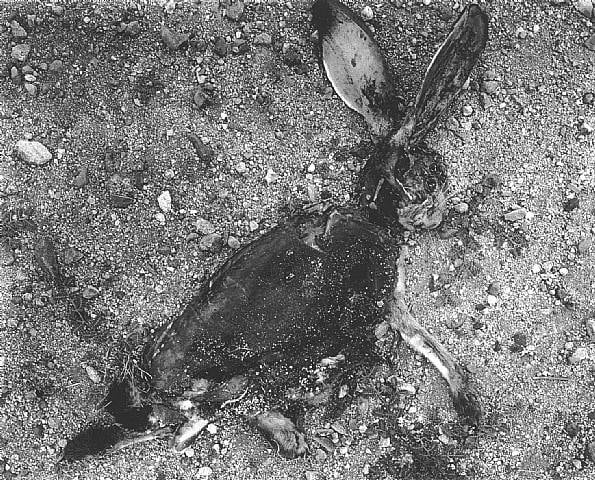
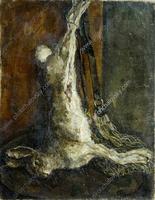
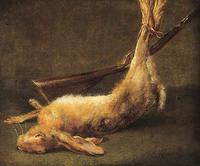
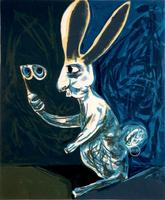
As a Surrealist photograph, Frederick Sommer’s Jack Rabbit is significant for its radical transformation of a mundane object into a symbol of psychological unease and formal ambiguity. Within the Surrealist movement, photography was often used to capture the irrational and the uncanny. Sommer achieves this by isolating the subject—a dead jackrabbit—against a stark background, stripping it of context and forcing the viewer to confront themes of decay, mortality, and the blurred boundary between natural realism and dreamlike distortion. The work exemplifies Surrealism’s goal of unsettling conventional perception, making it a key example of how photography could serve as a tool for exploring the subconscious through careful composition and lighting, rather than relying on painterly techniques. Its significance lies in this fusion of documentary precision with surrealist imagination.