Analisi esperta di Geese In Flight Before A Full Moon di Ohara Koson
Stile: Shin-hanga · Genere: wildlife painting
Expert Art Historical Analysis: "Geese In Flight Before A Full Moon" by Ohara Koson
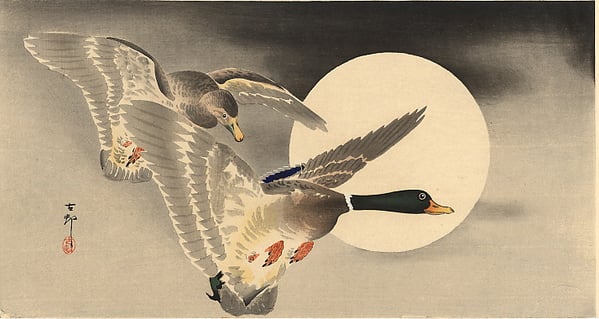
Ohara Koson’s Geese In Flight Before A Full Moon is a masterful example of the Shin-hanga (“new prints”) movement, which revitalized traditional ukiyo-e themes in the early 20th century by combining them with modern printing techniques and a heightened naturalism. The work belongs to the wildlife painting genre, specifically the kachō-e (bird-and-flower) tradition that Koson elevated to a central subject of Shin-hanga.
Significance within Shin-hanga:
- Revival of a classic motif: The image of geese silhouetted against a full moon is a deeply poetic trope in Japanese art, evoking autumn, migration, and transience. Koson updates this timeless theme by emphasizing atmospheric effects—the moon’s luminous gradation and the soft, cloud-like sky—made possible through Shin-hanga’s sophisticated color printing and bokashi (gradient) techniques.
- Modern naturalism: Unlike the more stylized or iconic birds in earlier ukiyo-e, Koson’s geese are rendered with a keen eye for anatomical accuracy and dynamic motion. Their outstretched wings and staggered flight pattern create a sense of spontaneous movement, anticipating the viewer’s gaze as they pass before the moon. This blend of realism with a lyrical, almost serene composition distinguishes Koson’s work from both traditional ukiyo-e and the more commercial prints of his era.
- Craftsmanship and collaboration: As a Shin-hanga artist, Koson worked closely with carvers and printers to achieve subtle tonal variations and precise registration—hallmarks of the movement. The contrast between the dark silhouetted birds and the glowing, softly colored moon demonstrates a technical sophistication that honors woodblock traditions while embracing new possibilities.
Artistic and cultural resonance: The pairing of geese (often symbols of fidelity and the changing seasons) with the full moon (a symbol of beauty and impermanence) creates a contemplative, almost haiku-like stillness. Koson’s ability to capture a fleeting moment in nature—a flock crossing a luminous orb—elevates the wildlife painting genre from mere decoration to a meditation on time and space. This work exemplifies how Shin-hanga artists like Koson preserved the soul of ukiyo-e while adapting it to modern tastes, ensuring the continued relevance of Japanese woodblock prints in the 20th century.
Visivamente simili
20 opere con composizione e palette affini
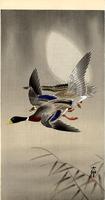
Mallards and Moon
Ohara Koson
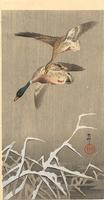
Mallards
Ohara Koson
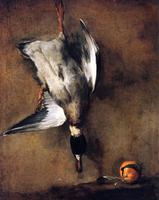
A Green Neck Duck with a Seville Orange
Jean-Baptiste-Simeon Chardin
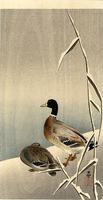
Mallards in Snow
Ohara Koson
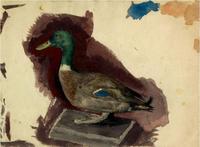
Stuffed duck
Nicholas Roerich
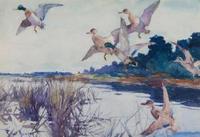
Mallards
Frank W. Benson
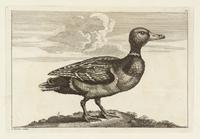
[title not known]
Francis Barlow
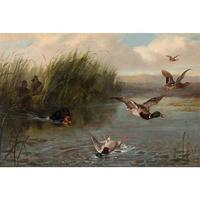
Duck Shooting
Arthur Fitzwilliam Tait
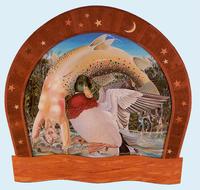
Impudent Encounter
Kit Williams
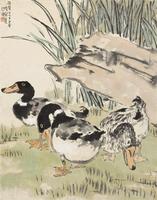
Three Ducks
Xu Beihong
Still Life – Mallard and Teal
Emil Carlsen
Reeds in the Snow with a Wild Duck
Hiroshige
Vacation Boy riding a Goose
Norman Rockwell
A Hunter's Still Life
Alexander Pope
Duck
Salvador Dali
Wild Birds in Flight
Robert Henry Roe
Green-Winged Teal
Douglas Allen
Duck with an Olive Jar
Jean-Baptiste-Simeon Chardin
Hanging Ducks
Alexander Pope
Wave
Ding Yanyong