Expertenanalyse zu Mstislav Dobuzhinskys White Nights
Stil: Symbolism · Genre: illustration
Expert Analysis: "White Nights" by Mstislav Dobuzhinsky
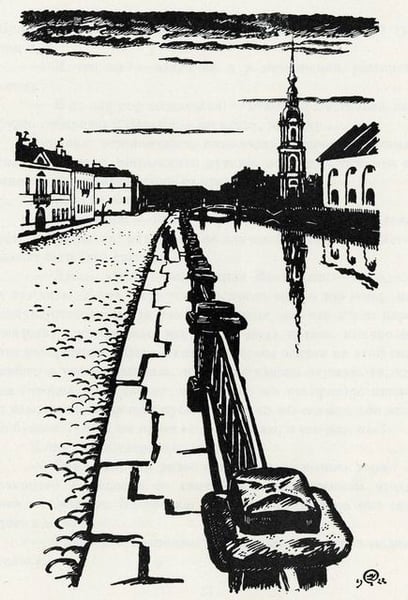
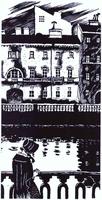
Mstislav Dobuzhinsky’s "White Nights" stands as a quintessential example of Russian Symbolist illustration, a work that transcends mere visual accompaniment to become a poetic meditation on atmosphere, memory, and the uncanny. Executed within the genre of illustration, this piece was likely intended for a literary text—most plausibly Fyodor Dostoevsky’s short story of the same name—yet it operates as an autonomous artistic statement.
Stylistic and Period Significance
Within the Symbolist movement, Dobuzhinsky belonged to the Mir iskusstva (World of Art) group, which championed a synthesis of graphic precision, historical pastiche, and psychological depth. "White Nights" exemplifies this by transforming the real, topographically accurate streets of St. Petersburg into a dreamscape. The hallmark of the work is its handling of the “white night” phenomenon—the eerie, perpetual twilight of the northern summer. Dobuzhinsky does not simply depict a physical effect; he renders a psychological state. The muted, silvery-grey palette, the elongation of shadows, and the stark juxtaposition of dark, silent canals against pale, luminous skies evoke a suspended reality where time feels unmoored.
Genre and Narrative Function
As an illustration, the artwork is highly significant for its ability to distill a complex literary mood into a single, resonant image. Dobuzhinsky avoids literal narrative. Instead, he captures the essence of yearning, solitude, and the fragile boundary between fantasy and waking life that defines Dostoevsky’s story. The lonely figure (often a solitary pedestrian or a silhouette by the Neva River) becomes an everyman—a symbol of the modern urban soul adrift in the liminal space between day and night, real and imagined.
Artistic Techniques and Legacy
Dobuzhinsky’s masterful use of graphic line—at once precise and ethereal—creates a tension between architectural solidity and atmospheric dissolution. Buildings feel both weighty and spectral, as if they could evaporate with the coming dawn. This fusion of the tangible city with an otherworldly aura is his signature contribution to Symbolist art. The piece is significant because it demonstrates how illustration, often seen as a secondary art form, can achieve the same symbolic complexity as painting. "White Nights" remains a touchstone for how Russian Symbolism used the urban landscape not as a backdrop but as a protagonist—silent, melancholic, and profoundly mysterious.
Visuell ähnlich
20 Werke mit ähnlicher Komposition und Farbpalette
Petersburg. Kryukov Canal.
Anna Ostroumova-Lebedeva
Leningrad. Fontanka and the Summer Garden in frost.
Anna Ostroumova-Lebedeva
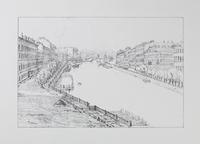
Fontanka
Anna Ostroumova-Lebedeva
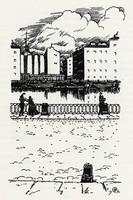
White Nights
Mstislav Dobuzhinsky
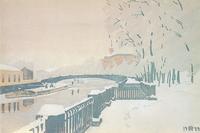
Leningrad. Summer garden in winter.
Anna Ostroumova-Lebedeva
A045 - Russia I - Moskva River with the Kremlin in the background
Ramiro Martín Martín
Leningrad. Bank Bridge.
Pyotr Konchalovsky
Fontanka near the Summer Garden
Anna Ostroumova-Lebedeva
The Griboedov Canal in St.Petersburg
Konstantin Gorbatov
Petersburg. Fontanka.
Anna Ostroumova-Lebedeva
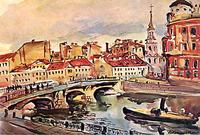
Leningrad. Bridge of Belinsky. Church of St. Simeon and Anna.
Pyotr Konchalovsky
White Nights
Mstislav Dobuzhinsky
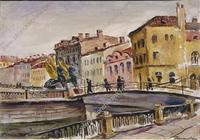
Leningrad. Lions Bridge.
Pyotr Konchalovsky
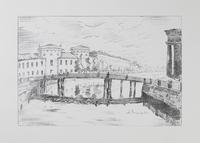
Lithuanian castle
Anna Ostroumova-Lebedeva
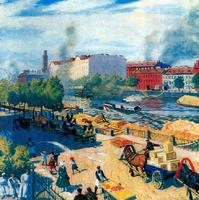
Fontanka
Boris Kustodiev
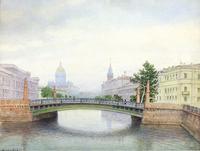
Potseluyev bridge
Albert Benois
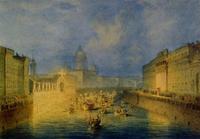
Illumination on the Moika Embankment in St. Petersburg
Vasily Sadovnikov
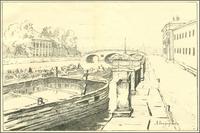
Academy of Arts
Anna Ostroumova-Lebedeva
Akaky Akakiyevich in the new coat
Boris Kustodiev
Bridge with griffins
Anna Ostroumova-Lebedeva