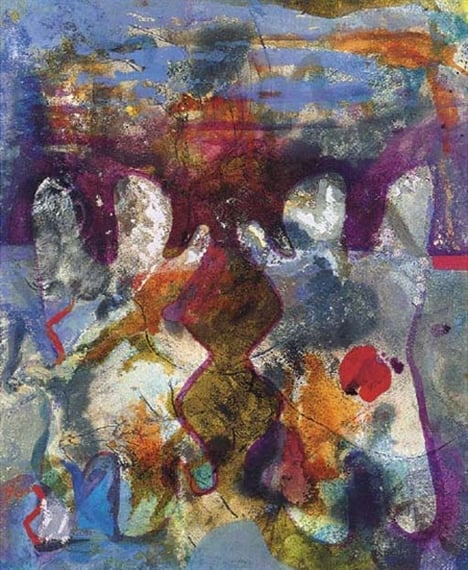
Abstract figures
Eileen Agar sanatçısının Abstract figures eseri hakkında uzman analizi
Tarz: Art Informel · Tür: abstract
Expert Analysis: "Abstract Figures" by Eileen Agar
Eileen Agar’s Abstract Figures occupies a distinctive position within the Art Informel movement—a post‑World War II European style that rejected geometric abstraction in favor of spontaneous, gestural, and material-driven expression. Although Agar is best known for her earlier Surrealist works, this piece demonstrates her evolution toward the intuitive, anti‑formalist language that defines Art Informel.
Significance within the Style
-
Tension between Figuration and Abstraction – True to the Art Informel ethos, Agar’s Abstract Figures hovers between recognizable form and sheer visual energy. The title itself signals a residual figuration, but the execution dissolves the human body into ambiguous, organic gestures. This ambiguity—what the French critic Michel Tapié called “unformed” art—allows the spectator to project meaning onto raw marks and textures, a core principle of Informel’s emphasis on process over representation.
-
Automatism and Materiality – Agar, who had participated in Surrealist experiments with automatic drawing, channels that unconscious spontaneity into the more brutal, tactile surfaces of Art Informel. The “figures” likely emerge from drips, scrapes, and layered paint, celebrating the physicality of the medium. This aligns with Informel’s rejection of polished composition in favor of chance and accident.
-
A Bridge between Surrealism and Post‑War Abstraction – While many Art Informel artists (e.g., Jean Fautrier, Wols) were reacting against Surrealism, Agar uniquely carries forward Surrealist psychic automatism into Informel’s gestural field. Her Abstract Figures thus becomes a rare female voice within a largely male‑dominated movement, proving that Surrealism’s liberating techniques could evolve into the raw, existential abstractions of the Cold War era.
Why This Work Matters
Abstract Figures is significant because it challenges the common assumption that Art Informel was purely non‑objective. By retaining the ghost of figuration—the “figures” in the title—Agar insists that abstraction can arise from, and still converse with, the human form. It also highlights the global reach of Informel: a British woman artist, deeply influenced by Surrealist meetings in Paris and Cornwall, translates continental Informel into a personal, lyrical idiom. In doing so, she expands the movement’s boundaries, proving that the “art of the informal” could be as psychological as it was material.
Tür
Stil
Görsel olarak benzer
İlişkili kompozisyon ve renk paletine sahip 20 eser
Mask 4
Willi Baumeister
Night
Willem de Kooning
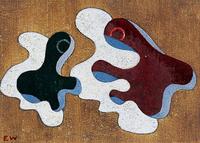
Conversation
Edward Wadsworth
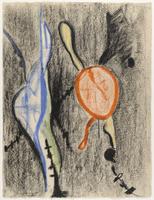
The Blessing
Barnett Newman
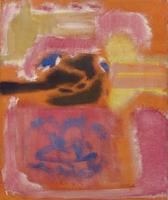
No. 9
Mark Rothko
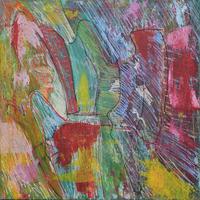
Mi.R Bb15
MAURIZIO D'ANDREA
Columna de figura grotescas
Wols
In the Mirror
George Stefanescu
Tennis
Willi Baumeister
Untitled
Willem de Kooning
Early Spring
Alfred Manessier
Voyage de Mozart à Prague
Endre Rozsda
Tablecloth VI
Pavlo Makov
Reddish Tennis
Willi Baumeister
Untitled
Vilen Barsky
Don Quixote
Carloluigi Colombo
Charred Beloved II
Arshile Gorky
Face and Figure
Christo Coetzee
Untitled
Maurice Esteve
(Abstract)
Bui Xuan Phai