Analysis of "Venus Rising From The Sea" by John Roddam Spencer Stanhope
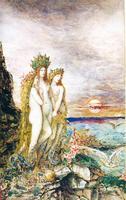
As a work of Romanticism in the mythological painting genre, Stanhope’s Venus Rising From The Sea exemplifies the Romantic fascination with classical myth reinterpreted through a lens of emotional intensity and sublime nature. The painting’s significance lies in its embodiment of key Romantic ideals: a return to allegory and ancient lore to explore human passion, vulnerability, and the awe-inspiring power of the natural world. By depicting Venus—the goddess of love—emerging from the sea, Stanhope merges the ethereal with the earthly, using the mythological subject to evoke both the transcendence and the raw, untamed forces of creation. Within the Romantic movement, this work stands as a testament to the era’s preference for dramatic, often turbulent scenes that privilege emotional resonance over neoclassical restraint. The choice of a mythological theme also allowed Stanhope to engage with the universal, timeless aspects of human experience, making the painting not merely a depiction of an ancient story but a profound meditation on beauty, birth, and the cycle of life—all hallmarks of Romantic art’s enduring significance.