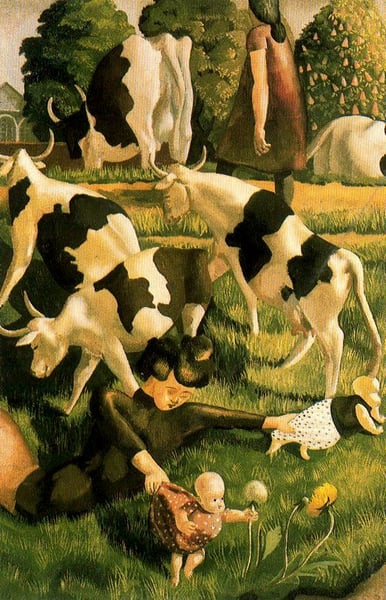
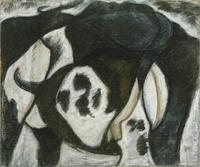
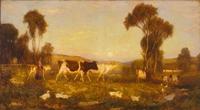
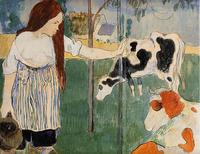
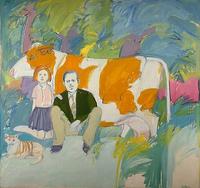
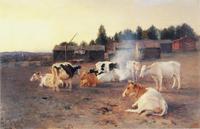
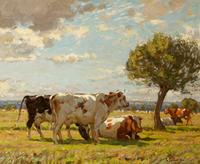
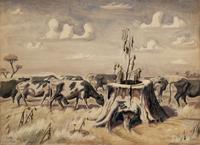
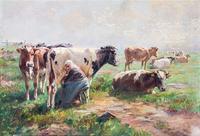
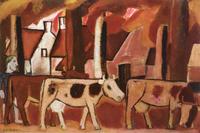
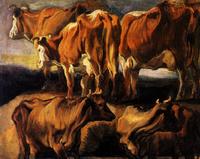
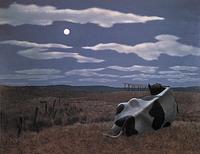
"Cows" by Stanley Spencer exemplifies the Neo-Romantic tendency to infuse ordinary rural subjects with a sense of visionary intensity. Spencer transforms a humble animal painting into a profound meditation on the sacredness of everyday life. Unlike the pastoral idealizations of earlier British landscape traditions, his cows are rendered with an almost obsessive, tactile attention to detail that elevates their presence to something monumental and spiritually charged. The composition fuses naturalistic observation with a dreamlike compression of space—characteristic of Spencer’s idiosyncratic style—where each cow seems to inhabit its own distinct aura, yet collectively they form a harmonious, almost ritualistic tableau. This work is significant because it demonstrates how Neo-Romanticism could find the sublime not in epic wilderness or mythic allegory, but in the quiet, repeating rhythms of farm life, making the mundane transcendent through Spencer’s singular vision of unity between creature, land, and divine order.