Expert Analysis: "The Roundabout" by Stanley Spencer
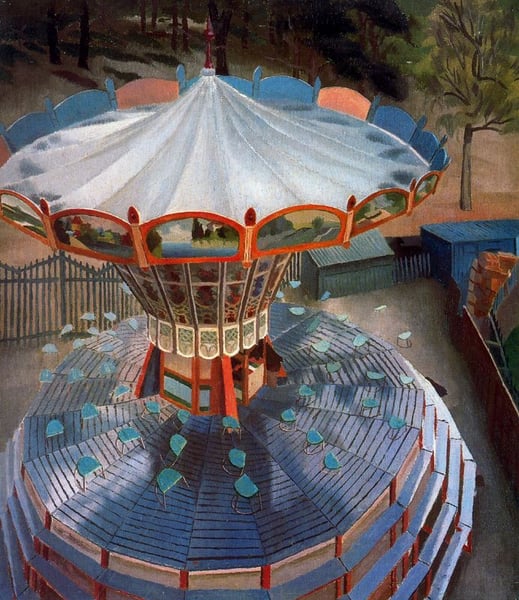
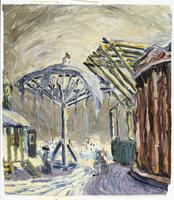
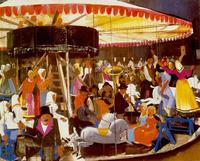
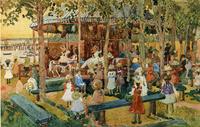
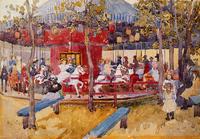
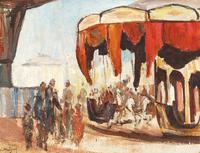
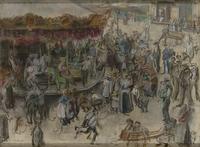
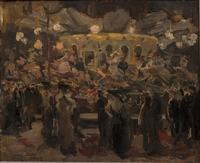
Stanley Spencer’s The Roundabout stands as a compelling, if idiosyncratic, contribution to British Neo-Romanticism. While this movement typically sought a mystical, often rural connection to the land—echoing the pastoral visions of Samuel Palmer or Paul Nash—Spencer stubbornly brings his spiritual, ultra-detailed gaze to the modern city. This cityscape is significant precisely because it fuses the mundane infrastructure of urban life with the transcendent everyday that defines Spencer’s oeuvre.
In The Roundabout, a traffic junction is transformed into a kind of modern pilgrimage site. The painting’s significance within Neo-Romanticism lies in its deliberate inversion of the movement’s usual escape from the industrial. Rather than turning away from the twentieth century, Spencer engages it head-on, finding a strange, almost sacramental beauty in the curves of the road, the patterns of cars, and the figures ambling through the scene. His characteristic, tightly packed composit