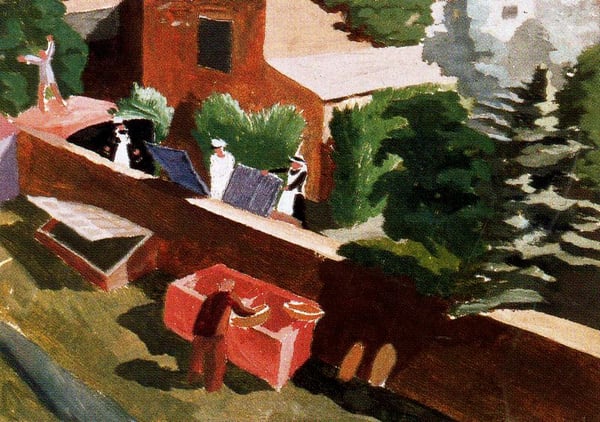
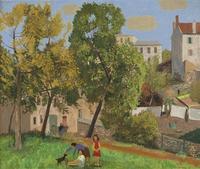
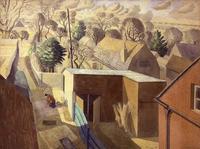
Stanley Spencer's Fernlea, Cookham epitomizes the Neo-Romantic fascination with the English countryside as a vessel for spiritual and personal introspection. Within this landscape genre, Spencer transforms a seemingly ordinary view of his beloved hometown into a profoundly intimate, almost visionary scene. The painting is significant for its meticulous, almost obsessive detail—every leaf, hedge, and cottage window is rendered with a precision that borders on the surreal, yet it remains grounded in a palpable sense of place. This duality reflects Neo-Romanticism’s core tension: a yearning for a pastoral, pre-industrial England fused with a modernist awareness of subjective perception. Spencer’s Cookham is not merely a topographical record; it is a personal mythology, where the mundane becomes sacred. The work’s significance lies in how it elevates domestic landscape to a realm of heightened emotional resonance, inviting the viewer to see the divine in the familiar.