Análisis experto de Palette II de Jim Dine
Estilo: Neo-Dada, Pop Art · Género: figurative
Expert Analysis of "Palette II" by Jim Dine
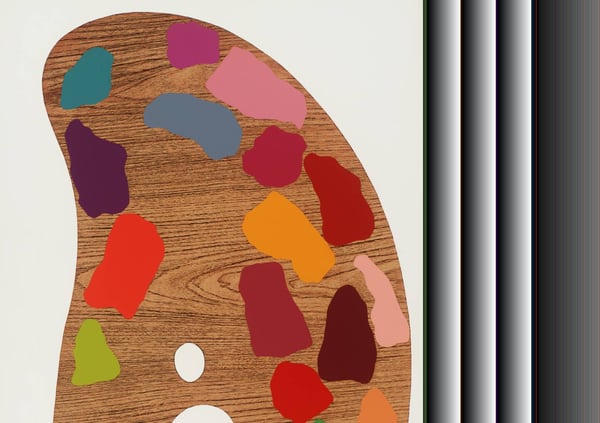
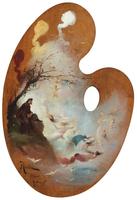
Jim Dine’s Palette II stands as a quintessential work that bridges the emotional rawness of Neo-Dada with the ironic detachment of Pop Art. Belonging to the artist’s long-running series of palette paintings, the work elevates a mundane studio tool—the painter’s palette—into a charged symbol of artistic identity and process. Its significance lies in how Dine collapses the distinction between the object of creation and the act of creation itself.
Within Neo-Dada, Palette II echoes the movement’s fascination with everyday objects and its critique of the sanctity of fine art. Dine, alongside contemporaries like Robert Rauschenberg and Jasper Johns, adopted the readymade ethos but infused it with a visceral, often autobiographical, gesture. The palette is not merely depicted; it is used as a canvas, its shape referencing the traditional support while its painted surface records Dine’s own mark-making. This self-referentiality—the painter holding a mirror to his own trade—aligns with Neo-Dada’s questioning of art’s boundaries. The palette becomes a “meta-painting,” a commentary on the artist’s labor and the physical remnants of creation.
As Pop Art, the work demonstrates Dine’s unique position: less cool and mass-media obsessed than Warhol or Lichtenstein, yet equally committed to the vernacular object. The palette is a functional item plucked from the studio, not the supermarket, but its repetition in Dine’s oeuvre (the “II” signals a series) treats it as a serial icon. Its figurative genre is deceptive—the palette is not a portrait of a person but of a tool, a proxy for the artist’s body and hand. Dine’s bold, gestural brushstrokes and drips—reminiscent of Abstract Expressionism—are deliberately flattened against the palette’s form, creating a tension between spontaneity and design. This tension defines his contribution to Pop: he retains the handmade, emotional stroke of earlier modernism while adopting Pop’s focus on recognizable, reproducible imagery.
Significance: Palette II encapsulates Dine’s central theme—the artist’s relationship to his materials. In a period when Pop Art was often critiqued as impersonal, Dine’s palette works insist on the presence of the maker. The palette is both a literal object and a metaphor for artistic consciousness. The work’s raw, painterly surface pays homage to Abstract Expressionist heroes while its conceptual framing (a painted palette of a palette) anticipates later appropriation and process art. It stands as a sophisticated, self-aware meditation on what it means to make a painting in an age of mechanical reproduction—an object that is at once a tool, a symbol, and a record of its own making. This layered meaning secures its place as a vital link between the personal mark and the impersonal icon.
Visualmente similares
20 obras con composición y paleta relacionadas
La palette de Dalí
Brassai
Untitled
Kerry James Marshall
Artist's palette
Jules Breton
ОДИНОЧЕСТВО
Artur Cuber
Palette
Mykhailo Vainshtein
Untitled (Painter)
Kerry James Marshall
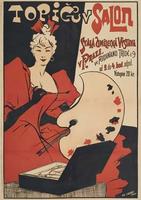
Topicuv Salon 1895
Viktor Oliva
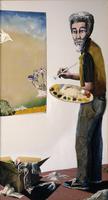
Portrait of a Collagist
Benny Andrews
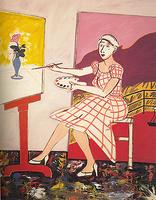
Self-Portrait
Joan Brown
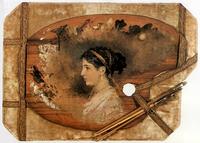
Portrait of a Woman on a Palette
Henryk Siemiradzki
Miss T
Edward Avedisian
Laundry Wars Green Load
Dan Goorevitch
Self-Portrait on a Palette
Delphin Enjolras
Ella y el mar y el pintor
Martin Pereira

Self Portrait. Myself at Work
Archibald Motley
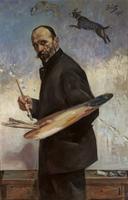
Self-Portrait
Julian Fałat
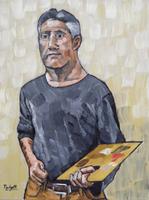
AP 1906 Self Portrait with Palette
Anthony Padgett
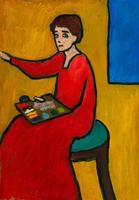
Beim Malen (wohl Marianne von Werefkin)
Gabriele Munter
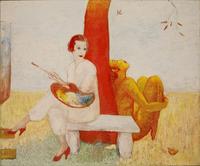
Self-Portrait with Palette (Painter and Faun)
Florine Stettheimer
Reverie (The Dream of the Monk)
Michel Simonidy