Joan Snyder の First Anniversary の専門的な分析
スタイル:Abstract Expressionism · ジャンル:abstract
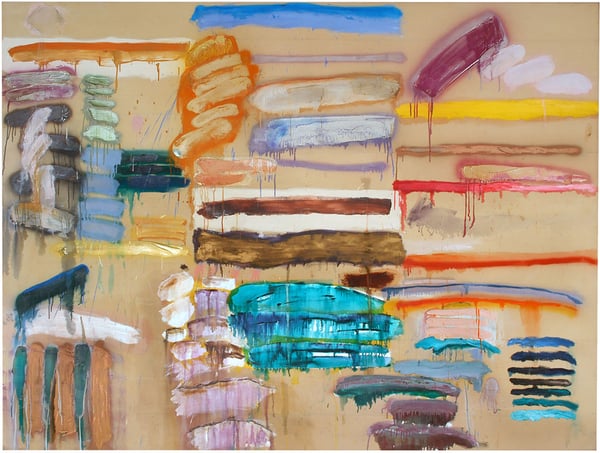
As an expert art historian, I will provide an analysis of "First Anniversary" by Joan Snyder, focusing on its significance within the context of Abstract Expressionism.
Artist & Context: Joan Snyder emerged in the late 1960s and 1970s, a period when Abstract Expressionism—long dominated by the "heroic," large-scale gestural painting of male artists like Pollock and de Kooning—was being critically re-examined. Snyder is a crucial figure in what might be called a "second generation" or even a feminist revision of the movement.
Analysis of "First Anniversary": While the specific visual details of this painting are not provided, the title itself—First Anniversary—is the key to understanding its significance within Abstract Expressionism. Early Abstract Expressionism was famously non-referential, rejecting narrative and symbolic content in favor of pure, universal emotion expressed through gesture and color. Snyder, however, boldly reintroduced the personal and biographical into the abstract vocabulary.
The work’s significance lies in its act of confronting the viewer with a specific, intimate time marker. This is not a generalized emotion of "joy" or "struggle"; it is a commemoration tied to a single relationship or event. This aligns Snyder with a critical shift in 1970s abstraction, where artists (particularly women) sought to infuse the grand, impersonal scale of Abstract Expressionism with the content of lived experience—without abandoning its core commitment to process and materiality.
Formal/Conceptual Significance within the Style:
-
A "Feminine" Abstraction: Abstract Expressionism was often coded as masculine (the aggressive drip, the forceful brushstroke). Snyder’s approach is often described as "gestural," but her marks are distinct: she uses lush, layered paint, sometimes with a sense of rot or decay, and introduces elements like strokes that resemble writing or calligraphy (though often illegible). In First Anniversary, one can imagine these marks acting as a kind of personal script or diary entry, making the canvas a record of a specific memory rather than a universalist statement.
-
Breaking the Taboo of Reference: By titling the work with a specific life event, Snyder challenges the orthodox "non-objective" purity of earlier Abstract Expressionism. She proves that abstraction can be both deeply personal and deeply formal. The "first anniversary" suggests a point of reflection, of memory, and perhaps of melancholy—emotions that the abstract language of color and line can convey without needing a recognizable figure or landscape.
-
Materiality as Meaning: While we lack specifics about the painting's materials, Snyder is known for using thick impasto, raw canvas, and even found elements like straw or fabric. In First Anniversary, the material texture—the scrape, the smear, the built-up crust of paint—can be read as a physical record of time itself, mirroring the temporal nature of a "first anniversary."
Conclusion: "First Anniversary" by Joan Snyder is significant because it represents a pivotal moment in the evolution of Abstract Expressionism. It demonstrates that the movement’s core principles of gestural energy and emotional impact could be expanded to include personal narrative and a feminist sensibility. Snyder didn't reject the power of abstraction; she domesticated and redirected it, proving that a canvas could be both a visceral, expressive object and a diary of a specific, human moment. The work stands as a powerful counter to the idea that abstraction must be anonymous or universal, cementing Snyder's role as a vital, transformative force within the style.
ジャンル
視覚的に類似
構図やパレットが近い作品 20 件
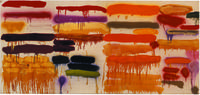
Summer Orange
Joan Snyder
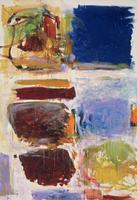
Blue Territory
Joan Mitchell
Abstract
Taro Yamamoto
Smashed Strokes Hope
Joan Snyder
Le passage de la Mer Rouge
Francois Arnal
Horses Upside Down
Sam Gilliam
Cause and Effect V
Basil Beattie
Bretagne
Charlotte Posenenske
Les hauts fleuris
Olivier Debre
Renfrew
Albert Irvin
Untitled
Moshe Kupferman
Capri
Gunther Forg
Untitled
Behjat Sadr
no title No. 309
Ben Vollers
Gewgaws
Kenneth Noland
Something Else
Ronnie Landfield
Champs
Joan Mitchell
Distant View
Friedel Dzubas
New York Summer Landscape
John Ferren
Untitled
Helen Frankenthaler