
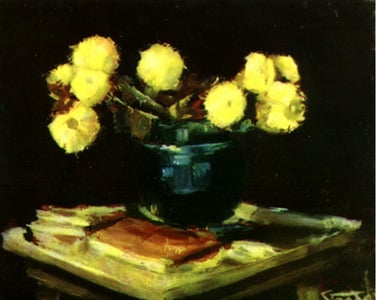
Cârciumărese
Expertenanalyse zu Francisc Siratos Cârciumărese
Stil: Post-Impressionism · Genre: flower painting
Expert Analysis of “Cârciumărese” by Francisc Sirato
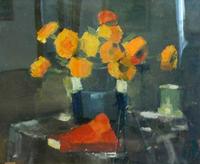
Despite its title—which translates to “barmaids” or “tavern women”—the supplied facts identify this work as a flower painting within the Post-Impressionist style. This apparent contradiction is itself significant: it suggests Sirato may have been playing with genre conventions, using the floral subject as a metaphor for the transient, lively, or even “painted” nature of tavern life. Alternatively, the work might depict flowers arranged in a setting that evokes a tavern interior, a subtle nod to the everyday environments of his native Romania.
Significance within Post-Impressionism:
-
Color and emotional intensity: Like his contemporaries Cézanne, Van Gogh, and Gauguin, Sirato uses color not merely to describe but to convey mood. In “Cârciumărese,” expect bold, non-naturalistic hues—perhaps hot reds, deep purples, or acidic greens—that radiate a sense of vitality and slight dissonance, mirroring the charged atmosphere of a rural inn.
-
Expressive brushwork: Post-Impressionist flower painting often abandoned tight botanical accuracy for thick, visible strokes (impasto) that record the artist’s hand and emotional state. Sirato’s handling likely adds tactile energy to petals and leaves, making the bouquet feel almost restless—a still life that pulses with life.
-
Symbolic layering: While the genre is “flower painting,” the title invites interpretation. Flowers in Post-Impressionism can symbolize fleeting beauty, earthly pleasure, or decadence—themes equally apt for tavern scenes. By conflating a floral subject with a human setting, Sirato pushes the genre toward a kind of double meaning, a hallmark of the period’s interest in psychological depth.
Artistic Context:
Francisc Sirato (1877–1953) was a leading figure in Romanian modernism, exposed to French Post-Impressionism during his studies in Paris and Munich. “Cârciumărese” likely belongs to his mature period, when he synthesized Western influences with local motifs. The work’s significance lies in how it domesticates Post-Impressionism’s revolutionary color and form, planting them firmly in the earthy, folkloric soil of Romania—a flower painting that blooms with national identity and universal emotion.
In short, this painting is a masterful example of Post-Impressionist still life that transcends its genre through color, texture, and a poetically mismatched title, inviting viewers to read between the petals.
Visuell ähnlich
20 Werke mit ähnlicher Komposition und Farbpalette
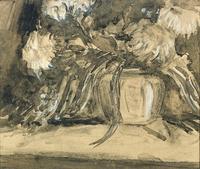
Jar of chrysanthemums
Theo van Doesburg
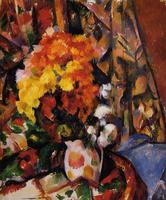
Chrysanthemums
Paul Cezanne
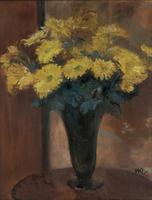
Flowers
Wojciech Weiss
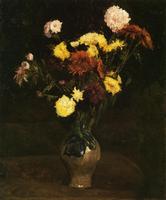
Basket of Carnations and Zinnias
Vincent van Gogh
Chrysanthemums
Guy Rose
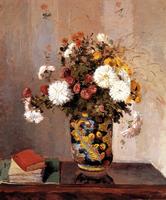
Chrysanthemums In a Chinese Vase
Camille Pissarro
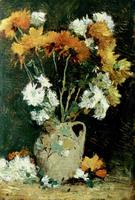
Tufănele în ulcică
Stefan Luchian
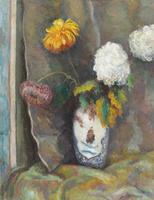
Chrysanthemums in Japanese Vase
Samuel Mutzner
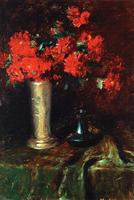
Still Life - Flowers
William Merritt Chase
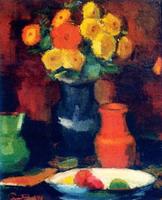
Cârciumărese
Francisc Sirato
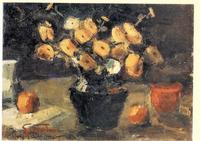
Flowers
Francisc Sirato
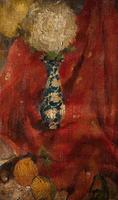
Flowers
Aydin Aghdashloo
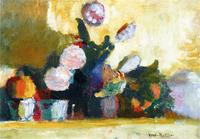
Snowballs
Henri Matisse
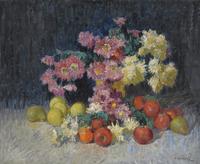
Still Life with Flowers and Fruit
Konstantin Gorbatov
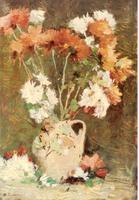
Chrysanthemums
Stefan Luchian
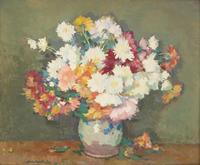
Pipkin with Chrysanthemums
Adam Baltatu
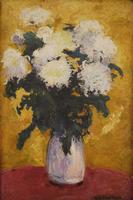
Crisantemos
Andres de Santa Maria
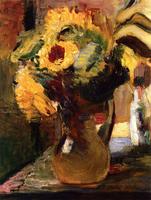
Bouquet of Sunflowers
Henri Matisse
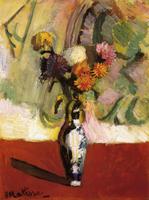
Chrysanthemums in a Chinese Vase
Henri Matisse
Yellow Flowers
Francisc Sirato