Analisi esperta di Landscape di Jean Metzinger
Stile: Cubism, Neo-Impressionism · Genere: landscape
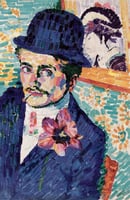
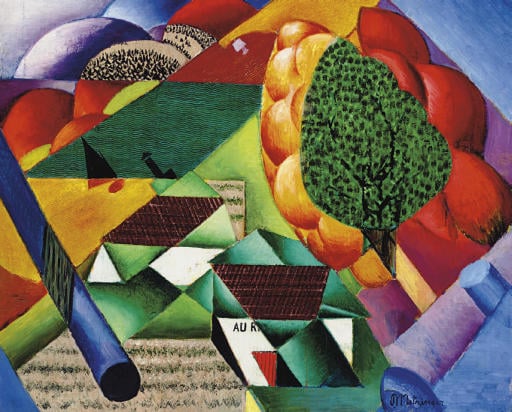
Jean Metzinger's Landscape stands at a pivotal intersection of two major avant-garde movements: Neo-Impressionism and Cubism. While Metzinger is primarily known as a founding theorist of Cubism—co-authoring Du "Cubisme" with Albert Gleizes in 1912—this work demonstrates his unique transitional phase, where he fused the color theory of Georges Seurat and Paul Signac with the emerging geometric fragmentation of form.
Significance within Cubism and Neo-Impressionism:
-
Synthesis of Color and Structure: Metzinger retains the Neo-Impressionist commitment to optical mixing and vibrant, dotted brushwork, but he reorganizes the landscape into faceted, crystalline planes. Instead of dissolving form into pure light (as Seurat might), he uses color to articulate volume and spatial depth, creating a "mobile perspective" that views the scene from multiple angles simultaneously—a hallmark of early Cubism.
-
Bridge between Movements: Unlike the more austere, monochromatic Cubism of Picasso and Braque (1909–1911), Metzinger’s palette remains lush and varied. Landscape exemplifies his belief that color and form should be equally expressive. This work anticipates the later "synthetic" phase of Cubism, where decorative color and pattern become central.
-
Theoretical Grounding: Metzinger’s approach was heavily intellectual. In this painting, the viewer sees not just a pastoral scene, but a visual argument: that reality can be reconstructed on the canvas through a logical, geometric language. The trees, hills, and sky are reduced to interlocking shards, yet the whole remains legible. This balance between abstraction and representation was crucial to the development of non-figurative art.
-
Landscape as Laboratory: For Metzinger, landscape provided an ideal subject to test these ideas. Unlike a still life or portrait, a landscape offers unlimited spatial cues—horizons, receding paths, overlapping foliage—allowing him to dissect and reconfigure space itself.
In essence, Landscape by Jean Metzinger is significant as a document of Cubism's evolution, proving that the movement was not a rejection of earlier modernist principles but a complex dialogue with them. It marks the moment when Neo-Impressionist color theory was grafted onto Cubist geometry, paving the way for a more expressive and colorful abstraction in the years to follow.
Visivamente simili
20 opere con composizione e palette affini
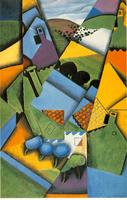
Landscape with House at Ceret
Juan Gris
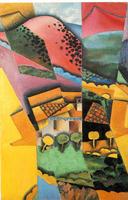
Landscape at Ceret
Juan Gris
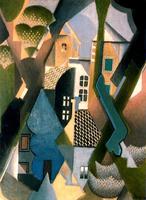
The Village
Jean Metzinger
Landscape
Enrico Prampolini
Costruzione spaziale - paesaggio
Enrico Prampolini
Paysage cubiste
Auguste Herbin
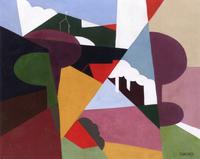
Landscape, La Ciotat
Georges Valmier
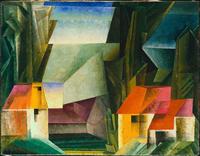
Hopfgarten
Lyonel Feininger
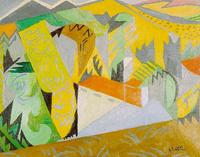
Mirmande jaune
André Lhote
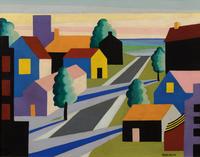
Houses and Street
O. Louis Guglielmi
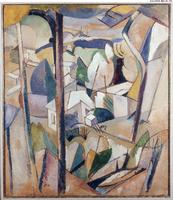
Untitled
Albert Gleizes
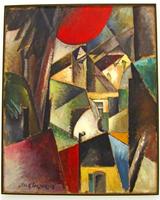
Landscape with Mill
Albert Gleizes
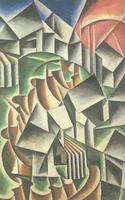
Birsk
Lyubov Popova
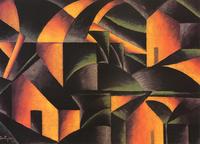
Yellow-Green Landscape
Sandor Bortnyik
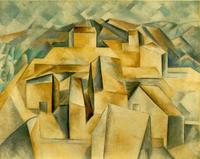
Houses on the hill
Pablo Picasso
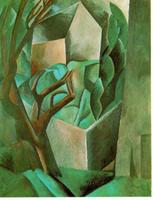
House in the garden
Pablo Picasso
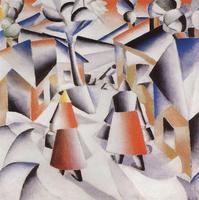
Morning in the Village after Snowstorm
Kazimir Malevich
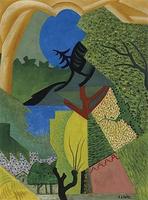
Paysage au Lambrequin Rose
André Lhote
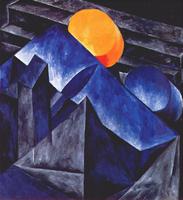
Composition
Natalia Goncharova
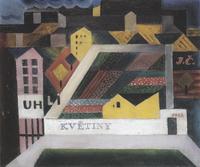
Předměstské zahradnictví
Josef Capek