Expert analysis of Piero Manzoni’s Achrome
Style: Minimalism · Genre: abstract
Expert Analysis: Achrome by Piero Manzoni
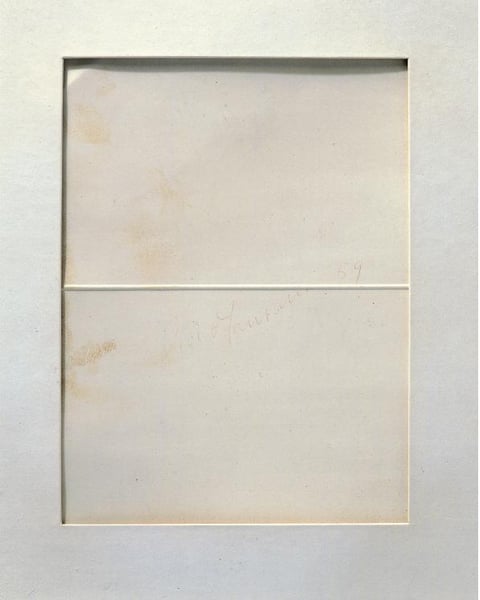
In the context of Minimalism and abstract art, Piero Manzoni’s Achrome series (1957–1963) stands as a radical precursor to the movement’s core tenets—yet it also subverts them. Where high Minimalism later sought geometric purity and industrial rigor, Manzoni’s Achrome (the name means “without color”) reduces painting to its most elemental state: a monochrome white surface, stripped of hue, narrative, and emotional expression. The work is not merely a white canvas; it is a deliberate negation of nearly every traditional painterly value.
Significance within Minimalism and Abstract Art
-
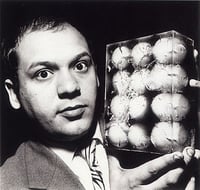
Reduction to Materiality: Manzoni created his Achromes using materials such as kaolin (porcelain clay), cotton wadding, synthetic fibers, and even bread rolls, all coated in white. Rather than applying pigment, he allowed the physical substance itself to create the surface. This elevates material over gesture, anticipating Minimalism’s later obsession with objecthood and literal presence. The Achrome is not a representation of something—it is something: an object embedded in the real world.
-
Refusal of Meaning: By erasing color, composition, and symbolic content, Manzoni rejects the very idea of artistic communication. The Achrome offers no allegory, no emotion, no “inner truth.” This nihilistic purity aligns with the Minimalist goal of eliminating personal expression, but Manzoni goes further: he turns the painting into a tautology. As he stated, “There is nothing to say: there is only to be.” This conceptual stance makes the Achrome a crucial bridge between Abstract Expressionism’s romantic excesses and the later cerebral strategies of Conceptual Art.
-
Precursor to Minimalist Seriality: Manzoni produced dozens of Achromes, each slightly different in texture and structure yet identical in their whiteness. This serial approach—repeating a single, self-contained form—foreshadows the grid-based works of Sol LeWitt and the repetitive industrial panels of Donald Judd. Yet Manzoni’s method is more organic: he often soaked cloth in kaolin and let it dry, creating accidental folds and ridges. The result is a “zero degree” of art that anticipates the movement’s embrace of chance and process.
-
Challenging the Painterly Canvas: The Achrome undermines the traditional support of painting. By using non-art materials (absorbent cotton, fiberglass, rabbit fur), Manzoni declares that the canvas itself is no longer sacred. The surface becomes a skin, a membrane—an object to be sensed rather than seen. This aligns with the Minimalist desire to collapse the boundary between painting and sculpture, making the work a physical presence in the viewer’s space.
-
Legacy: Manzoni’s Achrome is often cited as a direct antecedent to Robert Ryman’s white paintings and to the monochrome investigations of the 1960s and 1970s. But where later artists used white as a vehicle for painterly nuance, Manzoni’s white is an absence—a void that refuses to yield meaning. In this sense, the Achrome is more radical than any later Minimalist monochrome: it is the blank page that does not wait to be filled, the ultimate refusal of art’s explanatory power.
Conclusion
The significance of Achrome lies in its uncompromising reductivism. Manzoni strips abstract painting down to a material fact—a white, textured surface—and in doing so, he challenges the viewer to confront the limits of perception, meaning, and the very definition of art. It is a work that belongs to Minimalism only by way of anticipation; its true home is at the threshold where Minimal meets Conceptual, where substance becomes idea, and where the “nothing” becomes everything.
Genre
Style
Visually similar
20 works with related composition and palette
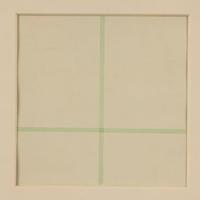
Spazio Luce
Antonio Calderara
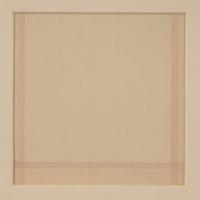
Spazio Luce
Antonio Calderara
Erased de Kooning
Robert Rauschenberg
Untitled
Agnes Martin
Spazio Luce
Antonio Calderara
Lago d'Orta
Antonio Calderara
Pequeña poesía en prosa
Francis Naranjo
Untitled (White Out)
Rirkrit Tiravanija
Spazio Luce
Antonio Calderara
Spazio Luce
Antonio Calderara
Untitled
Brice Marden
Untitled
Brice Marden
Twentieth Century Ikon Series 8.8.67 IV
Bob Law
Ha nevicato
Antonio Calderara
Untitled
Fred Sandback
Blue Line
Robert Ryman
Untitled
Robert Grosvenor
Untitled
Agnes Martin
Untitled
Gotthard Graubner
4097 Rain on Ther Streets
MF ARLO