Expertenanalyse zu Andy Warhols Statue of Liberty
Stil: Pop Art · Genre: figurative
Expert Analysis: Andy Warhol’s Statue of Liberty (Pop Art, Figurative)
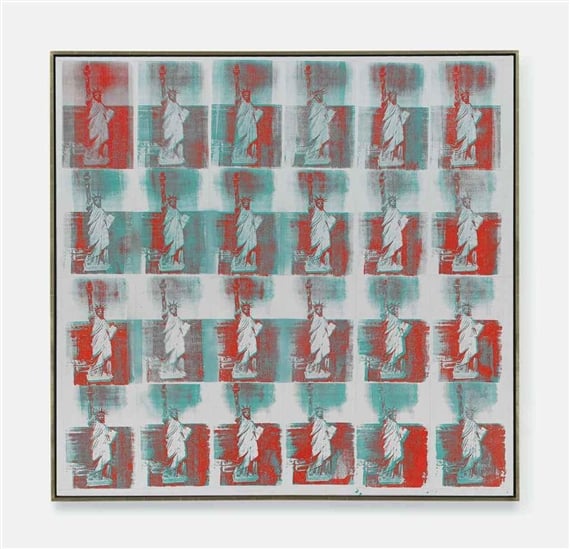
As an art historian, I examine Andy Warhol’s Statue of Liberty through the lens of its Pop Art context. Created in the 1960s or 1980s (Warhol returned to the subject multiple times), the work exemplifies Warhol’s signature strategy of appropriating instantly recognizable cultural icons. The Statue of Liberty—a national symbol of freedom, immigration, and the American Dream—is here stripped of its monumental grandeur and re-presented through the mechanical, mass-produced aesthetic of silkscreen printing.
Significance within Pop Art:
-
Democratization and Debasement of Icons – Warhol treats Lady Liberty like a consumer product, repeating her image in varying colors (e.g., green, gold, red) or stark black-and-white. This repetition echoes the endless reproduction of advertising imagery, flattening a sacred patriotic emblem into a commodified sign. By doing so, Warhol questions how mass media dilutes meaning: the Statue becomes as disposable as a soup can.
-
Commentary on American Identity – Unlike Romantic or documentary depictions, Warhol’s version is deliberately flat, often with off-register printing that suggests imperfection. The cracks, smears, and shifting colors hint at the statue’s aging and the contested nature of the ideals it represents. In a period of social upheaval (Vietnam War, civil rights movement), Warhol’s Statue is both a celebration of American kitsch and a critique of its hollowed-out symbolism.
-
Extension of Seriality – Warhol’s series of Statue of Liberty works (alongside the Mona Lisa, Elvis, and Marilyn) treat the monument as a “star.” By serializing it, he aligns national heritage with celebrity culture, arguing that both are products of constant media reproduction. The piece thus embodies Pop Art’s core mission: to dissolve the boundary between high art and popular imagery.
In summary, Warhol’s Statue of Liberty is significant for its deadpan, industrial treatment of a sacred American totem. It forces viewers to see the statue not as an ideal but as a circulated image—one that can be bought, sold, and endlessly replicated, much like the nation’s own promises.
Visuell ähnlich
20 Werke mit ähnlicher Komposition und Farbpalette
Liberty
Mihnea Cernat
The liberty statue line art
Muntadher Saleh
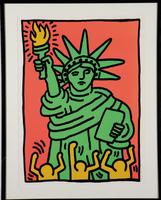
Statue of Liberty
Keith Haring
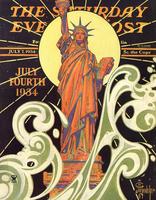
The Saturday Evening Post.
J. C. Leyendecker
Untitled (Statue of Liberty)
TRACY 168
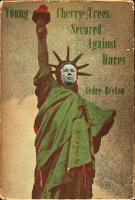
Cover for "Young Cherry Trees Secured Against Hares"
Marcel Duchamp
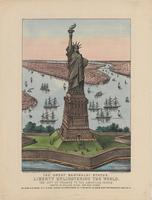
The great Bartholdi statue, liberty enlightening the world. The gift of France to the American people
Currier and Ives
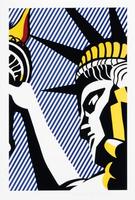
I Love Liberty
Roy Lichtenstein
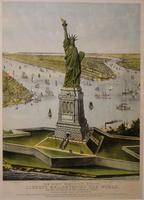
The Great Bartholdi Statue
Currier and Ives
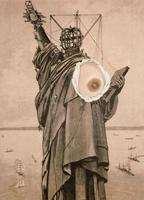
Statue of Liberty
Jindrich Styrsky
New York
Tadanori Yokoo
Liberty Head
Peter Max
American Spirit
Robert Silvers
Ridiculous Portrait (Statue of Liberty)
May Wilson
Statue of Liberty Unveiled
Edward Moran
Back in the New York Groove
Stickman
We Came to America
Faith Ringgold
Edward Moran
Andrey Allakhverdov
New York Proyectado
Loutphi
Liberty
Sue Coe