Análisis experto de Peinture de Simon Hantai
Estilo: Surrealism, Tachisme · Género: abstract
Expert Analysis of Simon Hantai’s Peinture (c. 1950s–60s)
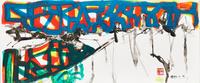
Simon Hantai’s Peinture stands as a pivotal intersection between two major mid‑20th‑century movements: Surrealism and Tachisme. While Surrealism prized psychic automatism and the unconscious mark, Tachisme—a French strain of Abstract Expressionism—emphasized spontaneous, gestural brushwork and the materiality of paint itself. Hantai, a Hungarian‑born painter who settled in Paris, was deeply influenced by André Breton’s Surrealist circle before developing his signature pliage (folding) technique, but Peinture represents a transitional moment: the work retains the Surrealist interest in irrational, untamed form while embracing the Tachiste commitment to pure painterly gesture and freedom from representation.
Significance within its Style and Period
-
Bridging Surrealist automatism and Tachiste abstraction
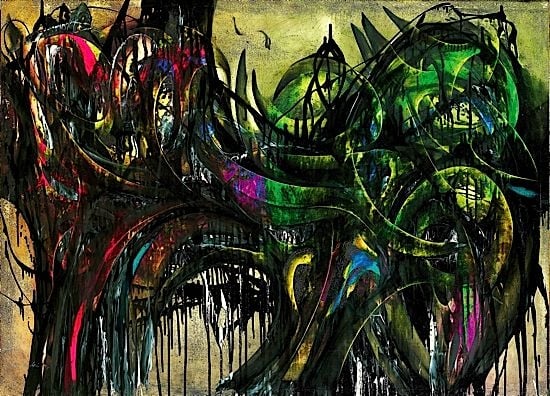
In Peinture, Hantai channels the Surrealist belief in accessing the unconscious through automatic drawing, but he redirects that impulse into large‑scale, all‑over composition. The absence of figurative or symbolic motifs pushes the work fully into abstraction, aligning it with the Tachiste desire to let paint speak for itself—drips, smears, and rhythmic strokes become the sole “subject.” This synthesis helped legitimize gestural abstraction in postwar France, where Surrealism’s dogma had long resisted formal abstraction. -
Early evidence of Hantai’s material experimentation
Even before his iconic folded canvases, Peinture demonstrates Hantai’s fascination with process. The thick, layered impasto and erratic trails of color suggest a painting made through physical engagement rather than premeditated design—a hallmark of both Tachiste practice and Hantai’s later methods. Critics have noted that works like Peinture foreshadow his radical technique of crumpling canvas to create painterly “blind” marks, thereby transferring agency from the artist’s hand to the material itself. -
A counterpoint to American Abstract Expressionism
While contemporaneous works by Pollock or de Kooning dominated the transatlantic avant‑garde, Hantai’s Peinture exemplifies a distinctly European response: it retains a Surrealist‑tinged mystery and a sense of organic growth (reminiscent of Miró’s biomorphism) rather than the heroic, often aggressive scale of American action painting. In this sense, Peinture is significant as a marker of Tachisme’s unique identity—lyrical, allusive, and rooted in French philosophical traditions of l’informe (the formless). -
Influence on later movements
By pushing Surrealism into full abstraction and foregrounding process over image, Hantai’s Peinture contributed to the theoretical foundations of Support/Surface (a French movement of the 1960s that deconstructed the canvas itself) and anticipated the “materialist turn” in European painting. Its significance lies not only in its aesthetic achievement but in its role as a laboratory for ideas that would redefine painting in the latter half of the 20th century.
In summary, Peinture is not merely an abstract composition; it is a historical document of a painter navigating the crosscurrents of Surrealism and Tachisme, forging a path that would lead to one of the most original bodies of work in postwar European art. Its raw, unapologetic materiality remains a compelling testament to Hantai’s lifelong investigation of the painted surface.
Género
Estilo
Visualmente similares
20 obras con composición y paleta relacionadas
Peinture
Simon Hantai
Leaves III
Jean-Paul Riopelle
Untitled
Karl Otto Gotz
Ladybug
Joan Mitchell
Untitled (The Clash)
Futura 2000
Mambo
Robert Goodnough
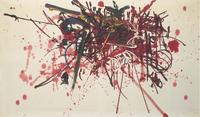
Le massacre de Vassy
Georges Mathieu

Number 10
Jackson Pollock
Talladega Three II, from the Circuits series
Frank Stella
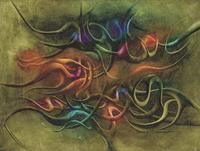
Peinture
Simon Hantai
Dedication to Vinyl and Pop Art I: Landscape
Alfred Freddy Krupa
Untitled
Joan Mitchell
Le Duc Charles épouse la Duchesse de Bourgogne
Georges Mathieu
Imrie
Mary Abbott
Abstract Composition 6
Aurel Cojan
Mask
Gary Wragg
Untitled
Fritz Winter
The boat
Alan Tellez
Claudia
Norman Bluhm
Dedication to Vinyl and Pop Art I: Landscape
Alfred Freddy Krupa