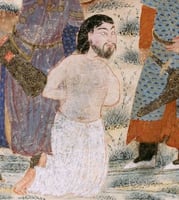
Ahmad Musa sanatçısının Bahram Gur kills the wolf eseri hakkında uzman analizi
Tarz: Ilkhanid · Tür: miniature
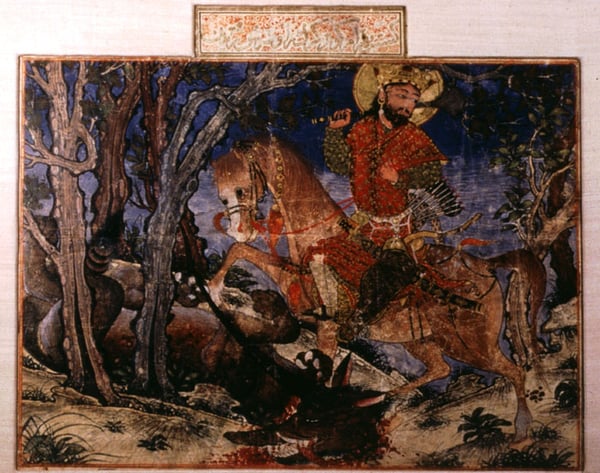
Expert Analysis: "Bahram Gur kills the wolf" by Ahmad Musa
This miniature, attributed to the renowned Ilkhanid painter Ahmad Musa, is a pivotal work within the Persian miniature tradition. Active in the 14th century under the Mongol Ilkhanate, Ahmad Musa is credited with reviving Persian painting after the destructive invasions, synthesizing indigenous Persian forms with imported Chinese and Mongol aesthetics.
Significance within the Ilkhanid Style:
- Cultural Fusion: The composition exemplifies the Ilkhanid blending of Persian narrative clarity with Chinese landscape conventions. The wolf and the hero Bahram Gur are locked in a dynamic, linear struggle that recalls Persian epic illustration, while the treatment of rocky outcrops, cloud bands, and foliage shows direct influence from Song and Yuan dynasty painting. This hybridization marks a turning point in Islamic art, moving away from the more abstract, frontally oriented Seljuk style toward a naturalistic, spatially coherent mode.
- Narrative Innovation: The scene captures a specific moment from Ferdowsi's Shahnameh (Book of Kings)—Bahram Gur's hunting prowess. Rather than a static, iconic depiction, Ahmad Musa conveys motion and tension: the wolf recoils, Bahram leans forward with his sword, and even the horse's posture suggests energy. This dynamic storytelling anticipates the heightened drama of later Persian miniature schools (e.g., Herat under Baysunghur).
- Technical Mastery: The miniature’s sinuous linework, subtle modeling of drapery, and controlled palette of deep blues, warm ochres, and vermillion demonstrate Ahmad Musa’s skill. The use of negative space and the rhythmic arrangement of figures against a shallow, patterned ground plane reflect a sophisticated understanding of balance.
- Historical Role: Ahmad Musa is often described by later sources (such as the Safavid chronicler Qazi Ahmad) as the "father" of Persian painting. This miniature—likely from the famous Great Mongol Shahnama (Demotte Shahnama, ca. 1330s)—is a key surviving example of his transformative approach. It represents the moment when Persian painting absorbed East Asian influences without losing its epic, lyrical character, setting the stage for the Timurid and Safavid golden ages.
In summary, "Bahram Gur kills the wolf" is not merely a decorative leaf; it is a landmark in the evolution of the Persian miniature, exemplifying the cultural synthesis, narrative vitality, and technical brilliance of the Ilkhanid period.
Görsel olarak benzer
İlişkili kompozisyon ve renk paletine sahip 20 eser
Bahram Gur and the Dragon
Ahmad Musa
Khosrow Anushiravan And Minister
Hossein Behzad
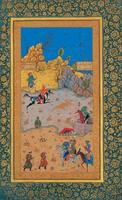
Hunting Ground
Kamal ud-Din Behzad
Untitled
Hossein Behzad
Game of polo
Hossein Behzad
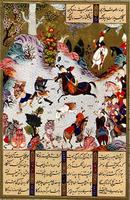
Tahmuras Defeats the Divs. Miniature from Shahname
Sultan Muhammad
Iskandar at Israfil (detail)
Ahmad Musa
Bathing Shirin
Hossein Behzad
From the Khamsa of Nizami: The Old Woman complaining to Sultan Sanjar
Sultan Muhammad
Ardashir fights Bahman
Ahmad Musa
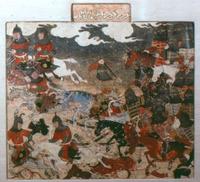
Darab and Rastnawan fight the Rumis
Ahmad Musa
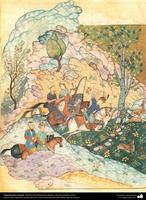
Khosrow Parviz Hunting
Hossein Behzad
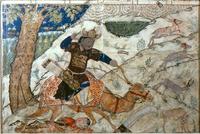
Bahram Gur tramples Azadeh
Ahmad Musa
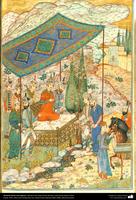
Khosrow Parviz and passengers
Hossein Behzad
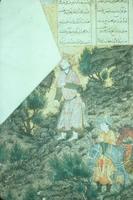
Iskandar at Israfil
Ahmad Musa
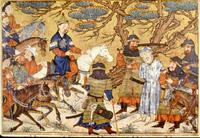
Ardashir captures Ardawan
Ahmad Musa
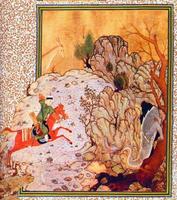
Bahram and Dragon
Kamal ud-Din Behzad
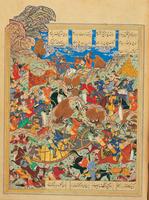
Battleground of Timur and Egyptian King
Kamal ud-Din Behzad
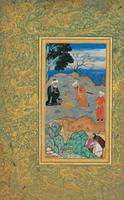
Advice of the Ascetic
Kamal ud-Din Behzad
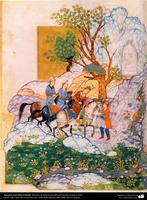
Meeting between Shirin and Farhad
Hossein Behzad