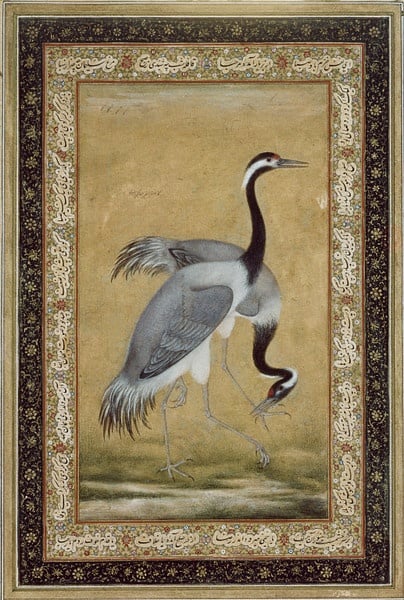
Two Cranes
Expert analysis of Ustad Mansur’s Two Cranes
Style: Mughal · Genre: animal painting
Ustad Mansur’s Two Cranes stands as a masterwork of Mughal animal painting, a genre that reached its zenith under the reign of Emperor Jahangir. The painting exemplifies the Mughal court’s unique fusion of scientific naturalism and refined aesthetic sensibility—a hallmark of the era’s imperial workshop.
Naturalistic Precision as Courtly Virtue
What makes Two Cranes significant is its almost ornithological accuracy combined with an elegant, decorative composition. Mansur, celebrated for his meticulous studies of the natural world, captures every detail—from the delicate curve of the birds’ necks to the subtle shading of their plumage. This precision was not mere artistry; it reflected Jahangir’s personal fascination with rare species and his demand for visual documentation that rivaled contemporary European natural history illustrations.
Symbolism and Status
In Mughal courtly culture, cranes symbolized longevity, grace, and vigilance. By isolating these two birds in a balanced, almost heraldic arrangement, Mansur elevates them to subjects of princely contemplation. The empty, luminous background focuses the viewer entirely on the birds’ forms, transforming a species study into an emblem of imperial authority over the natural world—a subtle assertion of the emperor’s role as a connoisseur and master of creation.
Technical Mastery in Miniature
Painted in opaque watercolor on paper, the work demonstrates the Mughal atelier’s supreme control of line and color. The delicate brushwork, the layering of translucent washes to model volume, and the restrained palette (ochres, whites, and cool grays) all contribute to an image that feels both scientifically objective and spiritually serene. This balance between documentation and decoration is the defining achievement of Mughal animal painting, and Two Cranes encapsulates it with clarity and grace.
In sum, Two Cranes is not merely a portrait of birds—it is a testament to the Mughal empire’s global curiosity, its sophisticated artistic traditions, and its belief that understanding nature was a path to understanding power.
Visually similar
20 works with related composition and palette
Red crowned Crane
Ohara Koson
Two white cranes
Ohara Koson
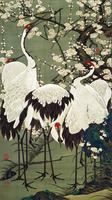
Plum Blossoms and Cranes
Ito Jakuchu
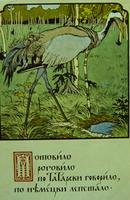
Crane
Ivan Bilibin
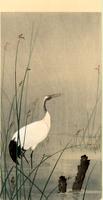
Crane in small water
Ohara Koson
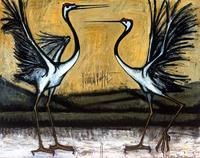
Les grues d'Hokkaido: deux oiseaux combattants
Bernard Buffet
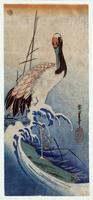
Crane in Waves
Hiroshige
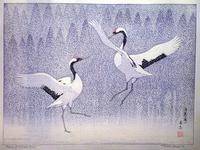
Dance of Eternal Love
Toshi Yoshida
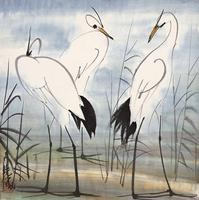
Thinking Three Times
Lin Fengmian
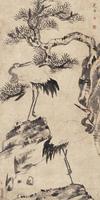
Pine and Cranes
Bada Shanren
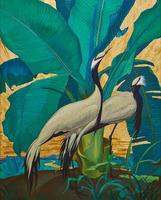
Demoiselle Cranes
Jessie Arms Botke
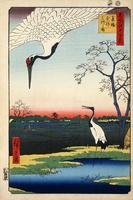
102. Minowa, Kanasugi and Mikawashima
Hiroshige
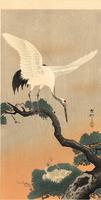
Crane over his nest
Ohara Koson
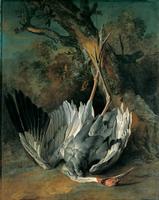
Dead Crane
Jean-Baptiste Oudry
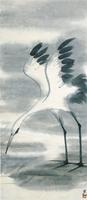
Egret
Lin Fengmian
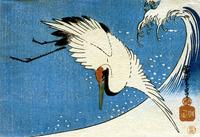
Crane and Wave
Hiroshige
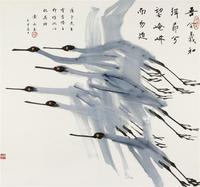
Cranes
Huang Yongyu
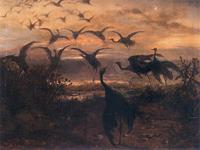
flight of cranes
Józef Chełmoński
White Birds in Snow
Ohara Koson
Flight of Cranes
Józef Chełmoński