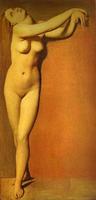
Expert analysis of "Female Model, Florentine" by Christoffer Wilhelm Eckersberg:
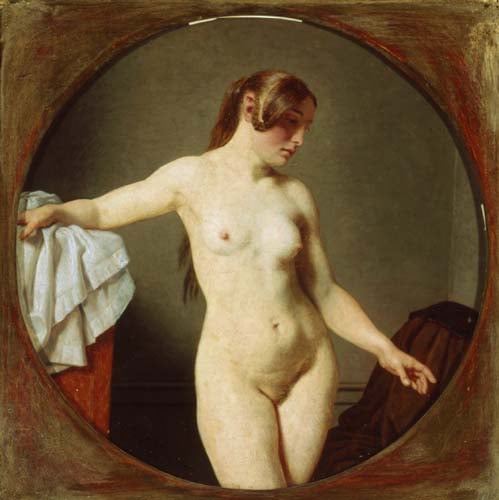
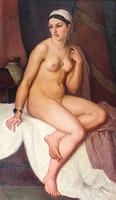
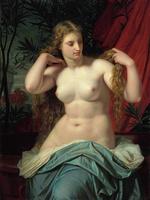
As a work of Neoclassicism in the genre of the nude painting, this piece exemplifies the period’s devotion to clarity, order, and the idealized human form. Eckersberg—a central figure of the Danish Golden Age—combined strict Neoclassical discipline with a naturalistic observation of the model, moving beyond mere academic formula. The title’s reference to “Florentine” likely evokes the Renaissance ideal of balanced, harmonious proportions rooted in classical antiquity.
What makes this work significant within its style and period is its dual allegiance: it adheres to the Neoclassical emphasis on sculptural firmness and anatomical precision, yet captures a sense of individual presence and quiet dignity. In doing so, Eckersberg bridges the rigorous formalism of late Neoclassicism with the emerging naturalism that would define later 19th-century painting. The painting stands as testament to the academic tradition of the nu (nude) as a vehicle for exploring both timeless beauty and human specificity—a hallmark of Eckersberg’s enduring influence on Nordic art.