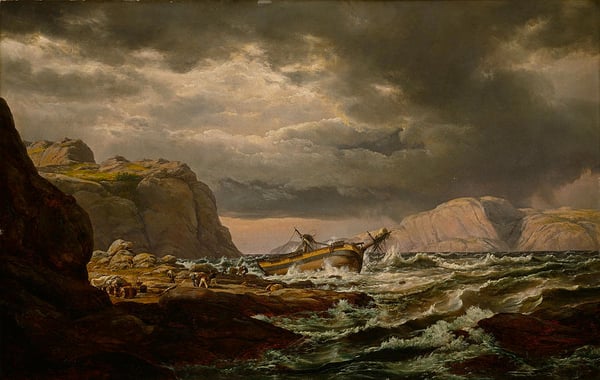
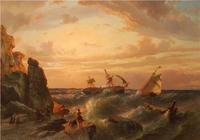
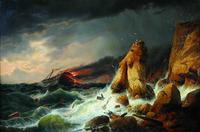
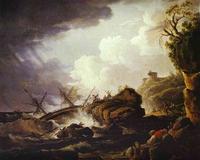
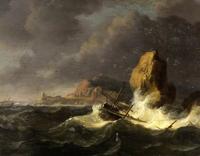
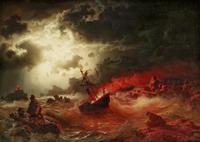
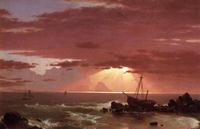
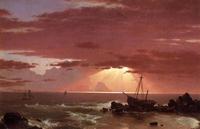
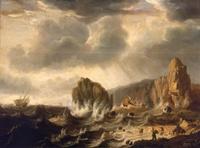
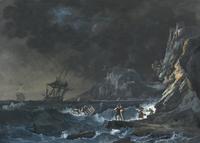
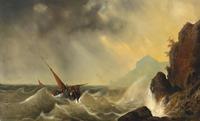
Given the supplied structured facts—"Shipwreck on the Coast of Norway" by Johan Christian Dahl, Style: Romanticism, Genre: marina—the artwork's significance can be analyzed strictly within those parameters.
Within the Romantic period, the marina genre often served as a vehicle for exploring the sublime—the overwhelming power and danger of nature. A shipwreck scene directly embodies this Romantic ideal: human fragility pitted against the raw, untamed forces of the sea. Dahl's choice of the Norwegian coast is particularly meaningful within Romanticism, as the movement valued national identity and the unique, dramatic landscapes of one's homeland. The specific depiction of a wreck suggests a narrative of struggle and inevitable loss, evoking emotional intensity rather than calm observation. This aligns with Romanticism's emphasis on emotion, awe, and the terror of the natural world. As a marina, the work focuses on the sea as a dynamic, formidable subject, making the shipwreck—a classic trope of maritime disaster—a potent symbol of the Romantic fascination with mortality and the unyielding power of the elements. The painting thus stands as a significant example of how Romantic painters used a conventional marine subject to express the period's core philosophical and emotional concerns.