
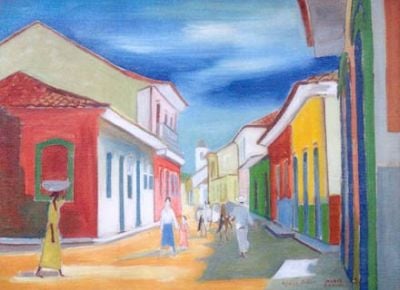
Analisi esperta di Rua de Parati di Mario Zanini
Stile: Post-Impressionism · Genere: cityscape
Expert Analysis of Rua de Parati by Mario Zanini
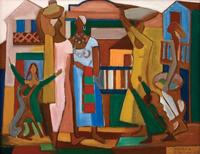
Mario Zanini’s Rua de Parati stands as a compelling example of how Post-Impressionist principles were adapted to capture the unique character of Brazilian urban life. Painted during his association with the Grupo Santa Helena—a collective of modernist artists from São Paulo—the work channels the movement’s hallmark interest in vivid color, simplified form, and personal expression while grounding it in a distinctly national subject: the historic colonial streets of Paraty.
Significance within Post-Impressionism and Brazilian Modernism
Zanini, like his Santa Helena peers, rejected academic naturalism in favor of a more direct, emotionally charged rendering of reality. In Rua de Parati, this manifests through a bold, broken brushstroke that builds texture and movement, evoking the shimmering heat and tropical light of the coastal town. The palette is key: warm ochres, terracottas, and deep greens dominate, with accents of white and blue that bounce light across the cobblestone street and whitewashed buildings. This chromatic intensity is a hallmark of Post-Impressionism, but Zanini uses it not merely for decorative effect but to convey the lush, tangible atmosphere of a small Brazilian village.
The composition is deceptively simple: a narrow street receding toward a distant church tower, framed by low houses and overhanging foliage. Yet Zanini flattens perspective slightly, emphasizing the picture plane—a nod to Cézanne’s structural approach—while allowing the strong diagonal of the road to draw the viewer into the scene. The genre of cityscape here becomes a vehicle for modernist exploration: the ordinary street is transformed into a vibrant, intimate study of light and color, free from narrative or sentimental idealization.
What makes it significant
- Synthesis of European and Brazilian identity: Zanini successfully imports Post-Impressionist painterly techniques (broken color, visible brushwork, emotional resonance) to a quintessentially Brazilian subject—Paraty’s colonial architecture and tropical vegetation. This aligns with the broader Brazilian modernist goal of creating a national art that is both cosmopolitan and rooted in local experience.
- Contribution to the Santa Helena School: Rua de Parati exemplifies the group’s “painting of the open air” ethos, where everyday urban and rural scenes are treated with a fresh, unpretentious eye. Zanini’s work helped define a middle ground between academic tradition and avant-garde abstraction.
- Mastery of light and atmosphere: The painting captures the specific quality of Brazilian daylight—harsh yet saturated, casting deep shadows and saturated highlights—in a way that feels both immediate and timeless. This preoccupation with light, filtered through Post-Impressionist lenses, marks the work as a standout within early 20th-century Brazilian art.
In short, Rua de Parati is significant not only as a fine example of Post-Impressionist cityscape painting but also as a founding piece in the development of a distinctly Brazilian modernist visual language.
Visivamente simili
20 opere con composizione e palette affini
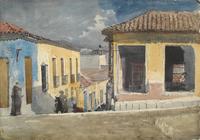
Santiago de Cuba, Street Scene
Winslow Homer
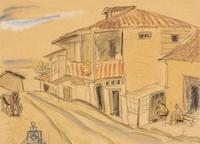
Case la Turtucaia
Theodor Pallady
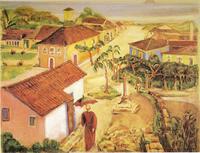
Itanhaém
Anita Malfatti
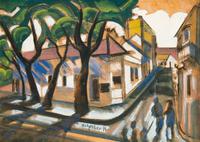
Scheiber Hugó Utcán, Gouache, Szén,papír, 41x57.5cm
Scheiber Hugó
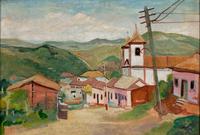
Paisagem De Sabará
Alberto da Veiga Guignard
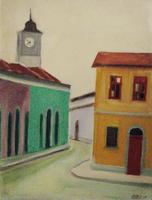
Casário
Mario Zanini
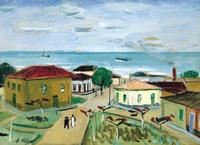
Untitled
Alfredo Volpi
No Title
Oscar Alzate
The Street
Fernando Botero
Rua de São Paulo Antigo (Rua da Consolação no século XIX)
Jose Ferraz de Almeida Junior
Clinic
George Pemba
Mangalia Street
Francisc Sirato
The White House
John Singer Sargent
Rua em São João del Rey
Jose Pancetti
Toque de oración
Pedro Figari
#03
Alcides Biagetti
Baianas
Emiliano Di Cavalcanti
Purple road
Yuriy Khymych
Paisagem com ponte
Mario Zanini
Composition With Figures
Mario Zanini