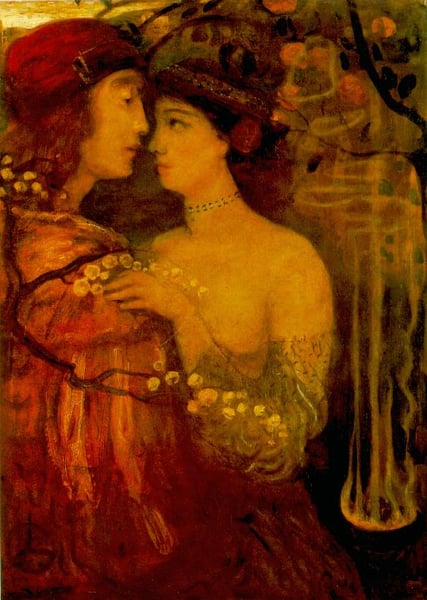
Expert analysis of Lajos Gulacsy’s Magic
Style: Symbolism · Genre: genre painting
Lajos Gulacsy’s Magic (c. 1920s) is a quintessential work of Hungarian Symbolism that transforms the ordinary realm of genre painting into a portal of dreamlike nostalgia. Gulacsy, a reclusive visionary, belonged to a unique strain of Symbolism that merged Art Nouveau elegance with folk-art whimsy and a deeply personal, melancholic fantasy. In Magic, the seemingly mundane scene—perhaps a performer or a domestic ritual—is imbued with an aura of suspended time and hidden meaning. The significance lies in Gulacsy’s ability to use the recognizable structure of genre painting (everyday figures, interiors, or village life) as a stage for the irrational: his muted, almost faded palette, delicate outlines, and meticulous attention to pattern evoke a world that is both familiar and eerily distant, as if glimpsed through a memory. The work exemplifies his core theme: the search for a “lost paradise” or an imaginary Golden Age, a retreat from the modern world into a private mythology. Magic stands as a testament to how Symbolist artists could subvert traditional genres, using the intimacy of domestic or rural scenes to explore psychological depth, emotional ambiguity, and the uncanny power of the ordinary made magical.
Visually similar
20 works with related composition and palette
Ecstasy
Lajos Gulacsy
Two Girls
Joan Brull
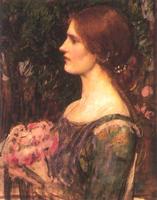
The Bouquet
John William Waterhouse
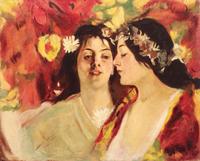
Spring (Two Muses)
Stefan Luchian
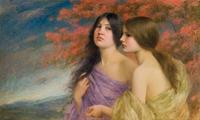
Oleanders
Joan Brull
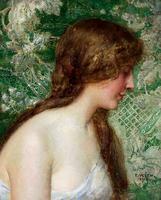
Portrait
Eduard Veith
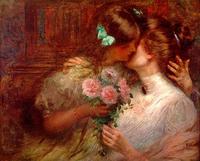
Kiss
Eliseu Visconti
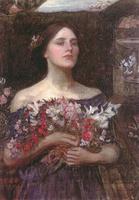
Gather Ye Rosebuds or Ophelia
John William Waterhouse
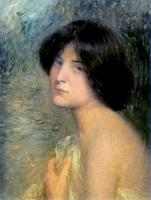
Portrait of a woman. Melancholy
Joan Brull
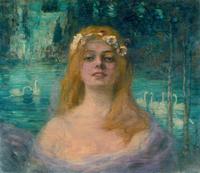
The Lake Fairy
Kimon Loghi
Bust of a woman
Joan Brull
Nadezhda Zabela-Vrubel as Princess Volkhova
Mikhail Vrubel
Portrait of a girl
Umberto Veruda
Illusions
Mary Lizzie Macomber
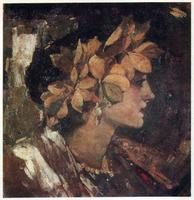
Beatrice
Fedir Krychevsky
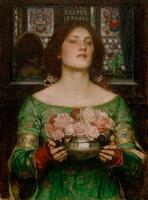
Gather Ye Rosebuds While Ye May (study)
John William Waterhouse
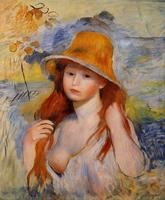
Young Woman in a Straw Hat
Pierre-Auguste Renoir
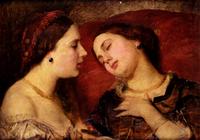
Miss Georgina Treherne
George Frederick Watts
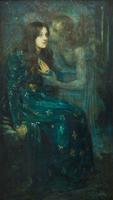
The Silent Voice
Gerald Moira
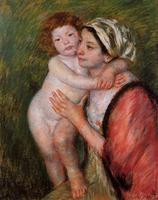
Mother and Child
Mary Cassatt