
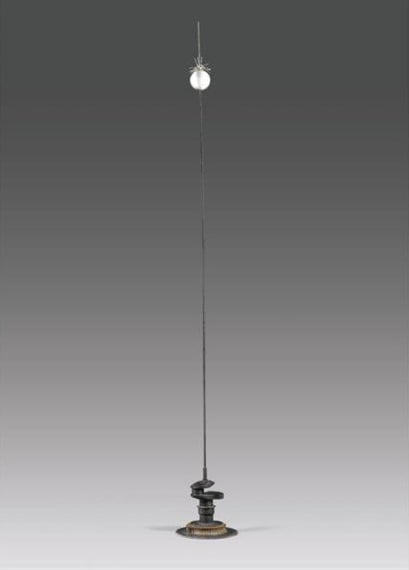
Analisi esperta di Plant of Isis #C 13 di Takis
Stile: Kinetic Art · Genere: installation
Analysis of "Plant of Isis #C 13" by Takis
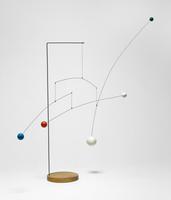
Takis’s Plant of Isis #C 13 is a seminal work of Kinetic Art, a movement that rejected static sculpture in favor of movement, often incorporating industrial materials and forces such as magnetism, light, or air. As an installation, the piece invites the viewer into an immersive experience where object and environment merge.
Significance within Kinetic Art and Its Period
-
Integration of Nature and Technology: The title evokes the ancient Egyptian goddess Isis, associated with fertility and the natural world, while the “#C 13” suggests a serial, systematic approach. This juxtaposition of organic form (a “plant”) with mechanical or electromagnetic elements is a hallmark of Takis’s practice. The work likely uses magnetic fields to set slender, metallic “stems” or “leaves” into motion, creating a continuously shifting, seemingly living sculpture. This blurs the line between natural growth and engineered construction, a central concern of the 1960s–70s Kinetic movement.
-
Emphasis on Process over Object: Kinetic Art valued the moment of movement rather than a fixed form. Plant of Isis #C 13 would embody this by relying on electromagnetic forces to generate unpredictable, graceful oscillations. The viewer’s presence and involvement—walking around the installation, observing how light and shadow change—become part of the artwork’s meaning. This aligns with the period’s shift toward participatory and time-based art.
-
Symbolism and Mythic Resonance: By referencing Isis, Takis infuses the kinetic mechanism with ancient, feminine symbolism of life and regeneration. The “plant” becomes a modern totem, suggesting that technology can evoke the same awe and vitality as nature. This metaphysical dimension distinguishes Takis from purely mechanical kineticists (e.g., Jean Tinguely), adding a poetic layer that connects the pre-industrial past with the space-age future.
-
Seriality and Conceptual Rigor: The “#C 13” indicates the work is part of a series, each iteration a variation on a theme. This systematically explores how tiny changes in materials, magnetism, or arrangement alter the kinetic behavior—a scientific curiosity typical of Takis, who was influenced by physics and cybernetics. Yet the outcome is always aesthetic and meditative, bridging art and science.
Why It Matters
Plant of Isis #C 13 stands as a key example of how Kinetic Art moved beyond mere optical illusion to engage with deep existential questions: the relationship between life and machine, the role of chance, and the viewer’s active perception. Takis’s fusion of myth, natural form, and electromagnetic motion marks a high point in the movement’s ambition to create art that is both physically dynamic and spiritually resonant.
Visivamente simili
20 opere con composizione e palette affini
Light Tree
Nanda Vigo
Untitled
Katsuhito Nishikawa
Linea Floor Lamp
Nanda Vigo

Signals (Series 2)
Takis
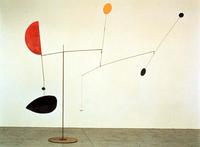
Steel Fish
Alexander Calder

Floor Lamp
Max Bill
Candlestick
Louis Comfort Tiffany
Kero
Olle Baertling
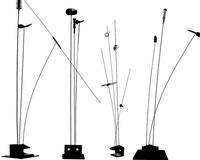
Signals
Takis

Tall Obelisk with Two Holes and a Notch
Bob Law
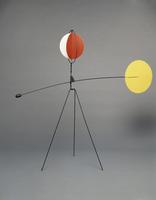
RED AND YELLOW VANE
Alexander Calder
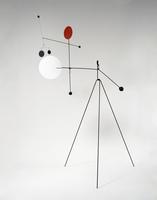
UNTITLED
Alexander Calder

One and Three Lamps
Joseph Kosuth
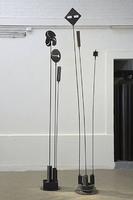
Signals
Takis
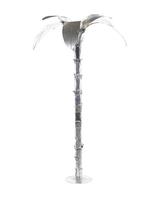
Per Costruzione di Oasi
Mario Schifano
Tanit
Katsuhito Nishikawa
Popeye Sculpture
Jeff Koons
Mobile
Alexander Calder
Red Cascade
Alexander Calder
Untitled
Alexander Calder