
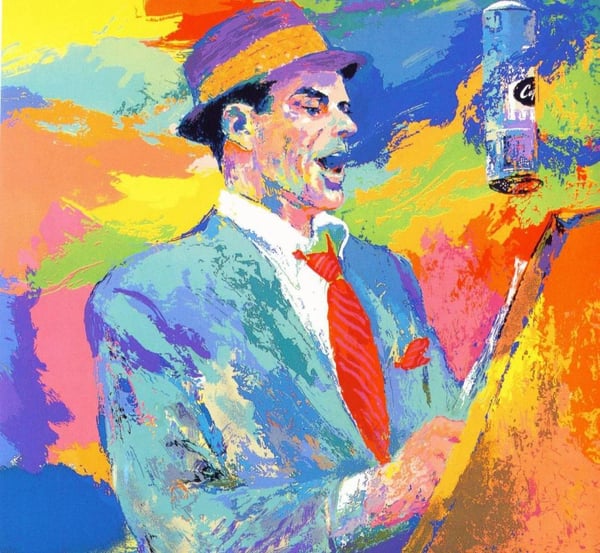
Expert analysis of LeRoy Neiman’s Frank Sinatra Duets
Style: Impressionism, Pop Art · Genre: portrait
Expert Analysis of "Frank Sinatra Duets" by LeRoy Neiman
LeRoy Neiman’s Frank Sinatra Duets exemplifies a distinctive fusion of two seemingly disparate movements—Impressionism and Pop Art—within the genre of portraiture. The work is significant for how it bridges the spontaneity of Impressionist brushwork with the bold, celebrity-focused iconography of Pop Art, creating a vibrant tribute to one of the 20th century’s most iconic entertainers.
Stylistic Synthesis:
Neiman’s hallmark style is immediately recognizable here: loose, energetic strokes of vivid color that evoke the fleeting impression of a live performance, much like the Impressionists’ pursuit of capturing light and motion. Yet the subject—Frank Sinatra—is treated with the graphic clarity and mass-media familiarity typical of Pop Art. The result is a portrait that feels both gestural and iconic, as if Sinatra’s persona is being celebrated in the moment of singing, while also being elevated to the status of a cultural monument. This duality is key to Neiman’s significance: he took the immediacy of Impressionism and applied it to the modern cult of celebrity, a move that Pop Art pioneers like Andy Warhol also explored, but with a more painterly, less mechanical approach.
Significance within Style and Period:
Neiman’s work occupies a unique niche. While Pop Art often used flat, commercial aesthetics (e.g., Warhol’s silkscreens or Lichtenstein’s Ben-Day dots), Neiman retained the painterly hand and dynamic composition of traditional oil painting. Frank Sinatra Duets demonstrates how he used that technique to glamorize his subjects, aligning with Pop Art’s fascination with fame and consumer culture, but injecting a sense of live, visceral energy. The portrait’s significance also lies in its embodiment of mid-century American entertainment culture: Sinatra was the epitome of the “crooner” and Rat Pack cool, and Neiman’s bold color palette and blurred edges evoke the neon-lit nightclubs and smoky atmosphere of Las Vegas shows, where Sinatra reigned. The painting thus becomes not just a likeness, but a sensory record of an era’s glamour and attitude.
Critical Insight:
What makes Frank Sinatra Duets particularly noteworthy is how Neiman’s approach—often dismissed as “illustrative” or “commercial”—actually bridges high and low art in a way that is central to Pop Art’s mission. By rendering Sinatra with Impressionist techniques, Neiman challenges the boundary between fine art and popular entertainment, asserting that the portrait of a pop star can carry the same aesthetic weight as a landscape by Monet. In this sense, the work is a significant document of the post-war period, when art and celebrity culture became increasingly intertwined. It is not merely a portrait of Sinatra, but a portrait of the very idea of stardom, captured in a style that is both accessible and visually arresting—a testament to LeRoy Neiman’s unique place in the art historical narrative.
Genre
Style
Visually similar
20 works with related composition and palette
15. Self Portrait with Straw Hat 2017 by Anthony D. Padgett (after Van Gogh Paris 1887)
Anthony Padgett
John F. Kennedy
Elaine de Kooning
Portrait of George Dyer in a Mirror
Francis Bacon

Modok Mária, Czóbel Béla Fest
Modok Mária
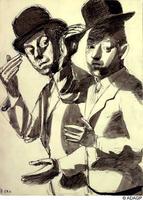
Double self-portrait in a bowler hat
Jean Dubuffet
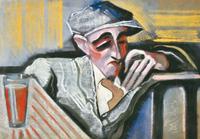
Scheiber Hugó , Ivó Férfi
Scheiber Hugó
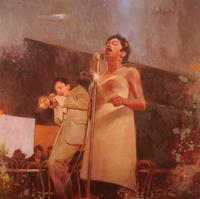
The High Note
Joseph Lorusso
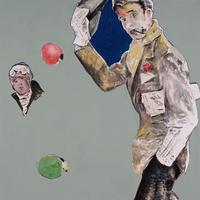
Poetic Life
Haralampi G. Oroschakoff

Portrait of Jack Greenbaum
Elaine de Kooning
Henry Kissinger V, 1978
Leon Golub
Self Portrait
Ilarion Pleshynskyi
M. Praince
Henri de Toulouse-Lautrec
Self-portrait (in yellow shirt)
Pyotr Konchalovsky
Three Men
Goran Djurovic
Parmi les peintres
Eduardo Arroyo
Gardonyi, Geza: Story of Ida
Maria Bozoky

Winston Churchill
Eduardo Arroyo
Self-Portrait
George Pemba
A French Professor
Sanyu
Untitled
Fikret Mualla Saygi