Analisi esperta di Seventeen (Titre Journalistique) di Martial Raysse
Stile: Nouveau Réalisme, Pop Art · Genere: portrait
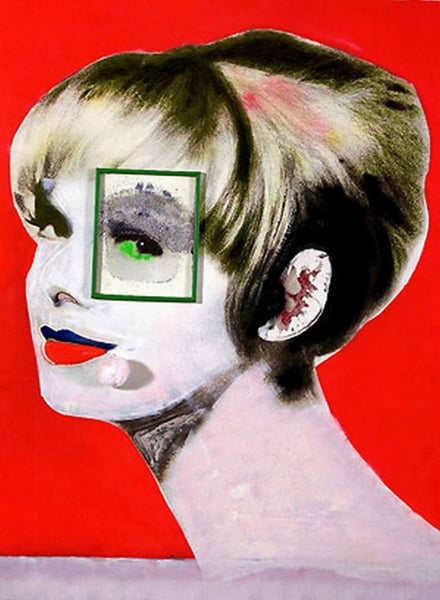
Martial Raysse’s "Seventeen (Titre Journalistique)" stands as a pivotal intersection of French Nouveau Réalisme and international Pop Art, using the genre of portraiture to critique mass-media image culture. In this work, Raysse appropriates the cover of Seventeen magazine—a publication synonymous with American teenage ideals and consumer femininity. By isolating and enlarging this commercial portrait, he transforms a disposable journalistic image into an icon of youthful allure and synthetic desire.
Significance within Nouveau Réalisme
As a member of the Nouveaux Réalistes, Raysse championed the use of “real” materials and everyday objects. Here the “real” is not a physical found object but a found image—a photographic reproduction lifted from print media. This aligns with the group’s dictum to capture contemporary reality in its raw, industrial form. The work’s title explicitly nods to its mass-media source (“Titre Journalistique” = “Journalistic Title”), foregrounding the magazine’s role in manufacturing idealized femininity. Raysse treats the portrait not as a unique human subject but as a serial product, akin to the neon signs and plastic objects he often incorporated into his assemblages.
Significance within Pop Art
Simultaneously, Seventeen (Titre Journalistique) exemplifies Pop Art’s fascination with celebrity, advertising, and mechanical reproduction. Raysse’s palette is deliberately artificial—harsh pink lips, sky-blue eyes, and a flat, almost poster-like surface—reminiscent of color separations in commercial printing. This hyper-saturated, cosmetic treatment drains the face of individuality and psychology, turning the sitter into a mask of generic aspiration. The work prefigures the cool, ironic portraits of stars and models that would dominate later Pop, while retaining a distinctly French, Nouveau Réaliste edge: it refuses the slick finish of American Pop, instead leaving visible the grain of the reproduced photograph and the awkwardness of its isolation.
Genre as Critique
By placing this magazine cover within the tradition of portraiture, Raysse interrogates the boundary between high art and mass entertainment. The portrait—historically a marker of status and interiority—becomes a hollow signifier for manufactured joy. The title’s “Seventeen” underscores the commodification of adolescence, suggesting that the subject is less a person than a demographic product. Raysse’s significance lies in his ability to hold this critique in tension with genuine visual pleasure: the work is seductive, brightly colored, and compositionally bold, forcing viewers to confront their own complicity in consuming such imagery.
In sum, "Seventeen (Titre Journalistique)" is a landmark work that bridges the European materialist critique of Nouveau Réalisme with the globalized iconography of Pop Art, redefining portraiture as a mirror of media-fed fantasy.
Visivamente simili
20 opere con composizione e palette affini
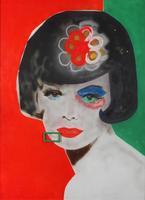
Last Year in Capri (exotic title)
Martial Raysse
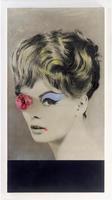
The Beautiful Mauve
Martial Raysse
Study for a Fashion plate
Richard Hamilton
Portrait de Mme Raysse
Martial Raysse
Ladies and Gentlemen
Andy Warhol
Liza Minnelli
Andy Warhol
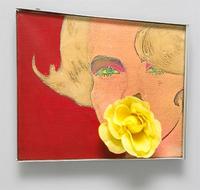
Tableau presque cuvé
Martial Raysse
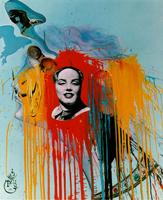
Self-Portrait (Photomontage with the famous 'Mao-Marilyn' that Philippe Halsman created at Dali's wish)
Salvador Dali
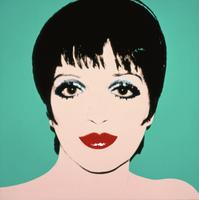
Liza Minnelli
Andy Warhol
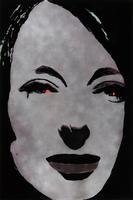
Painting in the French Style II
Martial Raysse
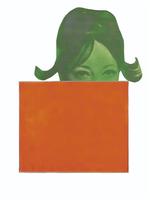
La France Orange
Martial Raysse
Dada Head Variation - no. 507
Hans Richter
Purple Lips
Burhan Dogancay
Scheiber Hugó, Nő Nyakláncal
Scheiber Hugó
Sarah Bernhardt
Andy Warhol
Taylor Swift Blue
Diana Ringo
Fashion plate
Richard Hamilton
Liz Taylor
Andy Warhol
The Look
Mimmo Rotella
Liz Taylor
Andy Warhol