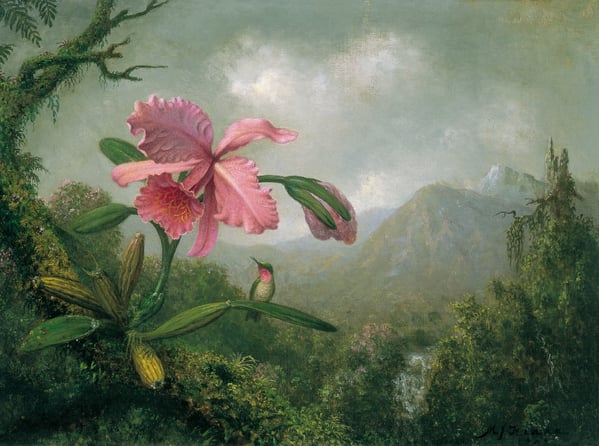
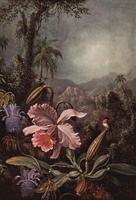
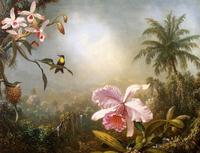
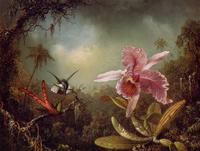
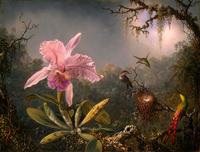
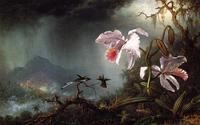
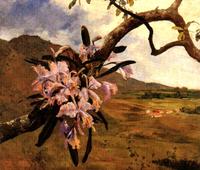
Based solely on the structured facts provided, the significance of Martin Johnson Heade’s Orchid and Hummingbird near a Mountain Waterfall lies in its fusion of two Romantic-era preoccupations within the animal-painting genre.
First, the composition places a delicate, close-up study of a hummingbird and orchid—creatures associated with natural grace and exoticism—into a vast, dramatic landscape of a mountain waterfall. This juxtaposition reflects Romanticism’s characteristic tension between intimacy and the sublime: the viewer is invited to appreciate both the intricate detail of a living creature and the overwhelming power of an untamed natural setting.
Second, as an animal painting, the work moves beyond mere natural history illustration. By situating the hummingbird and orchid within a scene of raw, cascading water and rugged rock, Heade elevates animal imagery to a symbol of nature’s harmony and fragility. The hummingbird—often a Romantic emblem of fleeting beauty and vitality—becomes part of a larger meditation on the interconnectedness of life and landscape.
Thus, the artwork is significant for embodying Romanticism’s core interest in the intersection of the minute and the monumental, the transient and the eternal, all while working within the animal-painting genre to suggest that even the smallest creatures are integral to the sublime order of nature.