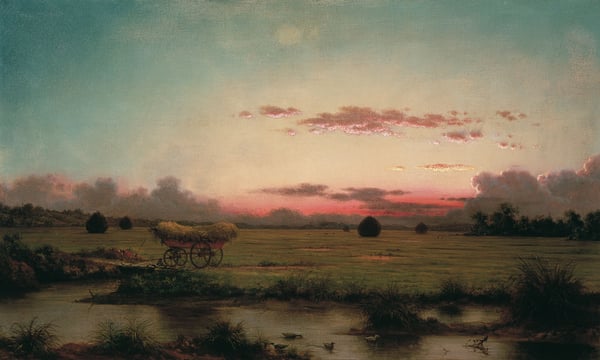
Expert Analysis: "The Marshes at Rhode Island" by Martin Johnson Heade
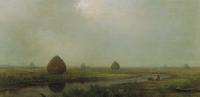
This work is a quintessential example of Luminism, a mid-19th-century American landscape style that emphasizes the effects of natural light, atmospheric stillness, and precise detail. Heade’s painting epitomizes the movement’s core principles: a serene, almost meditative composition centered on the play of light across a horizontal expanse of marshland.
The significance lies in how Heade elevates a humble, non-dramatic subject—a salt marsh—into a study of transcendental clarity. The scene is devoid of human activity or narrative, focusing instead on the palpable qualities of haze, water, and sky. The artist’s meticulous rendering of grasses and the soft gradations of light capture a moment of profound calm, characteristic of Luminism’s departure from the more theatrical Hudson River School landscapes.
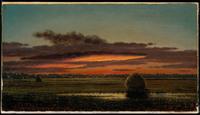
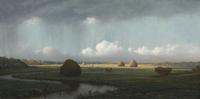
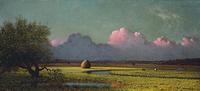
Within the Luminist period, Heade’s marsh series (including this Rhode Island view) is notable for its obsessive focus on a single ecological niche, prefiguring modern environmental awareness. The painting’s horizontal bands and restrained palette create a sense of infinite space, inviting contemplation. It stands as a testament to Luminism’s ultimate ambition: to reveal the divine in the quiet, unpretentious beauty of the American landscape.