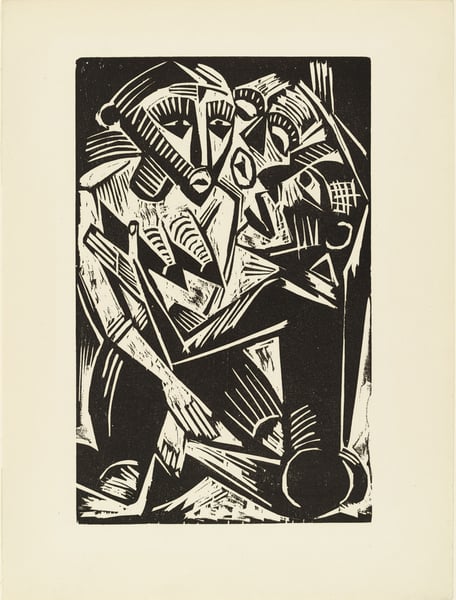
Expertenanalyse zu Max Pechsteins Woman desired by Man
Stil: Expressionism · Genre: genre painting
Expert Analysis: "Woman desired by Man" by Max Pechstein
As a prime example of German Expressionism, Max Pechstein's "Woman desired by Man" stands out for its raw emotional intensity and radical departure from naturalistic representation. Pechstein, a founding member of the Die Brücke (The Bridge) group, used this genre painting to explore primal human psychology through agitated brushwork, jarring color contrasts, and simplified, angular forms. The work’s significance lies in how it channels Expressionism’s core mission: to convey inner subjective experience over outer reality. The forced, tense relationship between the figures—likely a man and woman—is not rendered with polite observation but with a confrontational, almost theatrical energy typical of early 20th-century Expressionist genre scenes. This painting reflects the movement’s fascination with raw emotion, sexual tension, and the anxiety of modern life, making it a compelling document of how Pechstein and his peers broke from Impressionism to capture the turbulent human condition.
Visuell ähnlich
20 Werke mit ähnlicher Komposition und Farbpalette
Mask Dance
Ernst Ludwig Kirchner
Dialogue
Max Pechstein
Palucca
Ernst Ludwig Kirchner
In Love (Verliebt)
Christian Rohlfs
Two People
Erich Heckel
Two Dancers
Christian Rohlfs
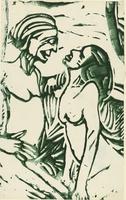
Conversation
Christian Rohlfs
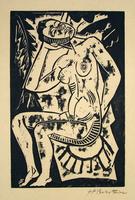
Sitzander Akt (Nude Sitting)
Max Pechstein
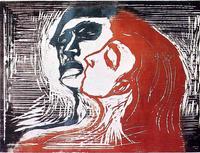
Man and Woman I
Edvard Munch
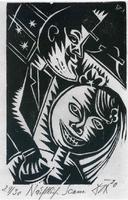
Man and Woman (Nocturnal scene)
Otto Dix
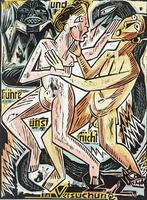
And lead us not into temptation
Max Pechstein
Untitled from the portfolio With the Grain of the Wood (Au fil du bois)
Pierre Alechinsky
Untitled from the portfolio With the Grain of the Wood (Au fil du bois)
Pierre Alechinsky
Forms in Action
Louis Schanker
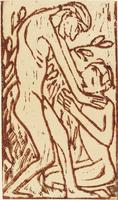
Couple I
Christian Rohlfs
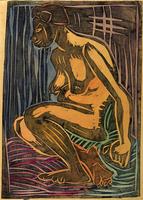
Seated Nude
William H. Johnson
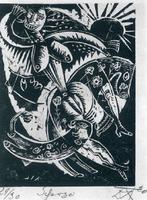
Scherzo from the portfolio Nine Woodcuts
Otto Dix
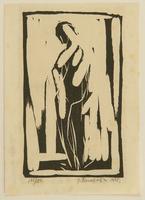
Figure
Funasaka Yoshisuke
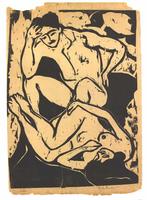
Nacked Couple on a Couch
Ernst Ludwig Kirchner
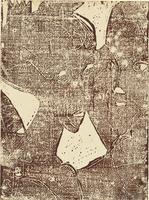
Three Heads
Christian Rohlfs