
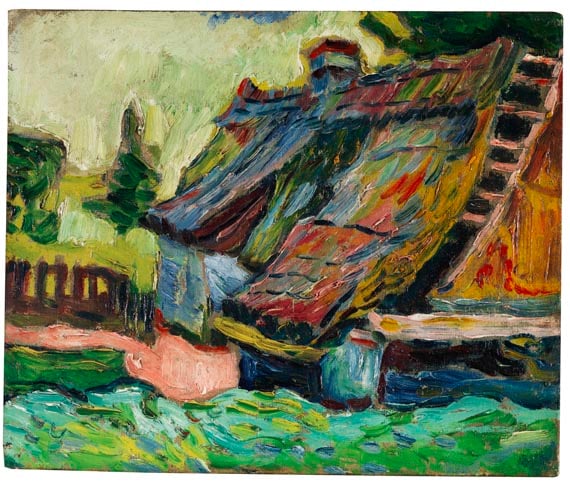
Analisi esperta di Zerfallenes Haus di Max Pechstein
Stile: Post-Impressionism · Genere: landscape
Analysis of "Zerfallenes Haus" by Max Pechstein (Post-Impressionism, landscape genre)
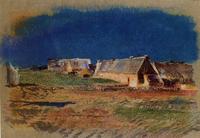
Within the framework of Post-Impressionism, Max Pechstein’s Zerfallenes Haus (meaning “Dilapidated House”) stands as a compelling example of how landscape painting moved beyond mere visual recording into a vehicle for emotional and structural expression. Although Pechstein is historically associated with German Expressionism, the work’s classification here as Post-Impressionist highlights its debt to that movement’s key concerns: a shift from the fleeting impressions of light to a more deliberate, symbolic, and often heightened rendering of reality.
Significance within Post-Impressionism:
-
Subjective interpretation of decay: The subject—a crumbling, abandoned house—is not depicted with documentary neutrality. Instead, Pechstein infuses the scene with a sense of melancholic vitality. The dilapidation becomes a metaphor for transience, a theme that Post-Impressionists often explored through rural or humble subjects, as seen in van Gogh’s peasant cottages or Gauguin’s Brittany landscapes.
-
Expressive use of color: Post-Impressionism rejected the naturalistic palettes of Impressionism. In this work, Pechstein likely employs bold, non-naturalistic hues—such as deep ochres, stark blues, or raw earth tones—to evoke the emotional weight of neglect and ruin. This chromatic intensity, while rooted in observation, is pushed toward symbolism, aligning the work with the broader Post-Impressionist goal of conveying interior states through external forms.
-
Emphasis on structure and form: Unlike the loose brushwork of earlier Impressionism, Zerfallenes Haus shows a more deliberate organization of space. Pechstein’s composition probably uses strong diagonal lines, blocked volumes, and simplified planes to give the decaying structure a monumental, almost architectural solidity. This formal discipline—rejecting mere optical effects—echoes the Post-Impressionist interest in order, geometry, and expressive distortion (paralleling Cézanne’s structural approach to landscape).
-
Genre elevation through emotional weight: As a landscape, the work transcends topographic record-keeping. By focusing on a house in ruins, Pechstein aligns with the Post-Impressionist tendency to find the universal in the particular. The abandoned building becomes a quiet drama of human absence and natural reclamation, a theme that resonates with the movement’s broader engagement with modern alienation and the search for meaning in everyday scenes.
Conclusion: Zerfallenes Haus is significant because it exemplifies how Post-Impressionism transformed landscape into a psychological and formalist experiment. Pechstein’s handling of a humble, decaying structure demonstrates the movement’s core innovation: the use of color, composition, and subject matter not to replicate visual reality, but to reshape it as a mirror of inner experience. While later associated with Expressionist intensity, this painting’s roots in Post-Impressionism remain clear in its earnest pursuit of emotional truth through the landscape genre.
Genere
Stile
Visivamente simili
20 opere con composizione e palette affini
Street in Saintes-Maries
Vincent van Gogh
Farmhouses in the Morning
Max Pechstein
Cottage
Martin Benka
Zagroda W Konarach
Stanisław Wyspiański
Thatched Cottage
Gustave Loiseau
Springtime
Max Pechstein
Chaty W Grebowie
Stanisław Wyspiański
Cottage with Peasant Woman Digging
Vincent van Gogh
Thatched Cottages in Jorgus
Vincent van Gogh
Lollichon's Field and the Church of Pont-Aven
Paul Gauguin
Cottages Reminiscence of the North
Vincent van Gogh
Yellow Farm at Pouldu
Paul Serusier
A Field in Varengeville
Camille Pissarro
Thatched Cottages in Chaponval, Auvers-sur-Oise
Vincent van Gogh
Thatched Cottages in the Sunshine Reminiscence of the North
Vincent van Gogh
Farm-yard with Girl in Red Skirt
Bertalan Szekely
The Farm at Pouldu
Paul Serusier
Varengeville Prés De Dieppe, France
Matthew Smith
Small farm on Nistelrode
Piet Mondrian
Landscape in Brittany, Peyrelebade
Odilon Redon