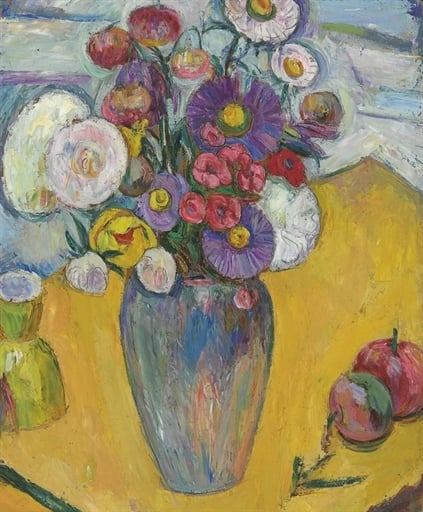
Flowers on a Yellow Table
Analisi esperta di Flowers on a Yellow Table di Abraham Manievich
Stile: Post-Impressionism · Genere: flower painting
Expert Analysis: "Flowers on a Yellow Table" by Abraham Manievich
Abraham Manievich, a Ukrainian-American artist who bridged European modernism and early 20th-century American art, brings a distinctly expressive energy to the flower-painting genre in this Post-Impressionist work. The title itself—Flowers on a Yellow Table—signals the artist’s departure from naturalistic representation toward an emphasis on chromatic boldness, a hallmark of Post-Impressionism.
Significance within the Post-Impressionist Frame
While Post-Impressionism is often associated with French artists like Cézanne, Van Gogh, and Gauguin, Manievich’s adaptation of the style carries a unique Eastern European and Jewish diasporic sensibility. Here, the flower painting is not merely a decorative still life but a vehicle for emotional and atmospheric intensity. The yellow table does not simply support the bouquet; it dominates the composition, flooding the canvas with a saturated, almost Fauvist warmth. This radical use of a single, vibrant ground color transforms a conventional subject into a study in color-as-emotion—a key Post-Impressionist concern.
Genre Reinvented
Flower paintings were traditionally exercises in botanical fidelity or symbolic memento mori. Manievich subverts these expectations. The flowers are rendered with loose, energetic brushstrokes—short, visible dabs and swaths of paint that prioritize rhythm and texture over precise delineation. The petals appear to quiver, caught in a flickering light that emanates from the yellow table itself. This technique creates a sense of immediacy and life, aligning the work with Van Gogh’s sunflower series rather than with Dutch Golden Age precision.
Cultural and Historical Context
Manievich trained in Kyiv and Munich, absorbing Post-Impressionist and Fauvist lessons before emigrating to the United States in the 1920s. Flowers on a Yellow Table likely dates from his mature period, when he synthesized these European influences with a newfound confidence in color. The painting’s significance lies in its demonstration that Post-Impressionism was not a solely French phenomenon—it was a global language of modernism. Manievich’s work reminds us that the “table” of Post-Impressionism could be yellow, not just blue or green, and that the quiet genre of flower painting could be a site of radical, personal expression.
Visivamente simili
20 opere con composizione e palette affini
Chrysanthemum
Ion Andreescu
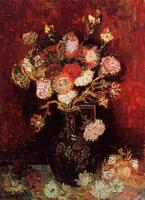
Vase with Asters and Phlox
Vincent van Gogh
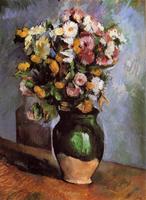
Flowers in an Olive Jar
Paul Cezanne
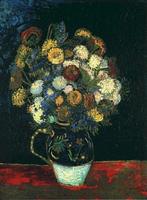
Still Life Vase with Zinnias
Vincent van Gogh
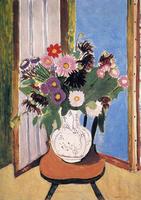
Daisies
Henri Matisse
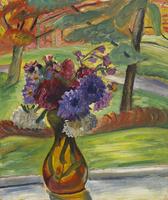
Vase of Flowers I
Prudence Heward
Vase of Chrysanthemums
Claude Monet
Mixed Flowers In An Earthware Pot
Pierre-Auguste Renoir
Still Life With Flowers
Theodor Pallady
Vase of Flowers
Gustave Loiseau
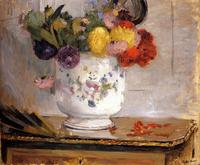
Dahlias
Berthe Morisot
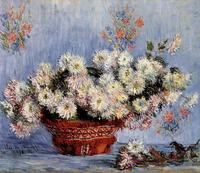
Chrysanthemums
Claude Monet
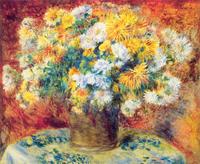
Chrysan the mums
Pierre-Auguste Renoir
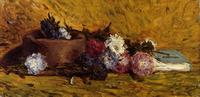
China Asters, Hat and Book
Paul Gauguin
Flowers and Fruit
Claude Monet
Nature Morte Aux Fleurs
Maximilien Luce
Vase with Chrysanthemums
Stefan Luchian
White Roses, Chrysanthemums in a Vase, Peaches and Grapes on a Table with a White Tablecloth
Henri Fantin-Latour
Flowers
Martiros Sarian
Chrysanthemums
Claude Monet