Analisi esperta di Sen di Carlos Orozco Romero
Stile: Cubism, Expressionism · Genere: portrait
Expert Analysis of "Sen" by Carlos Orozco Romero
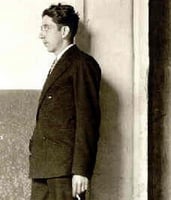
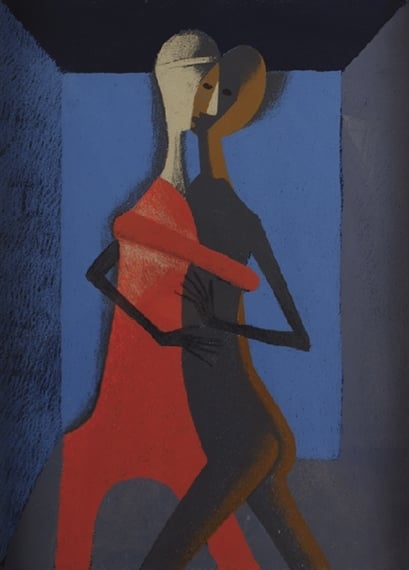
Carlos Orozco Romero’s "Sen" occupies a crucial position within early 20th-century Mexican modernism, where it synthesizes the structural rigor of Cubism with the emotional intensity of Expressionism. As a member of the Contemporáneos group, Orozco Romero rejected purely nationalistic or folkloric art in favor of a cosmopolitan, psychologically charged aesthetic. In this portrait, the subject is fractured into geometric planes—a clear Cubist inheritance—yet the sharp, almost jarring angles and the use of stark, contrasting colors (likely muted earth tones against vivid, unnatural highlights) tilt the work toward Expressionist anxiety. The title "Sen" may hint at a personal referent or a symbolic abstraction, but the true significance lies in how Orozco Romero uses the genre of portraiture to deconstruct identity itself: the face becomes a battlefield of competing perspectives, neither fully abstract nor wholly representational. This piece exemplifies how Mexican artists of the 1920s and 1930s adapted European avant-garde strategies to explore inner states, psychological fragmentation, and the tension between tradition and modernity, placing Orozco Romero at the forefront of a syncretic, deeply personal modernism.
Genere
Stile
Visivamente simili
20 opere con composizione e palette affini
Erotic
Yiannis Moralis
dance of dusk
Toshihiko Okuya
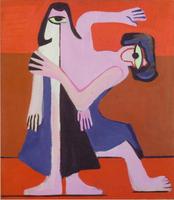
Mask Dance
Ernst Ludwig Kirchner
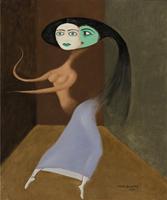
Dancing Girl
Victor Brauner
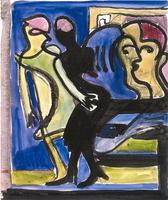
View into a Cafe
Ernst Ludwig Kirchner
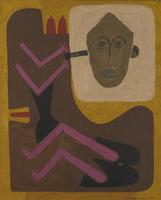
Exercise prénuptial
Victor Brauner
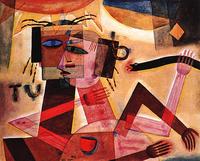
Tú y Yo
Xul Solar
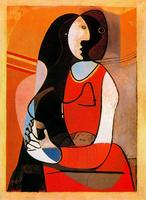
Seated woman
Pablo Picasso
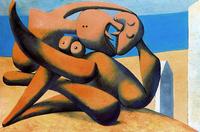
Figures at the Seaside
Pablo Picasso
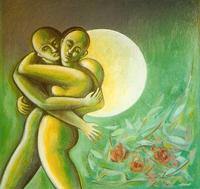
The offended Moon
Joan Tuset
Conversation
Ossip Zadkine
Embracing Colours
George Stefanescu
study #034
Toshihiko Okuya
Lovers (The Hembusses)
Ernst Ludwig Kirchner
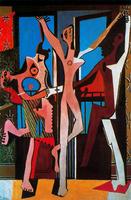
The dance
Pablo Picasso
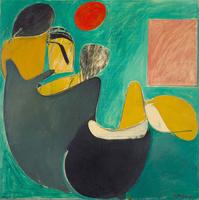
The Wave
Willem de Kooning
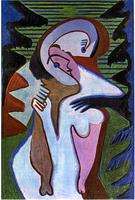
Lovers (The kiss)
Ernst Ludwig Kirchner
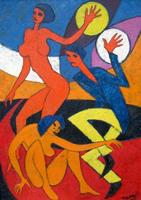
Dancers
Endre Bartos
Man with mandolin
Pablo Picasso
study #042
Toshihiko Okuya