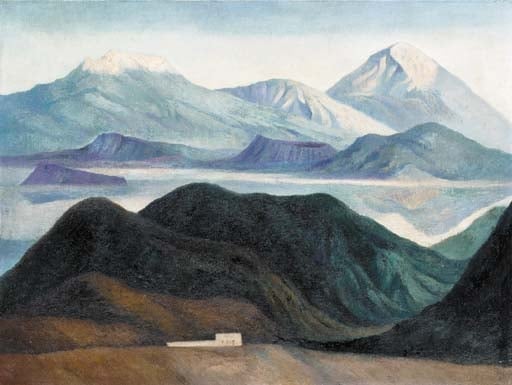
Valle de México
Analisi esperta di Valle de México di Carlos Orozco Romero
Stile: Magic Realism · Genere: landscape
Expert Art Historical Analysis: "Valle de México" by Carlos Orozco Romero
Carlos Orozco Romero’s Valle de México is a quintessential example of Latin American Magic Realism in landscape painting. Created during a period when Mexican art was dominated by the epic narratives of the Muralists, Orozco Romero turned instead to a quieter, more introspective mode—one that imbues the everyday with a sense of mystery and stillness.
Significance within Magic Realism
Magic Realism seeks to present the real and the fantastic as equally valid, often by depicting ordinary scenes with an uncanny clarity or an unexpected detail that unsettles the viewer’s perception. In Valle de México, the landscape of the Valley of Mexico is rendered with precise, almost hyper-realistic detail—each fold in the mountains, each patch of vegetation, each cloud seems meticulously observed. Yet there is a deliberate flattening of perspective and a muted, tonal palette that gives the scene a dreamlike, hermetic quality. The light appears diffuse and timeless, as if the valley exists outside of a specific hour or season. This fusion of meticulous observation and psychological distance is the hallmark of Magic Realism: the landscape is both deeply familiar and strangely otherworldly.
Genre and Period Context
As a landscape, Valle de México participates in a long tradition of representing the Mexican territory, but Orozco Romero subverts that tradition. Unlike the heroic, nationalist landscapes of earlier Mexican painters (or the social-realist depictions of rural life), his Magic Realist approach treats the valley as a space of introspection and metaphysical presence. The composition is centered and balanced, yet the absence of human figures or overt narrative turns the scene into a silent, almost sacred stage. The viewer is invited not to admire the valley’s grandeur, but to contemplate its quiet, enigmatic essence.
What Makes the Work Significant
- Bridging Realism and Surrealism: Orozco Romero’s Valle de México demonstrates how Magic Realism can transform a specific, recognizable place into a universal symbol of stillness and mystery. It refuses the melodrama of Surrealism while retaining its penetrative strangeness.
- Contribution to Mexican Modernism: At a time when many Mexican artists were prioritizing political messaging, Orozco Romero championed a personal, lyrical approach. This work asserts that the landscape is not merely a backdrop for national identity, but a vessel for emotional and metaphysical experience.
- Technical Mastery: The controlled brushwork and subtle gradations of color show a mastery of optical realism that is then destabilized by the irrational clarity of the scene. This tension between the real and the imagined is exactly what defines the Magic Realist aesthetic.
In sum, Valle de México by Carlos Orozco Romero is significant because it exemplifies how Magic Realism can elevate a familiar landscape into a site of quiet revelation, merging the seen with the unseen, the factual with the fabulous. It is a landmark work that defines the style’s capacity to make the ordinary extraordinary.
Visivamente simili
20 opere con composizione e palette affini
Pink glacier as flower
Nicholas Roerich
Himalayas
Nicholas Roerich

Lago de Patzcuaro
Carlos Orozco Romero
Himalayas
Nicholas Roerich
Himalayas
Nicholas Roerich

Kangchenjunga
Nicholas Roerich
Landscape
Carlos Orozco Romero
Himalayas. Morning.
Nicholas Roerich

Thang La
Nicholas Roerich
Sunset rider
Nicholas Roerich
Untitled
Carlos Orozco Romero
Three Figures
Carlos Orozco Romero

Pic Island, Lake Superior
Lawren Harris
Brahmaputra
Nicholas Roerich
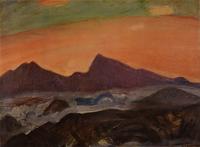
Niitakayama
Fujishima Takeji
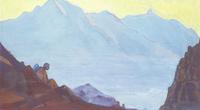
Study to "Teacher's Testament'
Nicholas Roerich
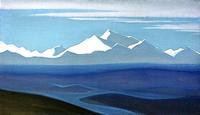
Border of Tibet
Nicholas Roerich
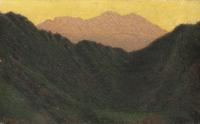
Sunrise in the mountains
Angelo Morbelli
Himalayas. Pink peak.
Nicholas Roerich
Snow Flurries, North Shore of Lake Superior
Franklin Carmichael