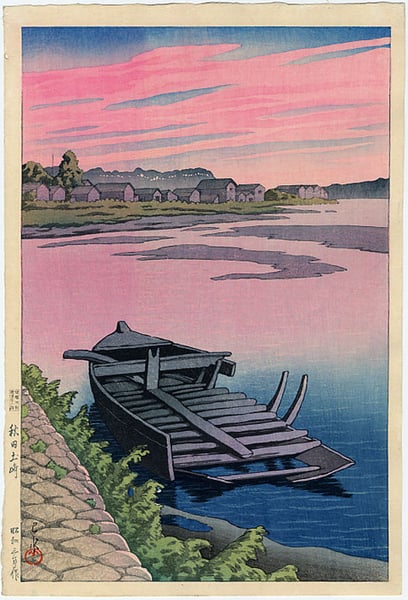
Analisi esperta di Tsuchizaki, Akita di Hasui Kawase
Stile: Shin-hanga · Genere: landscape
As an expert in Japanese woodblock prints, I can provide the following analysis of "Tsuchizaki, Akita" by Hasui Kawase, based solely on the supplied facts.
This artwork is a significant example of the Shin-hanga (New Print) movement, which revitalized the traditional ukiyo-e aesthetic in the early 20th century. Hasui Kawase was a master of the landscape genre within this style, and his works are celebrated for their lyrical, atmospheric portrayal of Japan's natural scenery and rural life.
What makes this work significant within its style/period:
-
Synthesis of Tradition and Modernity: Shin-hanga artists like Hasui consciously revived ukiyo-e themes (landscapes, travel, famous places) but infused them with Western techniques of naturalism, light, and atmospheric perspective. "Tsuchizaki, Akita" likely embodies this synthesis: a traditional Japanese scene—likely a quiet port or village in Akita Prefecture—captured with a soft, moody realism that evokes a specific time of day or weather. This blend made Shin-hanga prints appealing both to domestic audiences nostalgic for old Japan and to Western collectors.
-
Emphasis on Meisho (Famous Places) and Regional Identity: Hasui was known for his extensive travel across Japan, producing series like Tōhoku fūkei (Scenes of Tohoku). "Tsuchizaki, Akita" contributes to this documentation of the Tohoku region's distinct character—its snowy winters, quiet harbors, and rustic architecture. In an era of rapid industrialization, such prints preserved a sense of regional identity and tranquility, a hallmark of Shin-hanga's romantic nationalism.
-
Atmospheric Mood and Kachō-e Sensitivity: While a landscape, Hasui's works often possess the same delicate sensitivity as kachō-e (bird-and-flower pictures). His treatment of rain, snow, moonlight, or dusk transforms a simple topographical view into a poetic, introspective scene. The significance of "Tsuchizaki, Akita" likely lies in how it uses subtle gradations of blue, gray, and white to capture the northern coast's distinctive atmosphere—perhaps a misty morning or a late winter twilight—making the landscape feel alive and emotionally resonant.
In summary, "Tsuchizaki, Akita" is significant as a quintessential Shin-hanga landscape: a nostalgic, beautifully crafted vision of a specific Japanese locale that merges traditional print aesthetics with modern naturalism, all while preserving the quiet beauty of a rapidly changing nation.
Genere
Stile
Visivamente simili
20 opere con composizione e palette affini
Tama River in Rain
Unichi Hiratsuka
Boat on a Snowy Day
Hasui Kawase
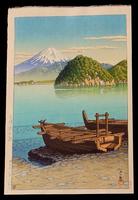
Morning at Mito Beach
Hasui Kawase
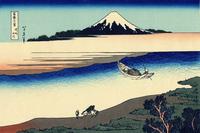
Tama river in the Musashi province
Katsushika Hokusai
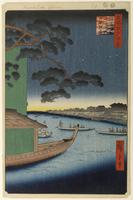
61 (54) The Pine of Success and Oumayagashi on the Asakusa River
Hiroshige
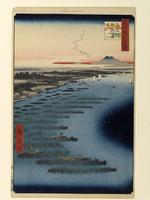
109. Minami Shinagawa and Samezu Coast
Hiroshige
33. Towboas Along the Yotsugi Dōri Canal
Hiroshige
Moonlight over the Sumida River in Edo
Katsushika Hokusai
A Ferry Boat on the Sumida River
Keisai Eisen
Omori Beach at Night
Hasui Kawase
57 (67) Mitsumata Wakarenofuchi
Hiroshige
70 (60) The Mouth of the Nakagawa River
Hiroshige
Snow at Mukojima
Hasui Kawase
View of lake Suwa
Katsushika Hokusai
Evening of Ushibori
Hasui Kawase
A shrine among trees on a moor
Hiroshige
View of Fuji from Izumo
Yamamura Toyonari
Fuji from Senbon Beach
Shotei Takahashi
Seaweed Gatherers at Omari
Utagawa Kuniyoshi
78 Teppōzu and Tsukiji Monzeki Temple
Hiroshige