Analisi esperta di Rainy Season at Ryoshimachi di Hasui Kawase
Stile: Shin-hanga · Genere: cityscape
Expert Analysis of "Rainy Season at Ryoshimachi" by Hasui Kawase
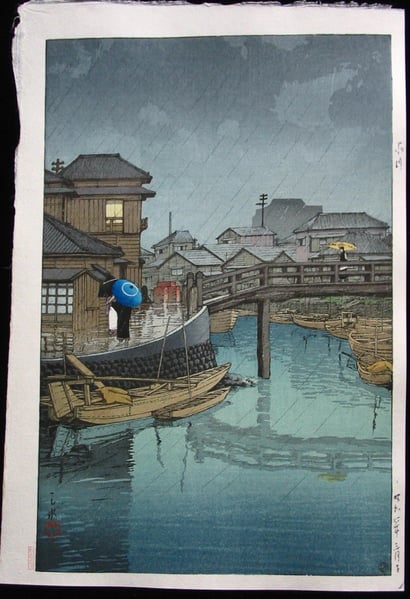
As an exemplar of the Shin-hanga ("new prints") movement, Rainy Season at Ryoshimachi exemplifies the style’s defining fusion of traditional Japanese woodblock techniques with Western-influenced naturalism and atmospheric perspective. Hasui Kawase, a leading figure in Shin-hanga, specialized in capturing transient moments of weather and light, and this cityscape is a masterful demonstration of that focus.
Significance within Shin-hanga and the Cityscape Genre:
-
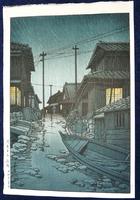
Atmospheric Mastery: The work’s core achievement is its atmospheric rendering of rain. Shin-hanga artists prized the depiction of weather as a mood-setting device, and here Hasui uses subtle gradations of gray and blue, combined with delicate rain lines, to evoke the hushed, reflective quality of the rainy season (tsuyu). The wet streets and muted lights create a sense of quietude that is both modern and nostalgic.
-
Modern Subject, Traditional Craft: While the genre is cityscape, the scene is not a landmark view but a contemporary, everyday street in Tokyo’s Ryoshimachi district. This choice aligns with Shin-hanga’s embrace of modern life (electric lines, Western umbrellas, raincoats) rendered through the meticulous, collaborative woodblock process (carver, printer, publisher) that harkens back to ukiyo-e. The print thus bridges Japan’s rapid modernization in the early 20th century with its artistic heritage.
-
Poetic Realism: Hasui’s hallmark is “poetic realism”—scenes that feel documentary yet dreamlike. In Rainy Season at Ryoshimachi, the deep shadows, soft halos of lamplight reflecting off wet pavement, and the solitary figure under an umbrella (a recurring motif) invite the viewer into a silent narrative. This emotional resonance raised the cityscape genre beyond mere topography into a vehicle for lyrical contemplation.
-
Representative of Shin-hanga’s Export Success: Works like this one helped Shin-hanga gain international acclaim, especially in the West, for combining Japanese sensitivity to nature with Western perspective and shading. Hasui’s rain scenes became especially sought after for their ability to translate a specific climate and mood into a universal aesthetic experience.
In summary, Rainy Season at Ryoshimachi is significant as a pinnacle of Shin-hanga’s ability to transform a mundane urban scene into a luminous meditation on transience, skillfully using rain to unify traditional craft with modern vision.
Visivamente simili
20 opere con composizione e palette affini
Hayase
Hiroshi Yoshida
Evening Shower at Nihonbashi Bridge
Hiroshige
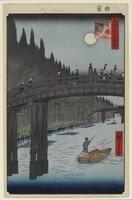
76 Bamboo Quay by Kyōbashi Bridge
Hiroshige
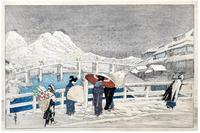
Snow at Matsue Bridge
Kazumaro Oda
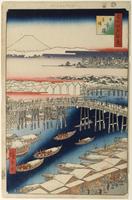
1. Nihonbashi. Clearing After Snow
Hiroshige
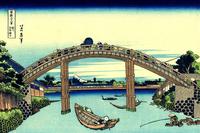
Fuji seen through the Mannen bridge at Fukagawa
Katsushika Hokusai
Nihonbashi, pl. 1 from a facsimile edition of Sixty-nine Stations of the Kiso Highway
Keisai Eisen
43. Nihonbashi Bridge and Edobashi Bridge
Hiroshige
Omori Beach at Night
Hasui Kawase
Kyobashi Bridge
Hiroshige
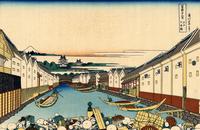
Nihonbashi bridge in Edo
Katsushika Hokusai
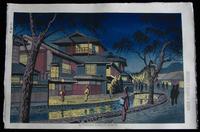
Kiyamachi Street, Kyoto
Asano Takeji
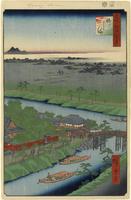
32. The Yanagishima
Hiroshige
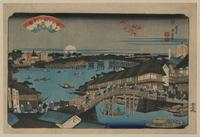
Evening glow at Ryogoku Bridge
Keisai Eisen
Urayasu
Toshi Yoshida
39. Distant View of Kinryūzan Temple and the Azuma Bridge
Hiroshige
Show at Shinkawabata
Hasui Kawase
Fukagawa Mannen Bashi Shita
Katsushika Hokusai
Night Rain at Kawarako, Ibaraki
Hasui Kawase
104. Koume Embankment
Hiroshige