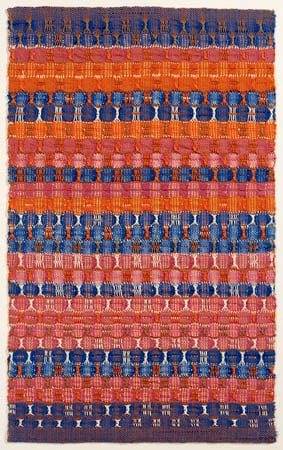
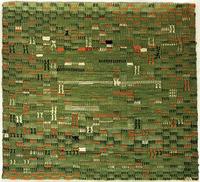
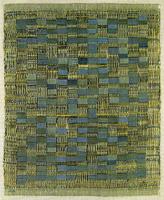
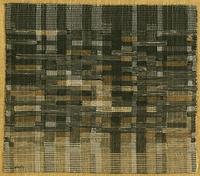
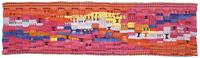
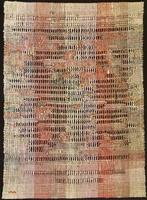
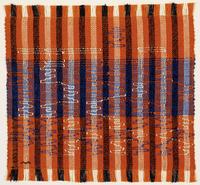
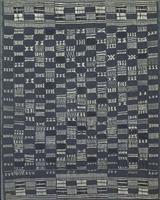
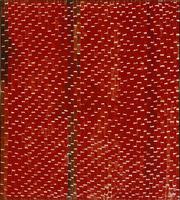
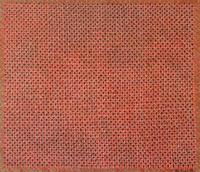
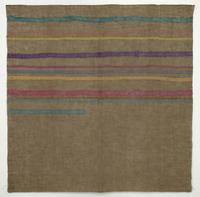
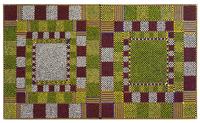
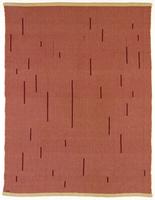
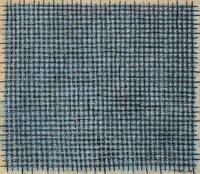
In "Red and Blue Layers," Anni Albers distills abstract art to its essential components: color, form, and structure. The work’s significance lies in its precise, understated exploration of how two hues—red and blue—interact through layering. The title itself points to a process of building visual depth not through illusionistic space but through the tension and harmony created by overlapping or juxtaposed planes of color. This approach is characteristic of the abstract genre’s commitment to pure visual experience, where the composition’s meaning emerges from relationships of hue and shape rather than narrative or representation. Albers’s technique here emphasizes the materiality of color, making the layers feel both solid and permeable. Within the context of mid‑20th‑century abstraction, the work exemplifies a rigorous focus on perceptual interaction, inviting viewers to contemplate how simple elements can produce complex, resonant effects.