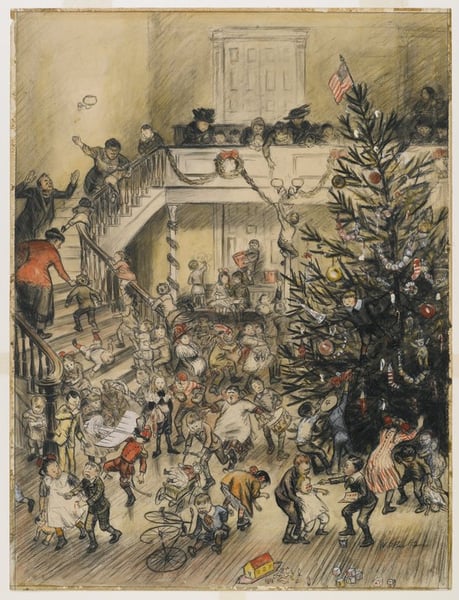
William James Glackens sanatçısının Merry Christmas eseri hakkında uzman analizi
Tarz: New Realism · Tür: genre painting
"Merry Christmas" by William James Glackens is a quintessential example of the New Realism movement, which emerged in early 20th-century America as a direct response to idealized academic art. Glackens, a core member of the Ashcan School, broke from convention by capturing unvarnished, everyday moments—here, a festive holiday scene rendered with vibrant, impressionistic brushwork and a keen eye for human interaction.
The painting’s significance lies in its ability to elevate a common genre subject—a Christmas celebration—into a document of social realism. Rather than a sentimental or posed tableau, Glackens presents a bustling, lively composition filled with authentic gestures and candid expressions. His use of bold, broken color and loose strokes infuses the scene with a sense of immediacy and joy, emphasizing the warmth of communal life. This approach reflects New Realism’s core belief: that art should mirror contemporary experience, especially the vibrancy of urban and suburban leisure.
Furthermore, "Merry Christmas" showcases Glackens’ mastery of light and atmosphere, a trait that distinguished him within the Ashcan circle. The painting’s emphasis on shared celebration—likely set in a modest home or public space—underscores the movement’s democratic ethos, celebrating the dignity and vitality of ordinary people. In this work, everyday festivity becomes a powerful statement of American identity during a period of rapid social change.
Stil
Görsel olarak benzer
İlişkili kompozisyon ve renk paletine sahip 20 eser
Ball in Paris suburb
Theophile Steinlen
Bal de Barriere drawing
Theophile Steinlen
The Laughing Audience (or A Pleased Audience)
William Hogarth
'La Fanciulla Del West' Rehearsal
Enrico Caruso
Puck’s Christmas tree
Samuel Ehrhart
Roman Carnival
Vasily Surikov
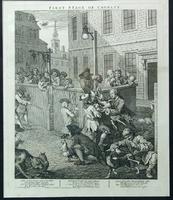
First stage of cruelty
William Hogarth
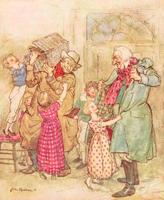
Laden with Christmas toys and presents
Arthur Rackham
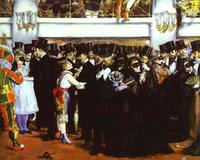
The Masked Ball at the Opera
Edouard Manet
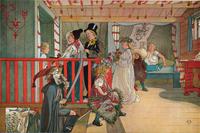
A Day of Celebration
Carl Larsson
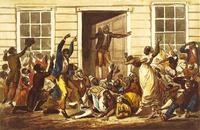
Black People's Prayer Meeting
John Lewis Krimmel
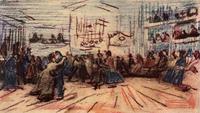
Dance-hall
Vincent van Gogh
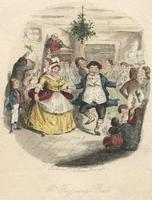
Mr. Fezziwig’s Ball
John Leech
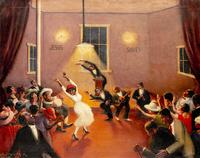
Holy Rollers
Archibald Motley
Black Methodists Holding a Prayer Meeting
Pavel Svinyin
L'Ennemi du Peuple
Theophile Steinlen
Gin Lane
William Hogarth
Chanson du Soir
Theophile Steinlen
Opening ceremony of the Hungarian parliament, 5 July 1848
August von Pettenkofen
La Correspondance Cassee
Theophile Steinlen