Analisi esperta di Femme au Chapeau di Jean Metzinger
Stile: Pointillism, Neo-Impressionism · Genere: portrait
Analysis of Femme au Chapeau by Jean Metzinger
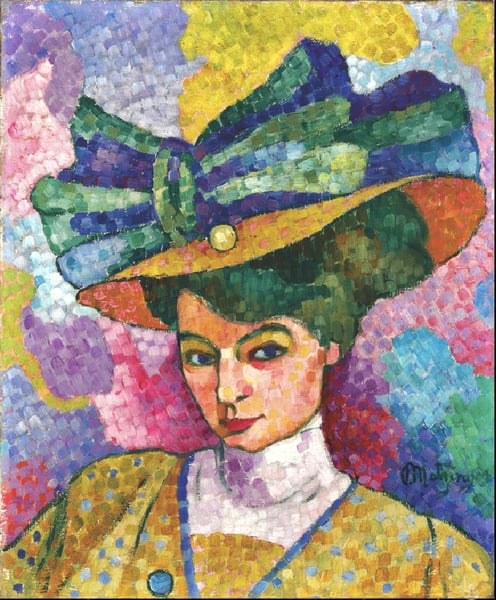
This portrait, executed in a refined Pointillist and Neo-Impressionist manner, represents a crucial early phase in Jean Metzinger’s career—before he would become a founding figure of Cubism. The work is significant for several reasons:
First, it demonstrates Metzinger’s mastery of the systematic color theory derived from Georges Seurat and Paul Signac. The brushwork consists of discrete, carefully placed dots or short strokes of pure pigment, which optically blend at a distance to create luminous flesh tones and the rich textures of the hat and costume. Rather than mixing colors on the palette, Metzinger relies on the viewer’s eye to synthesize complementary hues—a hallmark of Neo-Impressionist technique.
Second, the portrait is a revealing document of the artist’s stylistic evolution. Painted around 1905–1906, Femme au Chapeau shows Metzinger absorbing the lessons of Post-Impressionism while already hinting at the geometric simplification that would lead to his early Cubist works. The face, though still recognizable, is modeled with broad planes of color and a slight angularity that subtly flattens the form, departing from the purely atmospheric approach of pure Pointillism. This tension between optical realism and structural abstraction gives the portrait its distinct place in Metzinger’s output.
Third, the subject—a fashionable woman in an elaborate hat—aligns with the late 19th-century fascination with modern urban life and bourgeois leisure. By applying a rigorous, scientific painting method to a conventional portrait genre, Metzinger elevates a seemingly casual scene into a study of light, color, and perception. The hat itself becomes a vibrant pattern of prismatic touches, demonstrating the artist’s interest in decorative surface as much as representational depth.
In summary, Femme au Chapeau is significant as a transitional masterpiece, bridging the intuitive colorism of Neo-Impressionism and the analytical geometry soon to define Metzinger’s Cubism. It stands as a testament to the artist’s technical skill and his restless pursuit of new pictorial languages—a key work for understanding the path from fin-de-siècle pointillist experimentation to the radical avant-garde of the early 20th century.
Genere
Visivamente simili
20 opere con composizione e palette affini
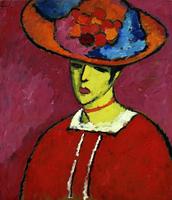
Schokko with Wide-Brimmed Hat
Alexej von Jawlensky
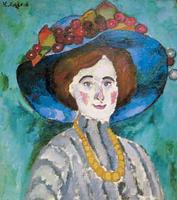
The lady in the hat
Ilya Mashkov
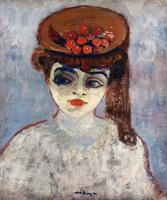
Woman with Cherries on Her Hat
Kees van Dongen
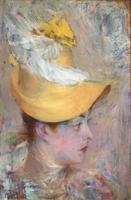
Head of a Lady with Yellow Sleeve
Giovanni Boldini
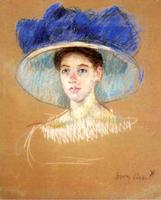
Woman`s Head with Large Hat
Mary Cassatt
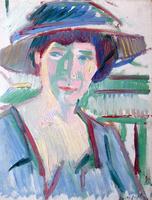
Margaret Peploe
Samuel Peploe
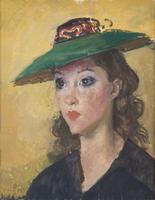
Louise Olgin
Augustus John
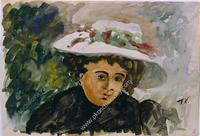
Female portrait (Voronova). Study.
Pyotr Konchalovsky
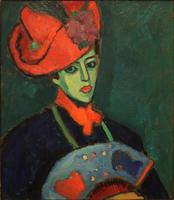
Schokko with Red Hat
Alexej von Jawlensky
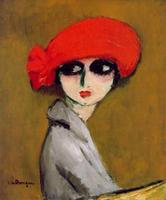
The Corn Poppy
Kees van Dongen
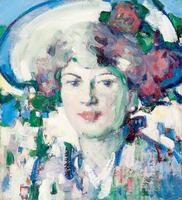
In the Sunlight
John Duncan Fergusson
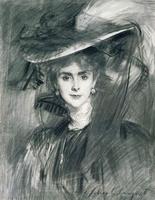
Olga, Baroness de Meyer
John Singer Sargent
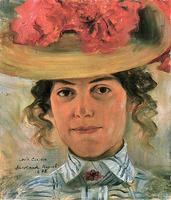
Woman's Half Portrait with Straw Hat (Luise Halbe)
Lovis Corinth
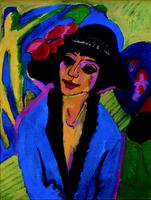
Portrait of Gerda
Ernst Ludwig Kirchner
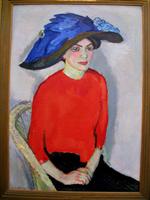
Portrait of a lady in red
Jan Sluyters
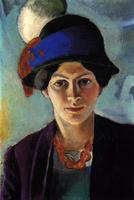
Portrait of the artist's wife with a hat
August Macke
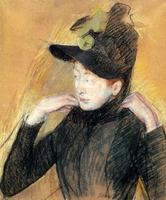
Woman Arranging Her Veil
Mary Cassatt
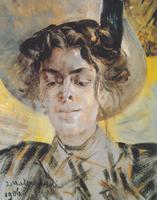
Portrait of Maria Balowa
Jacek Malczewski
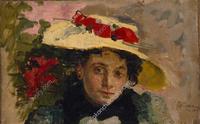
Female portrait (Voronova)
Pyotr Konchalovsky
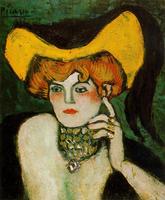
Woman with necklace of gems
Pablo Picasso