
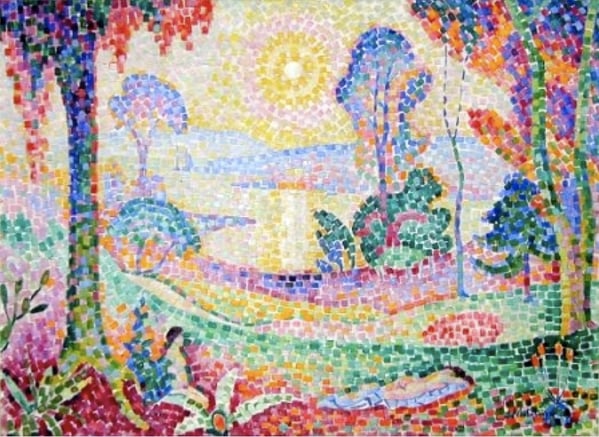
Expert analysis of Jean Metzinger’s Landscape (Couchée de soleil no. 1)
Style: Pointillism, Neo-Impressionism · Genre: landscape
Expert Analysis of "Landscape (Couchée de soleil no. 1)" by Jean Metzinger
This work stands as a notable example of Metzinger’s early engagement with Pointillism and Neo-Impressionism—movements that rigorously applied scientific color theory to landscape painting. The title, Couchée de soleil no. 1 (Sunset, No. 1), signals a classic motif for Neo-Impressionist exploration: the fleeting, atmospheric effects of twilight, rendered through systematic optical mixing of pure pigment.
Significance within its Style & Period:
-
Mastery of the Pointillist Technique: Metzinger demonstrates a precise application of divided color—small, distinct dots of complementary and contrasting hues placed side by side. In a sunset scene, this method becomes particularly powerful: warm oranges and reds juxtaposed with cool blues and purples would have created a vibrant, luminous surface that vibrates in the viewer’s eye, capturing the transient glow of the setting sun more intensely than traditional blending.
-
Contribution to Neo-Impressionist Landscape: This painting belongs to the generation of artists who extended Georges Seurat and Paul Signac’s legacy. By focusing on a sunset (a subject that demands subtle gradations of light and atmosphere), Metzinger pushes the Neo-Impressionist ideal of translating ephemeral natural phenomena into a structured, almost mathematical grid of color. It exemplifies the movement’s ambition to reconcile sensory perception with pictorial order.
-
Foregrounding Metzinger’s Artistic Evolution: As a landmark in Metzinger’s early career, this work reveals his deep foundation in post-impressionist theories of color and form. While he would later become a central figure in Cubism—a radical departure from naturalistic representation—Landscape (Couchée de soleil no. 1) anchors his development in the systematic, analytical approach to vision that Neo-Impressionism championed. The painting thus provides crucial context for understanding how Metzinger moved from the optical fragmentation of pointillist dots to the conceptual fragmentation of Cubist planes.
In sum, this artwork is significant not only as a refined example of Neo-Impressionist landscape painting but also as a key document of Metzinger’s pre-Cubist phase, demonstrating the rigorous color theory and disciplined technique that would inform his later revolutionary contributions to modern art.
Visually similar
20 works with related composition and palette
Couchée de Soleil No. 1
Jean Metzinger
The Maures
Henri-Edmond Cross
Sunset
Henri-Edmond Cross
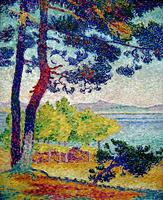
Afternoon at Pardigon, Var
Henri-Edmond Cross
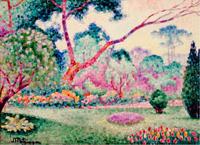
Parc Monceau
Jean Metzinger
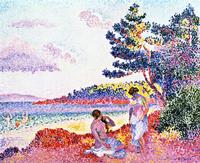
Bathers
Henri-Edmond Cross
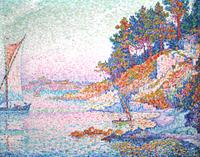
The bay
Paul Signac
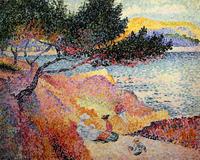
La Plage de Saint-Clair
Henri-Edmond Cross
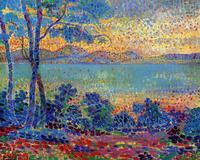
Provence Landscape
Henri-Edmond Cross
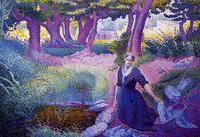
The Washerwoman
Henri-Edmond Cross
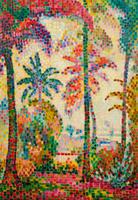
Paysage Tropical
Jean Metzinger
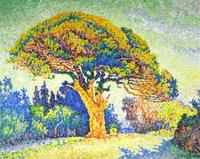
The Pine Tree at St. Tropez
Paul Signac
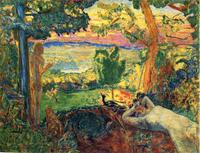
Earthly Paradise
Pierre Bonnard
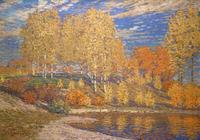
Autumn Sun
Vilhelms Purvitis
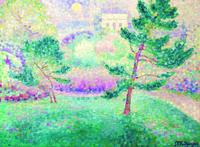
Matin au Parc Montsouris
Jean Metzinger
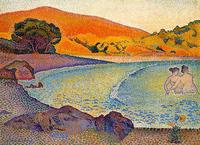
Bathers
Henri-Edmond Cross
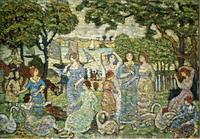
The Swans
Maurice Prendergast
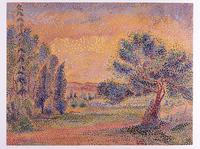
Landscape in Mâcon
Hippolyte Petitjean
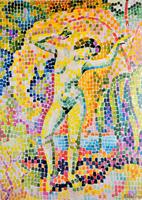
Bacchante
Jean Metzinger
Holidays
Maurice Prendergast