
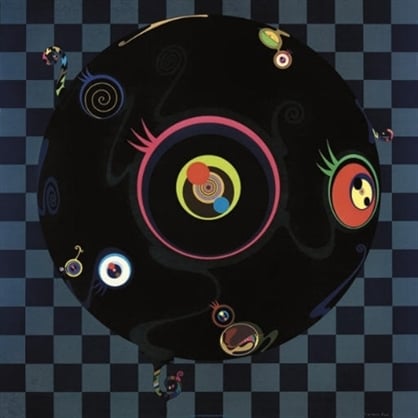
Analisi esperta di Blackbeard di Takashi Murakami
Stile: Neo-Pop Art, Superflat · Genere: figurative
Takashi Murakami’s Blackbeard is a quintessential example of the artist’s Neo-Pop and Superflat aesthetic, merging the flattened pictorial space of traditional Japanese ukiyo‑e with the hyper-saturated, consumer-driven imagery of contemporary pop culture. In this figurative work, Murakami applies his signature visual language—bold outlines, smooth gradations, and clashing, candy‑bright colors—to a subject that oscillates between the whimsical and the menacing. The title’s pirate reference is filtered through Murakami’s characteristic “cute but creepy” motif, often seen in his smiling flowers and skull icons.
Significantly, Blackbeard embodies the Superflat movement’s core critique of post‑war Japanese society: the erasure of depth in both visual representation and cultural experience. The painting’s utterly flat, graphic surface denies traditional perspective, forcing the viewer to confront the image as a pure sign—a commodity as much as a work of art. By reimagining a historical outlaw within this glossy, anime‑inspired framework, Murakami collapses distinctions between high art, mass entertainment, and historical narrative. The work thus stands as a provocative commentary on how history and identity are flattened, packaged, and consumed in a globalized, image‑saturated age.
Visivamente simili
20 opere con composizione e palette affini
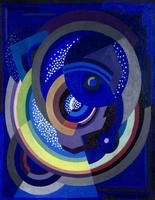
Abstract
Mainie Jellette
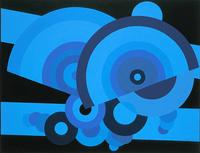
Sirènes des rois
Jean-Paul Jerome
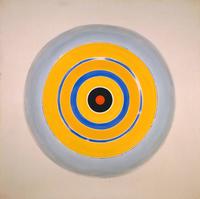
Drought
Kenneth Noland
Cosmos N°3
Martha Boto
Inner Way
Kenneth Noland
Tide
Kenneth Noland
Mysteries: Winds
Kenneth Noland
Untitled
Louise Bourgeois
Spread
Kenneth Noland
Spring Cool
Kenneth Noland
High Easter
Kenneth Noland
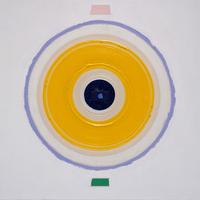
Refresh
Kenneth Noland
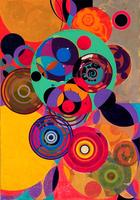
Popeye
Beatriz Milhazes
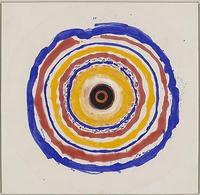
Askew
Kenneth Noland
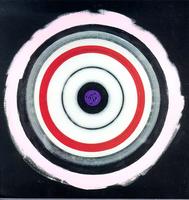
Jazz
Kenneth Noland
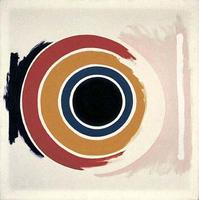
No. One
Kenneth Noland

Untitled
Carmelo Arden Quin
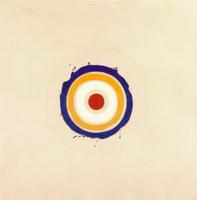
Nieuport
Kenneth Noland
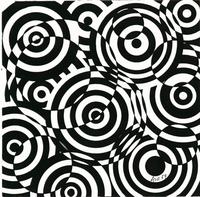
Untitled
Antonio Asis
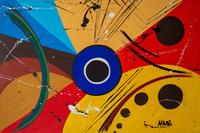
Circles
Alan Tellez